

Benefits of Risk Management for Pakistani Businesses
📊 Discover how risk management in Pakistan businesses cuts losses, boosts smart decisions, saves costs, ensures compliance, and builds a stronger reputation.
Edited By
Sophie Clarke
Risk management holds a key place in financial markets, especially for traders, investors, and analysts in Pakistan’s dynamic economy. Before diving into risk management processes, it is equally important to identify what falls outside its scope. Many activities may seem related to managing risks but do not technically qualify as risk management. This distinction helps professionals focus efforts where they truly matter, avoiding unnecessary work that doesn’t increase financial or operational security.

Understanding this requires knowing that risk management involves identifying, assessing, and controlling risks that can impact financial or operational goals. Activities like documenting procedures, general supervision, or routine reporting might feel connected but don't change the risk profile or reduce potential harm.
Administrative Tasks: Updating spreadsheets, preparing regular reports, or compiling data. These tasks support risk management but do not directly affect risk mitigation or evaluation.
Compliance Without Assessment: Compliance means following laws and regulations, such as tax filing with the FBR or adhering to SECP mandates. While vital, it doesn't always include identifying or managing risks unless paired with risk analysis.
Strategic Planning Without Risk Focus: Deciding company goals or market entry strategies without considering potential financial or operational threats isn't risk management; it’s business planning.
Crisis Response Post-Fact: Handling an incident after damage happens (for example, fixing IT system after hacking) is reactive but not preventive. True risk management focuses on anticipation and prevention.
Auditing Processes: Internal audits check compliance and controls. Though they highlight risk gaps, audits themselves don't manage risk until corrective actions are taken.
Focusing only on activities labeled 'risk management' ensures resources target threat reduction, not just busywork.
For traders and investors, this clarity means better use of time and capital. Analysts gain sharpness in reports when they know which efforts directly influence risk reduction. Brokers and educators can design more effective trainings focusing on actionable risk strategies instead of generic operational tasks.
In a nutshell, recognising what is not risk management sharpens priorities and avoids confusion. It keeps teams focused on reducing exposure to financial loss, regulatory issues, or market volatility — the true goals of risk management in today’s Pakistani financial ecosystem.
Grasping the core functions of risk management is essential for traders, investors, and financial analysts alike. It helps you tell apart activities that really protect your investments and operations from those that merely maintain routine tasks. Understanding these functions clarifies where to focus resources and how to monitor potential threats effectively.
Risk involves uncertainty where outcomes can deviate from what is expected, often leading to loss or gain. For instance, stock price fluctuations carry risk because no one can predict market moves with absolute certainty. Recognising this uncertainty allows professionals to prepare and respond appropriately.
Its main aim is to minimise potential damage while seizing opportunities. This means preparing for negative events, such as defaults or market crashes, while still aiming for reasonable gains. A fund manager might adjust asset allocation to reduce exposure to high-volatility stocks, balancing potential returns with controllable risks.
This is spotting sources of uncertainty that could hurt your portfolio or business. For example, an investor identifying currency devaluation risk when investing abroad enables more informed decisions. Early identification helps avoid nasty surprises.
Once risks are identified, evaluating their likelihood and potential impact comes next. A financial analyst may assess political instability’s risk in a region before recommending investments. Assessing helps to prioritise which risks need urgent attention and which are acceptable.
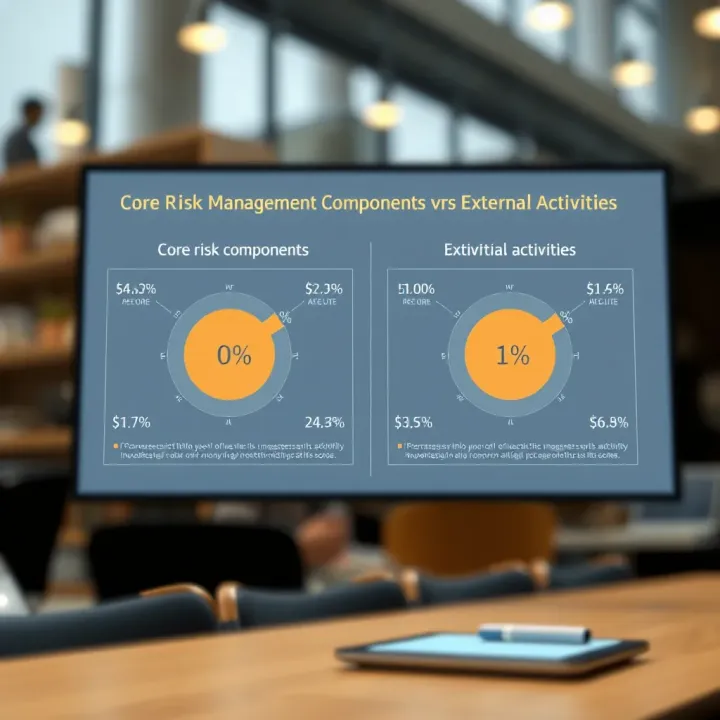
This involves actions to reduce risk to a manageable level. It could be diversifying holdings to avoid overexposure or buying insurance against theft in a business. Effective control might mean setting stop-loss orders in stock trading to limit losses during market downturns.
Risk conditions change, so continuous tracking is vital. For instance, a broker regularly reviewing an economic outlook can spot new risks early. This ongoing process ensures risk strategies remain effective and adapt to evolving circumstances.
Clear understanding and application of these functions prevent wasteful effort on tasks unrelated to managing risk, keeping your focus where it matters.
Organisations often confuse various routine or related business activities with risk management. This misunderstanding can blur the focus on true risk controls and lead to inefficient resource use. The following sections clarify why certain common tasks, while essential to business operations, don’t qualify as actual risk management.
Routine compliance checks involve verifying that a business meets regulatory or internal standards on a regular basis. While these checks help ensure legal and procedural adherence, they primarily aim at maintaining order rather than identifying or managing risks proactively. For example, a compliance officer confirming filing deadlines for tax returns supports governance but does not directly address potential uncertainties or threats that might challenge business objectives.
General record keeping ensures accurate documentation of transactions, communications, or operational data. Good record keeping supports transparency, audit trails, and accountability. However, maintaining ledgers or logs itself doesn’t entail analysing or controlling risks. It’s a foundational administrative task that enables risk management rather than replacing it.
Daily task management refers to organising and completing routine work assignments or operational duties. Although this keeps business functions running smoothly, it typically lacks systematic evaluation of hazards or uncertainties. For instance, scheduling delivery routes optimises efficiency but does not necessarily consider unexpected risks such as fuel shortages or security threats unless these are specifically examined and mitigated.
Budget approval is the formal authorisation of planned expenditures. It focuses on controlling costs and aligning spending with organisational priorities rather than assessing threats or opportunities that could affect outcomes. For example, sanctioning a marketing budget allocates resources but does not by itself identify financial risks like currency fluctuations or fluctuating supplier prices.
Cost tracking involves monitoring expenses against budgets. While it helps detect overspending or inefficiencies, it is essentially a financial control activity. It does not directly anticipate or reduce risk factors but instead supports overall financial discipline.
Invoice processing includes verifying and paying bills from suppliers or service providers. This process ensures accuracy and timely payments but is transactional, without explicit consideration of risk factors like fraud, supplier reliability, or contractual liabilities unless additional controls are instituted.
Marketing strategies aim to promote products and increase market share. These may include targeting customer segments or securing competitive advantages, but they seldom address risks systematically. While marketing may encounter reputational risks, the strategy itself is not a process aimed at identifying or mitigating such risks.
Human resource functions cover recruitment, training, and employee relations. Though these involve managing workforce challenges, they focus on personnel administration rather than formal risk assessment or treatment. For example, onboarding new staff helps operations but does not amount to managing organisational uncertainties unless designed within a risk framework.
Customer service management centres on addressing client inquiries and maintaining satisfaction. This function improves reputation and retention but does not inherently evaluate or handle risks. Handling complaints or feedback builds goodwill but is reactive, not a proactive risk control measure.
Understanding these distinctions helps businesses avoid mislabeling routine or related functions as risk management. This clarity improves focus on actual risk identification, assessment, and mitigation tasks that protect organisational objectives.
By recognising what activities fall outside of risk management, professionals can allocate time and resources more efficiently, enhancing their capacity to deal with real risks.
Understanding how to tell apart true risk management from other business activities is vital. This ensures organisations focus resources correctly and avoid confusion that weakens preparedness. Traders, investors, financial analysts, and brokers benefit from this clarity by aligning their strategies precisely with risk control rather than unrelated tasks.
Risk management deals primarily with uncertainty—situations where outcomes are not fixed and could impact objectives negatively or positively. To evaluate if an activity is genuine risk management, ask whether it aims to identify, understand, or respond to uncertain events. For example, drafting contingency plans for sudden currency fluctuations falls clearly under risk management because these fluctuations are uncertain and potentially harmful.
On the other hand, regular financial reporting is often mistaken for risk management, but it typically presents historical data rather than addressing uncertainty. While important, its primary purpose is record keeping, not managing unpredictable outcomes.
A key sign of risk management is deliberate planning against possible downsides. This means an activity should include assessing what could go wrong, how likely it is, and how to reduce impact. For instance, when a business evaluates credit risk of clients before extending loans and sets limits accordingly, it is planning against a potential negative outcome.
In contrast, simply enforcing standard operating procedures without considering potential failures does not qualify. Routine compliance checks, although related to governance, generally focus on adherence—not actively anticipating and mitigating specific risks.
True risk management revolves around three core steps: identifying risks, evaluating their severity and likelihood, and deciding how to treat them. This triad forms the backbone of any risk policy. For example, an equities trader analysing market volatility to adjust portfolio exposure conducts risk evaluation and treatment.
Activities lacking this analytical dimension—such as general team meetings or project status updates—do not count as risk management even if they discuss problems, as they may miss the systematic risk focus.
Effective risk management often employs formal tools like risk matrices, heat maps, or software systems designed to quantify and track risk. These methods help make subjective threats measurable and manageable. For instance, using Value at Risk (VaR) models to limit potential investment losses demonstrates a systematic approach.
Relying on intuition, ad hoc judgment, or unrelated administrative software without structured risk assessment frameworks suggests the activity is not genuine risk management. Without formal evaluation tools, it’s difficult to prove that an action systematically targets risk control.
Differentiating non-risk activities from true risk management ensures better resource use and stronger protection against financial and operational shocks, a must-do for Pakistani businesses facing volatile markets and regulatory challenges.
Confusing non-risk activities for genuine risk management can create significant challenges for organisations, slowing growth and weakening resilience. When resources are directed toward tasks that do not actually identify, assess, or control risks, companies may neglect the true threats that could disrupt operations. This type of misclassification not only wastes time and money but also blinds leaders to emerging dangers that require urgent attention.
Spending effort and funds on tasks outside risk management can divert attention from critical safeguards. For example, an organisation might invest heavily in routine compliance checks or daily operational tasks believing they are managing risk, while ignoring gaps in cybersecurity or supply chain vulnerabilities. This misallocation means risk controls that protect against financial loss, regulatory penalties, or reputational damage remain underfunded or unimplemented.
In the competitive financial sector, such as brokerage firms managing large portfolios, this mistake can lead to missed insights on market volatility or geopolitical risks. Allocating too much budget to general administrative work instead of specialised risk assessments limits the organisation's ability to adapt swiftly to threats, directly affecting long-term stability and profitability.
Overlooking serious risks due to confusion can leave a company vulnerable to sudden shocks. When employees equate routine tasks like invoice processing or customer service with risk management, they may not develop the skills or mindset needed to spot hazards early. This gap can delay response times to breaches or compliance issues until the problem escalates into a crisis.
Take the example of a financial analyst who focuses solely on budget reviews without integrating risk models predicting inflation trends or currency fluctuations. The absence of proper risk evaluation tools means potential threats to investment portfolios might go unnoticed, resulting in significant financial losses.
Weak preparedness for emergencies follows naturally from blurred boundaries between actual risk work and unrelated duties. Organisations may find themselves scrambling during crises such as market crashes, cyber-attacks, or natural disasters because they failed to plan prevention, mitigation, and recovery steps properly.
Emergency drills, contingency planning, and incident response protocols require clear identification and treatment of risks—which does not happen if teams are distracted by non-risk activities. For example, a firm that focuses primarily on day-to-day tasks without scenario planning might lack a robust plan for quick decision-making during political upheavals or sudden regulatory changes. Such unpreparedness can magnify the financial and operational impact of emergencies.
Properly distinguishing risk management activities helps organisations allocate resources wisely, sharpen risk awareness, and build strong emergency responses. It is an investment that safeguards stability and future growth.
📊 Discover how risk management in Pakistan businesses cuts losses, boosts smart decisions, saves costs, ensures compliance, and builds a stronger reputation.

Explore key actuarial science and risk management concepts 🧮 to assess and control financial risks, helping businesses in Pakistan make smarter decisions 📊.

🔢 Learn how the hexadecimal 5A converts to binary with clear steps and practical examples. Perfect for understanding computing number systems in detail.

Explore binary operations in math and computer science 🔢🤖. Learn about types, properties, number systems, and practical uses in programming and logic.
Based on 13 reviews