

Effective Forex Trading Strategies for Pakistani Traders
📈 Explore forex trading strategies crafted for Pakistani traders including market analysis, risk management, and practical tips to boost your trading success in PKR markets.
Edited By
Emily Parker
Forex trading patterns are recurring shapes or trends on currency charts that traders use to predict future price movements. For Pakistani traders, recognising these patterns is vital because it helps make informed decisions in PKR and other international currency pairs, especially given the rupee’s sensitivity to global events and local economic indicators.
Understanding trading patterns is like reading a map before a journey; it guides where the market might head next. Unlike random price movements, these patterns form as a result of collective trader behaviour, such as buying or selling pressure, news reactions, or central bank interventions.

Some familiar patterns include:
Head and Shoulders: Signals a potential trend reversal. When this appears on the chart, it often means the current trend (up or down) may soon change direction.
Double Tops and Bottoms: Indicate strong resistance or support zones where prices might bounce back or break through.
Triangles and Flags: Represent periods of consolidation before the market continues in its existing direction or reverses.
Successful traders in Pakistan often combine pattern recognition with local financial events, like SBP monetary policy decisions or changes in import-export dynamics, to better anticipate market moves.
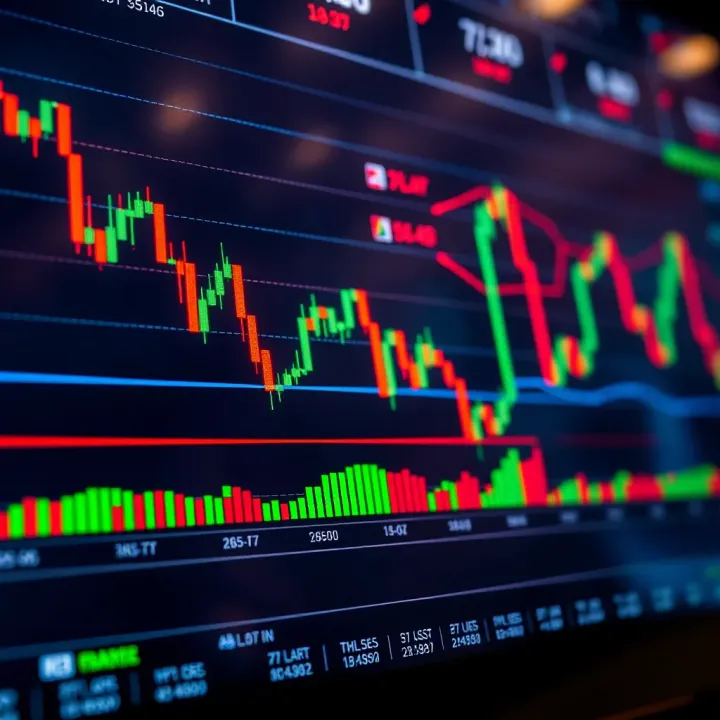
Charts in forex trading are analysed using tools like candlestick patterns, trendlines, and volume indicators. Candlestick patterns, for example, show the battle between buyers and sellers in a clear visual format that reveals potential price shifts.
While trading patterns provide a useful edge, Pakistani traders should avoid common pitfalls such as over-reliance on a single pattern without context, ignoring fundamental factors like political stability, or failing to use risk management with stop-loss orders.
In the coming sections, we will break down these patterns and tools in more detail, tailor insights to Pakistan’s unique trading environment, and offer practical tips to help you trade with confidence and caution.
Forex trading patterns offer critical insights into how currency prices are likely to move. Pakistani traders who learn to identify these patterns can make better decisions, protect their investments, and improve their chances of profit. Rather than guessing market moves, understanding patterns provides a repeatable approach based on historical price action.
For example, recognising a "head and shoulders" formation might alert a trader to an upcoming trend reversal, allowing them to exit a position before losses mount. Similarly, the appearance of a "flag" pattern could signal the continuation of a strong trend, encouraging traders to hold or enter trades. This section sets the foundation for grasping these patterns, making the following sections more accessible and practical.
Forex trading patterns are identifiable shapes or formations created by price movements on charts. These patterns are not random; they reflect recurring behaviours of buyers and sellers in the market. For traders, these signs provide clues about potential price direction, helping to anticipate moves and plan entries or exits accordingly. For instance, a "double bottom" pattern often indicates that a currency pair has found strong support and may start rising.
Patterns matter because they turn raw price data into understandable signals, reducing uncertainty. They serve as a kind of language through which traders read market sentiment and act with more confidence.
Behind every price pattern lies human behaviour—fear, greed, hesitation, and optimism. Patterns emerge when groups of traders react similarly to market news or events. For example, during a "triangle" pattern, shrinking price ranges show indecision as traders await a breakout. When the breakout happens, it indicates a collective commitment to a new trend.
Such psychological insights help Pakistani traders understand not just what prices are doing but why. This awareness can prevent emotional decisions and encourage a patient, probing approach to market moves.
Pakistan’s forex market is shaped by factors unique to its economy, such as imports dependency, remittances, and political uncertainty. Access to real-time data can be limited for individual traders, making pattern recognition a vital skill for timing trades effectively. Given the rupee’s relative volatility, relying solely on news or fundamentals can be difficult.
Patterns provide a practical toolkit for navigating this environment, allowing traders to respond quickly to price signals even when detailed news analysis isn't possible.
Using patterns helps Pakistani traders to set clearer stop-loss and take-profit levels, both essential for managing risk. For example, if a trader spots a "flag" pattern confirming a trend, they can place their stop-loss just below the pattern’s support line, limiting potential losses.
Moreover, patterns guide position sizing by indicating how strong or uncertain the market is. This supports more disciplined trading and can reduce the common pitfall of overexposing one’s capital, a mistake especially costly in Pakistan’s sometimes volatile forex landscape.
Mastering forex trading patterns offers Pakistani traders a sharper edge—transforming price charts into strategic tools rather than guesswork.
Recognising common forex trading patterns helps traders predict potential price moves, improving decisions in volatile markets. In Pakistan’s forex context, where currency fluctuations can be sudden, understanding these patterns provides an edge, allowing traders to align with prevailing market momentum or spot reversals early.

Flags and pennants are short-term continuation patterns showing brief pauses before the prevailing trend resumes. Flags look like small rectangles slanting against the trend, while pennants form tight symmetrical triangles. For example, after a sharp rupee depreciation, a flag pattern might occur as the market consolidates before the downtrend continues.
These patterns are useful for Pakistani traders to enter trades during pauses without waiting for a full reversal, especially useful during news events affecting PKR or USD exchange rates.
Triangles signal areas where traders hesitate, consolidating before a breakout. An ascending triangle forms with a flat upper resistance and rising support, often leading to upward breakouts. Descending triangles show the opposite. Symmetrical triangles feature converging support and resistance, bounce uncertain until a breakout.
In forex markets like USD/PKR, spotting triangles early helps you prepare for breakouts with stop-loss orders, especially when political or economic uncertainty affects market sentiment.
This pattern signals a market reversal, resembling a peak (head) flanked by two smaller peaks (shoulders). It appears at trend tops or bottoms, indicating exhaustion of the current trend. A “neckline” connects the two troughs.
For example, if PKR is strengthening steadily but a head and shoulders pattern appears on currency charts, it might warn that the trend is ending and depreciation could follow. Traders use this to exit or short positions.
These patterns form when prices hit resistance or support levels twice but fail to break through, hinting at reversals. A double top appears after an upward trend, and a double bottom after a downtrend.
For instance, if USD/PKR charts show a double top around Rs 280, it may hint at a pause or reversal in dollar strength. Pakistani traders can use these cues to adjust trades accordingly.
Rectangles form when price moves sideways between horizontal support and resistance, indicating market indecision. Breakouts above or below these levels suggest the next big move.
Pakistani traders observing rectangles in PKR exchange rates during political calm might wait for breakout confirmations before committing, thereby managing risks better.
Unlike ascending or descending, symmetrical triangles show consolidation with converging trend lines but no clear bias. This pattern indicates potential volatility ahead without specifying direction.
For forex pairs with active political or economic events in Pakistan, symmetrical triangles provide valuable warnings to exercise caution and watch for breakout signals before trading.
Understanding these patterns equips you to read market psychology and price action better, an advantage for trading in Pakistan’s often uncertain forex environment. Clear pattern recognition combined with risk management can improve trading outcomes significantly.
Using the right technical tools helps Pakistani traders spot forex patterns more reliably. These tools cut through market noise and give clearer views of price movements, easing decisions about entry and exit points. Understanding chart types, indicators, and volume factors equips you to interpret patterns with confidence rather than guesswork.
Candlestick charts are the go-to for many forex traders due to their clear, visual detail. Each candlestick displays open, high, low, and close prices for the chosen timeframe. This helps you see price action and market sentiment at a glance. For example, a long wick on the top might indicate selling pressure despite a price rise. Pakistani traders often use candlestick charts on platforms like MetaTrader or TradingView to catch reversal signals on the PKR/USD pair.
Line charts offer a simpler view by connecting closing prices over time. While they don’t show the intraday highs and lows, line charts provide a clean perspective useful for spotting larger trends or support and resistance levels. Especially for beginners in Pakistan, these charts help avoid confusion caused by short-term fluctuations in rapidly changing markets.
Using different timeframes enhances analysis by giving multiple perspectives. Short-term charts (like 5-minute or hourly) highlight entry points, while daily or weekly charts show bigger trends and possible reversals. Pakistani traders in volatile sessions may look at 15-minute charts to time trades, then check the daily chart to confirm overall market direction. This multi-timeframe approach reduces the chances of falling into false signals.
Moving averages smooth out price fluctuations to reveal underlying trends. A common method is using the 50-day and 200-day moving averages to spot crossovers indicating bullish or bearish momentum. In the Pakistani market, where sudden rupee swings happen, moving averages help confirm if a trend will continue or fade.
The Relative Strength Index (RSI) measures momentum by comparing recent gains to losses, giving values between 0 and 100. An RSI over 70 may suggest the currency pair is overbought, signalling a possible pullback, while below 30 usually means oversold. This helps traders decide when a reversal might occur, avoiding chasing overextended moves in PKR pairs.
MACD (Moving Average Convergence Divergence) combines moving averages to detect trend shifts and strength. It plots the difference between fast and slow averages, and a signal line triggers buy or sell alerts when it crosses. Pakistani traders use MACD to catch early signs of trend reversals in forex pairs or to confirm ongoing momentum before taking positions.
Volume plays a key role in validating trading patterns. Higher volume during breakouts confirms stronger conviction behind price movements, while low volume breakouts often fail. For Pakistani traders, observing volume from platforms offering real-time data can prevent losses by avoiding false breakouts in illiquid PKR currency pairs.
Momentum indicators like the Stochastic Oscillator track the speed of price changes to confirm the strength behind patterns. When momentum aligns with pattern signals, it adds reliability. Conversely, diverging momentum indicators warn traders to stay cautious. Combining momentum with volume and chart patterns builds a more robust trading setup.
Mastering these technical tools improves your ability to recognise forex trading patterns and make smarter moves. They reduce guesswork, letting you ride trends confidently in Pakistan’s dynamic forex market.
Pattern trading in forex can offer valuable insights, but it's easy to fall into some common traps. Pakistani traders often face challenges like misreading patterns or ignoring the bigger picture, which can lead to costly mistakes. Understanding these pitfalls helps improve accuracy and risk control.
False breakouts happen when the price moves beyond a pattern boundary, suggesting a new trend, but then quickly reverses. For example, a trader might see the price break above a resistance line in a triangle pattern and assume a bullish move. However, the breakout may lack real strength or volume, causing the price to drop back inside the pattern soon after. This can trick traders into entering a position prematurely and facing losses.
Being aware of false breakouts is crucial, especially in volatile markets like PKR/USD or EUR/PKR, where strong interventions or news can cause sudden price spikes that don’t hold. To avoid this, Pakistani traders should confirm breakouts with volume spikes or momentum indicators before acting. Also, waiting for a candle to close beyond the breakout level reduces the chances of misreading.
Overreliance on single indicators can misguide traders by providing a narrow view of market conditions. For example, using only the Relative Strength Index (RSI) to decide when to enter a trade may not capture the full market context. RSI could show oversold conditions, but the overall trend might still be strong downwards, making a buy signal unreliable.
Pakistani traders should combine various tools, such as moving averages, MACD, and volume alongside pattern analysis. This rounded approach gives a better confirmation and helps avoid false signals. Relying on a single indicator is risky, especially when local events or economic announcements can quickly override technical cues.
Economic news impact plays a significant role in forex prices. Announcements like State Bank of Pakistan (SBP) policy rate decisions, inflation data, or trade balance reports can swiftly change market sentiment. For instance, just before an SBP interest rate announcement, forex patterns may show indecision or false breakouts, making pattern trading alone unreliable.
Traders ignoring economic calendars risk entering trades just before high-impact events, leading to unexpected volatility and losses. It’s wise to pause pattern-based trades around such news or use smaller position sizes to manage risks.
Geopolitical factors affecting forex markets also cannot be overlooked. Tensions at the border, trade negotiations with China under CPEC, or political developments in Islamabad often influence the rupee’s direction. These external forces can cause sudden shifts that override technical patterns.
Pakistani traders who watch geopolitical news alongside pattern analysis fare better. For example, during the 2019 trade tensions, PKR saw sharp swings even when technical setups suggested otherwise. Combining market context with patterns helps avoid costly errors and improves trading decisions.
Remember, patterns provide clues but never guarantees. Pairing technical analysis with an eye on wider market factors keeps you ahead in forex trading.
Confirm breakouts with volume and momentum indicators
Avoid using a single indicator; combine multiple tools for confirmation
Monitor economic news and avoid trading during volatile announcements
Keep an eye on geopolitical developments that affect PKR and regional currencies
Navigating these challenges strengthens your ability to trade forex patterns successfully in the Pakistani market.
Using forex trading patterns effectively requires a practical approach tailored to the realities Pakistani traders face. Patterns alone won’t guarantee success; combining them with solid risk management, local resources, and continuous learning improves the odds of making profitable trades.
Setting stop-loss and take-profit levels is crucial when trading patterns. A stop-loss protects your capital by automatically closing the trade if the market moves against you beyond a certain point. For instance, if you identify a head and shoulders pattern signalling a reversal, placing a stop-loss just above the right shoulder limits loss if the pattern turns out false. Take-profit levels, on the other hand, lock in gains by selling when a predetermined price target is hit. This discipline keeps emotions in check, especially in volatile PKR/USD or EUR/USD markets affected by local economic news.
Managing position sizes goes hand in hand with stop-loss settings. No matter how promising a pattern looks, risking too much on a single trade can drain your account quickly. Pakistani traders typically aim to risk 1-2% of their capital per trade. For example, if your account balance is Rs 100,000, risking Rs 1,000 to Rs 2,000 per trade through appropriate position sizing preserves your funds in the face of losing streaks. This approach builds steadier long-term growth rather than chasing large wins on risky bets.
Choosing the right forex broker in Pakistan matters for pattern traders. Brokers like FXTM, XM, and local options regulated with PTA approvals offer platforms that support advanced charting tools to spot patterns clearly. Traders should verify the broker’s reputation, spreads, and withdrawal ease. A local presence helps with currency deposits in PKR and understanding regional regulatory changes affecting forex flows.
Access to real-time data and analysis is the backbone of pattern recognition. Live price feeds from platforms like MetaTrader or TradingView enable swift decisions as patterns develop. Pakistani traders should subscribe to timely financial news from sources like Bloomberg Pakistan or the Business Recorder for context on market moves. Local economic indicators, such as SBP monetary policy announcements or FBR tax updates, often influence patterns and should be monitored closely.
Using demo accounts for practising pattern-based trading allows you to test strategies without risking real money. Demo accounts mimic live markets and let you hone your ability to read flags, triangles, or head and shoulder shapes before putting capital at stake. Most brokers provide these free with no expiry, so you can build confidence step-by-step.
Invest in recommended courses and online resources focused on forex patterns and risk management. Pakistani marketplaces now offer both classroom and online training that cover technical analysis tailored for local market conditions. Websites like Udemy or Coursera, along with forex-focused YouTube channels, provide continuously updated content to sharpen skills. Staying updated helps you adapt to the ever-changing forex environment and improve trade accuracy.
Practical trading requires more than spotting patterns; Pakistani traders benefit most from combining good habits, reliable platforms, and ongoing learning to navigate forex markets with confidence and discipline.
By following these practical tips, forex traders in Pakistan can improve their pattern trading results and reduce the costly mistakes many beginners face.
📈 Explore forex trading strategies crafted for Pakistani traders including market analysis, risk management, and practical tips to boost your trading success in PKR markets.

📈 Discover forex trading basics, strategies, and risk management in Urdu PDF for Pakistani traders. Learn safe trading with local insights and trusted platforms. 🇵🇰

🤖 Discover how crypto trading bots work to automate crypto trades and improve efficiency. Learn advantages, risks, and tips for responsible use in Pakistan's crypto market.
Discover key forex trading indicators 📈 to spot trends, price moves, and market signals. Learn which tool fits your style for smarter trading decisions.
Based on 9 reviews