

Binary Search in C++: How to Implement and Use It
Explore binary search in C++ through detailed explanations, clean code, iterative & recursive methods, plus tips on common mistakes ✓💻🔍
Edited By
Emma Thompson
Binary trees form a fundamental data structure in computer science, widely used in various applications such as database indexing, sorting algorithms, and decision-making systems. For traders and financial analysts, understanding binary trees can help optimise data searches and enable efficient real-time computations, which are essential in managing large volumes of financial data.
At its core, a binary tree is a hierarchical structure with nodes, where each node has at most two children: the left and right child. This simplicity allows binary trees to support quick data retrieval operations, making them valuable for building balanced search trees or heaps in C++.
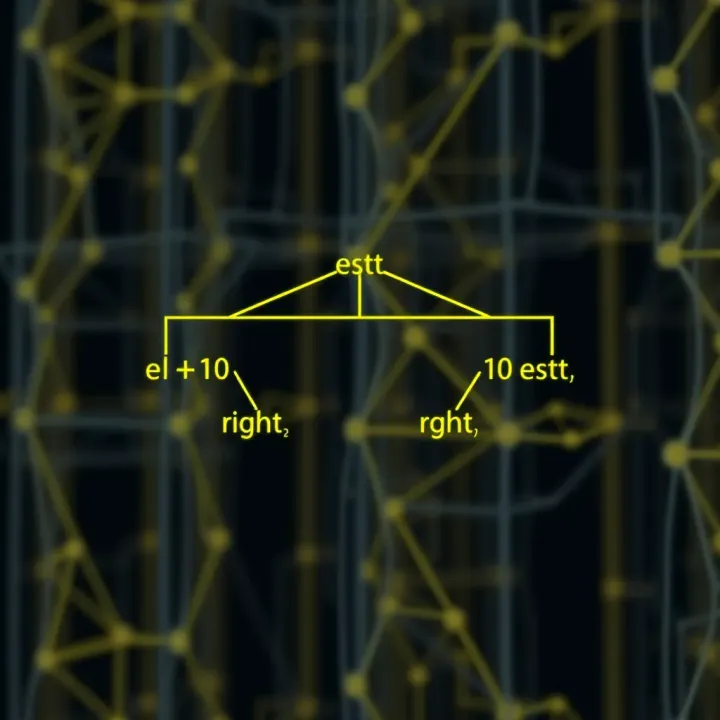
This guide focuses on practical implementation in C++ with clear source code examples. We’ll begin with designing a simple node structure using classes or structs, ensuring the tree holds essential data such as integer keys or more complex types relevant to financial records.
Key operations covered include:
Insertion: Adding new nodes while maintaining tree properties.
Traversal: Accessing nodes through preorder, inorder, and postorder methods, useful for extracting sorted data or performing aggregate calculations.
Efficiency tips: Optimising memory usage and recursive calls to avoid stack overflow in large datasets.
Mastering these aspects will equip you with the skills to handle complex data structuring problems encountered in financial software, trading algorithms, and analysis tools.
A step-by-step approach will guide you through crafting a clean, efficient binary tree implementation that is easy to integrate and adapt. This article suits programmers familiar with C++ basics who want to deepen their understanding of tree data structures in a practical context relevant to Pakistani markets and technology environments.
By focusing on clear, concise coding and real-world use cases, you will soon be able to apply binary trees for fast data searches, decision trees for trading strategies, and more.
Let's start by examining the node design and basic tree setup, building from the ground up.
Binary trees form the backbone of many computer science applications, including programming in C++. Understanding their structure and function helps you organise data efficiently and perform operations like searching, insertion, and deletion with ease. In software development, particularly in systems dealing with hierarchical data such as file systems or stock portfolios, binary trees streamline complex operations, improving speed and resource management.

Definition of a binary tree: A binary tree is a hierarchical data structure where each node has at most two children — referred to as the left and right child. This simple rule makes binary trees easy to implement and suitable for various programming tasks. Picture a family tree, but every person has only up to two children maximum. This contrasts with general trees where nodes could have many children.
Root, leaf, internal nodes: The root is the topmost node where the tree starts. It acts like the main entry point into the data structure. Leaf nodes are the end points — nodes without any children — much like distant relatives in a family tree without offspring. Internal nodes lie between the root and leaves, holding connections to other nodes. These terms help programmers visualise the tree’s flow and debug or optimise algorithms effectively.
Binary tree properties: Several properties govern binary trees, helping predict their behaviour and performance. For instance, the height of the tree affects how fast you can find a node — a taller tree means potentially longer searches. Also, a full binary tree has every node with either zero or two children, while a complete binary tree fills levels fully except possibly the last. Knowing these distinctions helps when selecting or designing trees for specific needs such as balanced trees for database indexing.
Advantages over other data structures: Compared to arrays or linked lists, binary trees allow quicker search, insert, and delete operations when structured properly. Unlike arrays, trees don't require continuous memory locations, which means you can manage large datasets more flexibly. For example, if you implement a binary search tree, operations can approach logarithmic time, a big gain especially when working with thousands or millions of records.
Common applications: Binary trees find regular use in databases, compilers, and networking algorithms. For traders and financial analysts, binary trees can underpin efficient data retrieval for real-time stock or asset tracking. In databases, indexes are often constructed as balanced trees to speed up queries. Beyond finance, they appear in organising file directories or even in parsing expressions in compilers, showing their versatility across industries.
Mastering binary trees gives you a practical edge in coding applications where quick data access and organisation are priorities.
Establishing a well-structured node class is the foundation of any binary tree implementation in C++. The node acts like a building block, holding data and links to its child nodes. This structure impacts how easily you can insert, traverse, or delete nodes later on.
Each node typically contains data and two pointers—one pointing to the left child and the other to the right. These pointers enable the tree’s branching, crucial for binary tree operations. For example, creating a class with int data, Node* left, and Node* right allows storing numeric values and linking nodes efficiently.
cpp class Node public: int data; Node* left; Node* right;
This simple class shows how data members and pointers come together. The `left` and `right` pointers start off as `nullptr`, indicating that the node has no children initially. This clear setup aids in recursive tree operations like insertion and traversal.

The constructor initializes these members neatly, which leads us to the next essential part.

#### Constructor and Destructor Basics

Constructors ensure that each node starts with the right initial values, avoiding uninitialized pointers which can cause crashes or bugs. In the example above, the constructor sets the node’s data and assigns `nullptr` to the pointers, preparing it for safe integration into the tree.

Destructors are equally important, particularly in complex trees where nodes are linked dynamically. While the default destructor might suffice in many cases, if your class manages dynamic memory inside (e.g., if nodes store pointers to other dynamic resources), defining a destructor to clean up prevents memory leaks.

### Memory Management Considerations

#### Dynamic Allocation with new/delete

Since trees grow during runtime, nodes are created dynamically using `new`. This flexibility allows the tree to expand as needed, unlike static arrays with fixed sizes. For example, when inserting a new value, you might write:

```cpp
Node* newNode = new Node(value);
This the creates a node on the heap, giving your program control over the tree size dynamically. However, whenever you allocate with new, you must release memory with delete once a node is no longer needed.
If nodes are deleted incorrectly or not at all, your program slowly wastes memory, which is critical especially in long-running applications like financial analysis tools or real-time data processing common in trading platforms.
Proper tree destruction involves writing a recursive function to delete all child nodes before deleting the parent. This careful order ensures memory is freed precisely and safely. Failing to manage this can cause subtle bugs that are hard to catch but can slow down your system or cause crashes under heavy loads.
Always pairing every
newwith adeleteis key to stable, efficient C++ programmes, particularly when building data structures like binary trees that grow dynamically.
In summary, designing the node class with clear data members and pointers, alongside careful memory management through constructors, destructors, and dynamic allocation ensures your binary tree is reliable, efficient, and ready for the complex operations programmers need in practical scenarios.
Implementing the core operations of a binary tree is fundamental to leveraging its power in real applications. These operations — insertion, traversal, and searching — form the backbone for organising, visiting, and querying the tree's data. Getting these methods right ensures efficient data handling, which is vital for tasks such as market data sorting, decision analysis, or hierarchical record storage common in finance and programming.
Insertion in an empty tree sets up the foundation. When the tree is empty, inserting a node simply means assigning the new node as the root. This step is straightforward but critical because it establishes the root, after which further insertions find their place relative to it. For example, when initialising a portfolio tree, your first asset node will form the root, which sets the base for subsequent nodes.
Placing nodes recursively involves comparing the value to be inserted with the current node to decide if it goes to the left or right child. This recursive approach ensures data remains ordered — smaller values on the left, larger on the right, much like keeping financial records sorted by date or amount. This method efficiently guides the new node to its rightful place, preserving the binary search tree property.
In-order traversal with code visits nodes in ascending order by recursively traversing the left subtree, accessing the current node, then the right subtree. This traversal is especially useful when you need sorted data, like listing investments from smallest to largest value. A sample code snippet looks like:
cpp void inorderTraversal(Node* root) if (!root) return; inorderTraversal(root->left); std::cout root->data " "; inorderTraversal(root->right);
**Pre-order traversal implementation** follows the pattern: visit the current node first, then the left and right subtrees. This is helpful when you want to copy the structure or save the tree because it captures the root before its branches — similar to recording a workflow sequence step-by-step.

**Post-order traversal approach** visits left and right children before the parent node. This suits situations like freeing memory or evaluating expressions stored in the tree, where leaves are processed before roots. It reflects reviewing trade positions after evaluating associated indicators.

### Searching for a Value in the Tree

**Recursive search method** checks the current node's value and decides whether to continue searching left or right based on comparison. This method exploits the sorted nature of the tree to quickly zoom in on target data. For example, searching for a specific stock price or transaction ID becomes faster than scanning a plain list.

**Efficiency considerations** matter because recursive search runs in O(h) time, where h is the tree's height. A balanced tree minimises height, ensuring quick lookups, while an unbalanced tree may degrade to linear search time. Keeping the tree balanced or restructuring when necessary helps maintain performance, crucial when handling large financial datasets in real-time.

> Mastering these core binary tree operations ensures your C++ implementations are both efficient and reliable, acting as a solid base for advanced data handling in your projects.

## Practical Tips for Coding and Testing

When implementing a binary tree in C++, practical coding and testing tips can save you a lot of headaches later. Writing code is only half the battle; ensuring it runs reliably with no memory issues or logic bugs requires deliberate care. Testing your binary tree thoroughly helps catch problems early and confirms your tree behaves as expected across different scenarios.

### Debugging Common Issues

**Handling null pointers** is critical when working with binary trees. Since every node links to its left and right child nodes, which can be `nullptr` when absent, dereferencing a null pointer causes a program crash. To avoid this, always check if a pointer is null before accessing its content. For example, when writing traversal functions, ensure the node pointer isn't null before calling recursive functions on its children. This simple guard helps prevent segmentation faults during traversal or insertion.

**Detecting infinite recursion** is another key debugging step. Binary tree operations like insertion and traversal often use recursion, but mistakes such as failing to update node pointers or improperly setting base cases can cause the recursion to loop endlessly. For instance, if the insertion function always recurses left without checking conditions, it never stops and eventually causes a stack overflow. To detect this, add print statements or use a debugger to trace recursive calls. Implementing clear base cases—like returning immediately when a node pointer is null—will help prevent infinite recursion.

### Writing Test Cases for Your Tree

**Sample inputs and expected outputs** are necessary to verify your binary tree’s correctness. For example, inserting nodes with values 10, 5, and 15 should place nodes properly; traversing the tree in-order should output values in ascending order (5, 10, 15). Writing test functions that insert such known values and compare traversal outputs against expected results ensures that both insertion and traversal methods are working correctly. These tests help you catch mistakes like incorrect node placement or flawed traversal logic early.

**Edge cases to consider** are often overlooked but vital. Trees with only one node, inserting duplicate values, or full left/right skewed trees should be tested. For example, inserting into an initially empty tree or deleting nodes with one or no children tests your code’s robustness. Handling these cases prevents unexpected behaviour or crashes when real data doesn’t fit ideal conditions. Testing with minimum, maximum, or boundary values further ensures your implementation can handle real-world inputs.

> Careful debugging and comprehensive testing form the backbone of a reliable binary tree implementation. Taking time with these steps helps you build software that performs well and is maintainable.


## Extending the Binary Tree Implementation

Once you have the basic binary tree set up with insertion and traversal, extending it becomes essential for practical use. Adding features like node deletion and balancing improves performance and usability, especially when working with dynamic datasets such as financial transactions or market data stored in trees for fast access.

### Adding Node Deletion

Deleting nodes from a binary tree is crucial when data changes or becomes obsolete. Starting with **deleting leaf nodes** simplifies the process since these nodes have no children to worry about. Removing a leaf involves simply disconnecting it from its parent and freeing its memory, which prevents dangling pointers and memory waste. In trading applications, discarding outdated price points might be handled this way to keep the tree up-to-date.

More challenging is **removing nodes with one or two children**. When a node with a single child is deleted, you must link that child directly to the deleted node's parent to maintain tree structure. For nodes with two children, the common approach is to replace the node with either its inorder predecessor or successor, then remove that replacement node which will now have at most one child. This ensures the tree remains ordered and the search property holds. Such deletion logic is vital in real-time systems where decisions depend on accurate, current data.

### Balancing the Binary Tree

**Balancing** means arranging nodes so that the height difference between any two subtrees remains minimal. Unbalanced trees can degrade performance, turning operations like search and insertion from average O(log n) to worst-case O(n), especially in ordered data scenarios such as stock prices or index values.

Knowing **when to balance** a binary tree depends on the use case. If the tree experiences many insertions and deletions, leading to skewed branches, balancing becomes necessary. On the other hand, if data is relatively static, balancing might be less urgent. Algorithms like AVL or Red-Black trees handle balancing automatically, but understanding this helps when implementing custom solutions or performance tuning in trading platforms or analytical tools.

> Proper node deletion and tree balancing are key for efficient binary tree management. They prevent performance bottlenecks and ensure data integrity in dynamic systems.

In the context of C++ implementation, extending your binary tree with these features equips your application to handle realistic scenarios involving frequent data updates, ensuring your binary tree remains a reliable and efficient data structure.Explore binary search in C++ through detailed explanations, clean code, iterative & recursive methods, plus tips on common mistakes ✓💻🔍

🧐 Explore how binary search works & learn to implement it efficiently in C++ with iterative & recursive methods. Tips for developers in Pakistan and beyond! 🇵🇰💻
Learn how to convert decimal numbers to binary using C++ with clear, practical code examples and step-by-step explanations 📊💻. Perfect for Pakistani coders.

🔍 Learn how to implement binary search in C++. Explore clear code steps, compare search methods, and get tips for optimizing and debugging your algorithms efficiently.
Based on 14 reviews