
Choosing the Best Indicator for Forex Trading
Discover key forex trading indicators 📈 to spot trends, price moves, and market signals. Learn which tool fits your style for smarter trading decisions.
Edited By
Henry Morgan
Forex trading has grown increasingly popular in Pakistan, especially among young investors looking to diversify their portfolios. But the question on many minds is whether this form of trading complies with Islamic law, or Shariah, which is a serious concern for devout Muslims. Understanding whether forex trading is halal or haram requires a closer look at Islamic finance principles and how forex markets operate.
To start, basic Islamic finance rules discourage practices like riba (interest) and gharar (excessive uncertainty). Forex trading involves currency pairs, where buying and selling happen rapidly, sometimes within seconds. This kind of speculation can raise concerns among scholars because it may involve gambling-like elements or interest through swap charges.
Traders need to examine if their forex activities involve prohibited elements under Shariah, such as interest or excessive risk, to ensure their dealings remain halal.
Islamic law emphasises transactions based on fairness, transparency, and real economic activity. For example, if a trader engages in spot forex trading—where currency exchanges occur immediately without delaying payment or delivery—it is generally considered permissible by many scholars. However, if the trade involves deferred payment, or leverage with interest, it is usually seen as haram.
Pakistani traders should also consider brokers that offer Shariah-compliant accounts. These accounts avoid interest on overnight positions (called swaps) and follow trading rules that minimise uncertainty. Several local and international brokers now provide such options, but it is essential to verify their authenticity.
Understanding these Islamic finance principles helps traders make informed decisions aligned with their faith. This clarity is particularly important in Pakistan's socio-economic context, where many Muslim investors wish to grow their wealth while staying true to Islamic ethics.
Key takeaways:
Forex trading may be halal if it avoids riba, gharar, and gambling aspects.
Spot trading with immediate currency exchange is preferred.
Interest-bearing swaps or leveraged trades usually render trading haram.
Choosing Shariah-compliant brokers supports halal trading practices.
With these points in mind, investors can better navigate the complex world of forex trading without compromising their religious beliefs.
Understanding the basic principles of Islamic finance is essential for evaluating whether forex trading fits into the framework of Shariah compliance. These principles serve as a guide for Muslims to engage in financial activities without violating Islamic law. Three main concepts are particularly relevant here: riba (interest), gharar (excessive uncertainty), and halal trading practices. Each of these has a direct impact on how forex trading should be approached according to Islamic teachings.
Riba literally means 'increase' or 'excess', but in Islamic finance, it refers specifically to the prohibition of interest on loans or debt. Islam strictly forbids riba because it leads to unfair gains without effort or risk. This principle promotes justice and equity in financial dealings, avoiding exploitation.
In the context of trading, riba manifests when interest is charged or gained directly in transactions. For example, in forex trading, if a trader uses leveraged accounts where overnight swaps incur or pay interest, this may involve riba. Traders must therefore be careful to avoid transactions where interest forms part of profit or cost, as this contradicts Islamic finance rules.
Gharar refers to excessive uncertainty or ambiguity in contracts and transactions. Islam encourages clarity and transparency to prevent unfairness caused by unclear terms or speculative bets. High gharar situations typically involve unknown outcomes, incomplete information, or risky speculation.
In financial markets, gharar is common in futures contracts or when one contracts without knowing the actual possession or price at the time of exchange. For example, some forex contracts that involve delayed settlement or ambiguous delivery can be regarded as carrying gharar because they resemble gambling more than genuine trade.
Islam permits trading as long as specific conditions are met. These include the actual possession and delivery of goods or currency at the time of the contract, transparency in terms, and avoiding any prohibited elements like fraud, deception, or uncertainty.
For trading forex to be halal, the currency exchange should occur immediately (spot trading), and both parties must fully own what they exchange at once. Moreover, the trade should not involve interest or excessive speculation. Ethical practices also require that traders avoid market manipulation or deceit, ensuring fairness to all involved.
Clear and honest transactions with immediate exchange, free from interest and excessive risk, align closely with Islamic finance principles and help ensure forex trading remains within halal boundaries.
By understanding and applying these basic principles, Pakistani traders can better decide how to approach forex trading in accordance with their faith, minimising risks of engaging in haram practices.
Forex trading involves buying and selling currencies from different countries. It’s a 24-hour market where currency values fluctuate based on economic news, geopolitical events, and market sentiment. This section explains the key concepts behind forex trading, helping readers understand how trades are executed and why this market appeals to many, including Pakistani investors.
Forex trading always involves pairs of currencies, such as USD/PKR or EUR/USD. The first currency in the pair is the base currency, and the second is the quote currency. The exchange rate tells you how much of the quote currency is needed to buy one unit of the base currency. For example, if USD/PKR is 280, it means 1 US dollar equals 280 Pakistani rupees. Traders speculate on whether the base currency will strengthen or weaken against the quote currency.
This system lets traders profit from movements in exchange rates rather than owning the actual currencies. Say you expect the US dollar to strengthen against the rupee; you could buy USD/PKR early and sell it later at a higher price. This practical setup drives most forex decisions.
Leverage allows traders to control larger positions with a smaller amount of money, known as the margin. For example, a leverage of 1:100 means you can trade 100 times the amount you deposit. If you put in Rs 10,000 as margin, you control Rs 1,000,000 of currency.
While leverage can boost profits, it also increases risk. Small price changes can cause big losses, which is why understanding and managing leverage is vital. Many Pakistani brokers offer leverage, but it’s important for traders to use it cautiously and avoid overexposure.
Pakistani traders often use brokers regulated in countries like Cyprus, Dubai, or the UK, as Pakistan itself lacks strict forex regulations. Some of the popular brokers include XM, FXTM, and HotForex. These brokers offer services tailored for Pakistani clients, such as deposit methods in PKR and Urdu or English customer support.
Because FBR and SBP do not regulate forex trading directly, the onus falls on traders to choose trustworthy brokers. Regulation helps ensure fair trading conditions, transparency, and prompt withdrawals. Checking broker licences and customer reviews is a practical step before depositing funds.
MetaTrader 4 (MT4) and MetaTrader 5 (MT5) are the leading platforms used by Pakistani forex traders. They offer user-friendly interfaces, real-time market data, and tools for technical analysis. Traders can automate strategies using Expert Advisors (EAs), place various order types, and monitor trades on mobiles or PCs.
These apps provide flexibility, allowing traders to react promptly to market changes despite loadshedding or internet limitations. Their widespread adoption also means large online communities exist, where Pakistani traders share insights and tips.
Understanding these mechanics, along with platform features, helps traders make informed decisions and manage risks in forex trading aligned with their financial goals.
Evaluating forex trading within Islamic jurisprudence matters because it helps clarify whether this financial activity fits the ethical and legal framework set by Shariah law. For Pakistani Muslims, understanding these rulings protects them from unknowingly engaging in haram (forbidden) practices while seeking investment opportunities. This evaluation hinges on how forex trading aligns with principles like prohibition of riba (interest), gharar (excessive uncertainty), and fair contracting.
Spot trading with immediate exchange refers to transactions where currencies are exchanged on the spot with no delay in settlement. Islamic scholars who view forex trading as halal often point to spot trading because it mirrors traditional currency exchange where ownership transfers instantly. For example, when you exchange US dollars for Pakistani rupees directly, this shows possession changes hands immediately, complying with Shariah conditions.
This immediacy avoids the issue of gharar, reducing uncertainty in the contract. Practically, most forex trades conducted within the same trading session qualify as spot trades, which supports their permissibility under Islamic law.
Compliance with Shariah contracts means the trading agreements meet specific requirements: no interest, no ambiguity, and full possession during the exchange. In this context, forex contracts must avoid elements like deferred payments that involve riba, or unclear terms that lead to gharar.
Many Islamic finance experts argue that if forex trading uses contracts structured according to Shariah, such as Salam (advance payment for a known commodity) or barter-like exchanges completed on the spot, it can be halal. Pakistani traders who use Islamic forex accounts, which avoid swap or rollover interest, demonstrate this compliance practically.
Use of interest-based leverage is a major hurdle in declaring forex trading halal. Most conventional brokers offer leverage by lending funds with interest, which directly conflicts with the Shariah ban on riba. This means traders who use leverage pay or receive interest, making their transactions haram.
Despite this, some brokers provide swap-free accounts with no rollover interest, aimed at Muslim traders. However, critics argue that the overall system still links to interest-based mechanisms, making such trading problematic from a strict Islamic viewpoint.
Speculation and gambling concerns relate to how forex markets function. A lot of forex trading, especially short-term and high-frequency trades, resembles speculation where traders bet on currency price movements without real underlying economic activity.
Islamic teachings discourage gambling (maysir), which involves excessive uncertainty and chance. If forex trading is primarily speculative, without genuine exchange or productive purpose, many scholars consider it haram. For Pakistani investors, this raises caution against risky, high-leverage trading that resembles gambling more than investment.
Spot versus future contracts makes a difference in Islamic rulings. Spot contracts imply immediate exchange and possession, typically within two business days. Future contracts involve agreeing now but settling later, shifting ownership and payment dates.
Islamic scholars generally disapprove of future contracts because they introduce gharar and defer possession, violating the requirement for immediate exchange in currency swaps. Traders using future contracts or derivatives in forex face stricter scrutiny regarding permissibility.
Importance of actual possession and delivery directly ties to the principle that one can only sell what they own and possess. In forex trading, this means the trader must have actual ownership of the currency being sold at the time of trade.
If a trader sells currency they don’t own yet or relies on delayed delivery, the contract may be invalid according to Shariah. This is crucial for Pakistani traders to understand because some online platforms allow trades without actual currency possession, which may render the practice haram.
Immediate possession, clear contracts, and absence of interest or gambling elements are the pillars Shariah scholars focus on when evaluating forex trading. Pakistani Muslims must be vigilant about these details before participating in forex markets.
By examining forex trading through these jurisprudential lenses, traders can better navigate Islamic financial principles while engaging in currency markets.
Understanding the different opinions among Islamic scholars and fatwa councils is critical when considering whether forex trading is halal or haram. These views shape the practical guidelines followed by Pakistani Muslims and influence the financial decisions of traders and investors. Given the complex nature of forex trading and its interaction with Islamic principles like riba and gharar, scholars often interpret permissibility differently based on contract conditions and trading methods.
Many conservative scholars categorically reject forex trading, especially when it involves interest-based leverage or speculative practices resembling gambling. Such rulings are common in Pakistan and other Muslim-majority countries where scholars emphasise avoiding gharar (excessive uncertainty) and riba (interest). For example, if a trader uses margin accounts with overnight rollover fees (swap), these interest charges violate clear Islamic prohibitions. Some Pakistani religious authorities warn that such trading bears high risk and encourages speculation, which is seen as unethical and akin to gambling.
This conservative stance often discourages ordinary Muslims from engaging in forex markets without strict oversight, viewing most commercial forex transactions as falling into doubtful territory. The rejection is grounded in preserving financial dealings free from forbidden elements, prioritising certainty and fairness.
Conversely, a number of scholars take a more lenient approach, permitting forex trading under specific conditions. The key conditions include executing spot transactions with immediate settlement and strictly avoiding interest-based transactions. These conditions aim to ensure that trading resembles genuine currency exchange rather than speculative bets. Additionally, using Islamic forex accounts that do not charge swaps is recommended.
Such opinions recognise forex trading as a modern financial activity that can comply with Shariah, given proper safeguards. This view encourages educated and cautious trading, with transparent dealings and avoidance of excessive risk. In Pakistan, some Islamic finance experts promote these regulated methods, highlighting opportunities for Muslims to participate in forex markets ethically.
Several Pakistani religious bodies including notable fatwa councils have issued guidance on forex trading. The general consensus leans towards caution, endorsing forex trading only if it strictly complies with Islamic financial rules. Fatwas often require immediate currency exchange without deferred payments and prohibit trading on leverage with interest charges.
For instance, prominent councils have advised that Muslims should seek Islamic forex accounts from brokers able to provide swap-free options. They also warn against excessive speculation and urge proper knowledge before trading. These rulings provide practical frameworks for responsible forex trading aligned with Islamic values, offering Pakistani traders clear markers on what to avoid and how to proceed safely.
These differing views highlight the importance of consulting qualified scholars and understanding contract specifics before engaging in forex trading, ensuring financial activities remain within the bounds of Islamic law while managing real-world opportunities and risks effectively.
By recognising these diverse opinions, Pakistani investors and traders can better navigate the challenges forex trading poses for Shariah compliance and make informed decisions suited to their ethical and financial goals.
Pakistani Muslims interested in forex trading must follow clear guidelines to ensure their activities align with Islamic principles. This is especially relevant given the varying opinions on forex trading’s permissibility. Careful selection of brokers, cautious trading strategies, and exploring alternative halal investments can help avoid religious doubts and financial risks.
Traditional forex trading often involves rollover or swap charges when positions are held overnight. These charges are technically interest-based, which Islamic finance forbids as riba. Pakistani traders should actively avoid such charges by choosing brokers that offer swap-free accounts. For example, brokers catering to Muslim traders provide accounts where no interest is charged on overnight positions, thus helping traders stay within halal boundaries.
Islamic forex accounts, sometimes called swap-free accounts, follow strict guidelines to prevent earning or paying interest. They are structured to comply with Shariah principles by removing swap fees and sometimes additional commissions. Pakistani brokers and international platforms serving Pakistani clients now commonly offer these accounts. Using an Islamic forex account not only helps traders comply with their faith but also simplifies risk management by eliminating unexpected interest-related costs.
Forex trading is often associated with high volatility and short-term speculation, which borders on gambling. Islamic teachings caution against gambling because it involves undue risk and uncertainty (gharar). Pakistani traders should focus on well-researched trades based on fundamental analysis rather than hit-and-miss speculation. Keeping speculation in check reduces financial hazards and keeps trading ethically acceptable.
Successful forex trading requires thorough knowledge, discipline, and continuous learning. Pakistani investors should invest time in understanding market trends, currency factors, and trading tools before risking capital. Caution is also essential to avoid pitfalls like scams or unregulated brokers. Adequate preparation not only enhances profitability but ensures informed, responsible trading aligned with Islamic ethics.
For Muslims hesitant about forex trading’s permissibility, Islamic banking offers viable investment alternatives. Products like Mudarabah (profit-sharing) and Sukuk (Islamic bonds) follow Shariah rules strictly and are available through major Pakistani banks. These products provide steady returns without interest, making them a safer, halal option for Muslim investors.
Equity investment in companies compliant with Islamic law is another popular alternative. The Pakistan Stock Exchange (PSX) features indices like the KMI-30, which includes Shariah-approved companies only. Investing in such stocks provides exposure to growth opportunities while avoiding businesses involved in prohibited sectors such as alcohol, gambling, or interest-based financial services. Pakistani Muslims can thus participate in wealth-building ethically and confidently.
Selecting proper brokers, practising ethical trading, and considering Islamic investment options are key to navigating forex trading within Islamic limits in Pakistan. Thoughtful adherence to these guidelines helps maintain religious compliance while managing financial goals effectively.
Discover key forex trading indicators 📈 to spot trends, price moves, and market signals. Learn which tool fits your style for smarter trading decisions.
Explore how to pick the best Forex trading platform in Pakistan 💹. Learn about key features, security, regulations, and tips for beginners to trade smart.
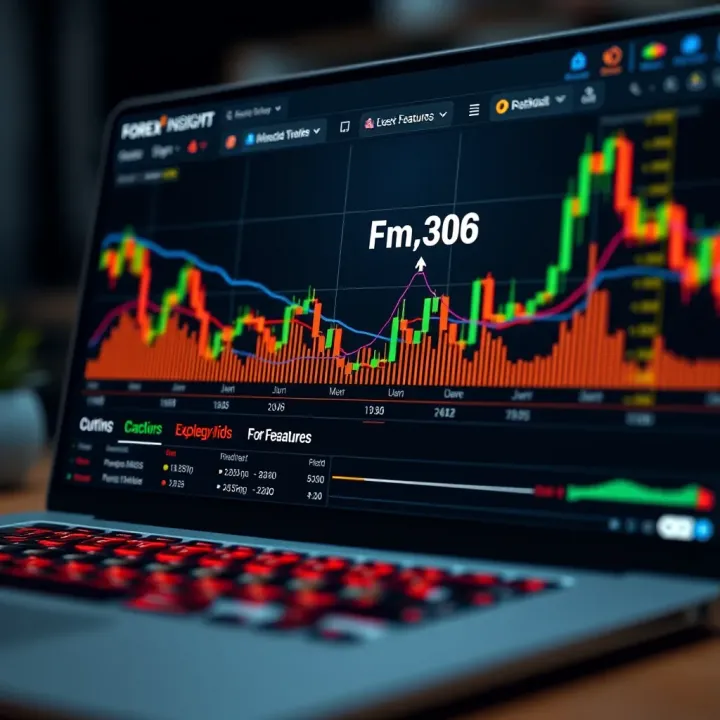
Find the ideal Forex trading platform in Pakistan 🇵🇰 with practical tips on features, security, and top choices tailored for every trader's style 📈💡
Find the best forex broker in Pakistan 🇵🇰 with our guide covering regulations, platforms, fees, local payments, and expert tips for smarter trading.
Based on 11 reviews