

Benefits of Risk Management for Pakistani Businesses
📊 Discover how risk management in Pakistan businesses cuts losses, boosts smart decisions, saves costs, ensures compliance, and builds a stronger reputation.
Edited By
Benjamin Collins
Risk management in banks is about identifying, analysing, and handling potential threats that can affect a bank’s financial health and reputation. These risks range from credit defaults and market volatility to operational errors and compliance failures. In Pakistan, banks face unique challenges due to a fluctuating economic environment, regulatory changes, and geopolitical factors.
Effective risk management ensures that banks hold enough capital to absorb losses and stay solvent during tough times. For example, if a major borrower defaults, the bank’s credit risk controls should already have limited exposure to prevent a devastating impact. Without such controls, a bank might fail its customers and investors, leading to systemic risks across the industry.
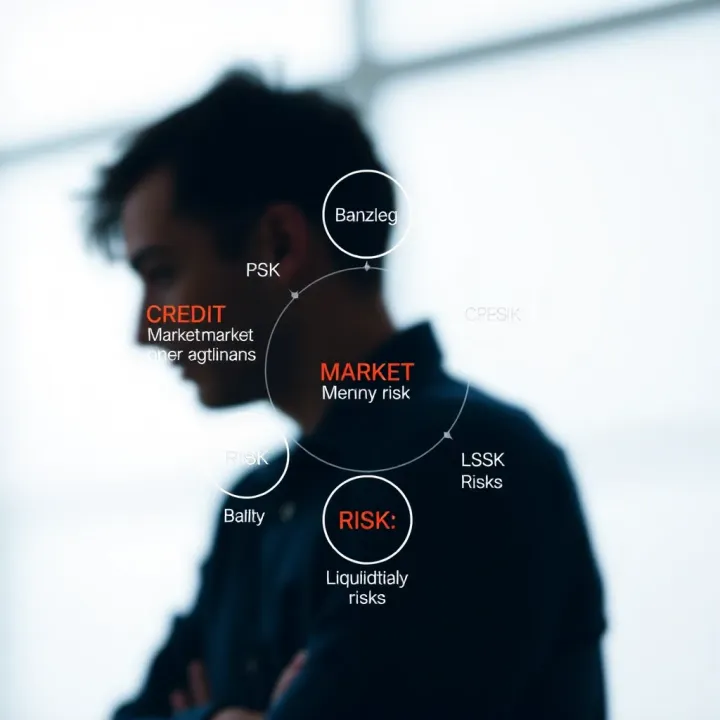
Banks use several types of risk assessment methods, such as stress testing and scenario analysis. Stress testing simulates extreme economic situations—like sudden interest rate hikes or currency depreciation—to see how well the bank can cope. Meanwhile, scenario analysis helps anticipate possible events by considering current market trends and geopolitical tensions, especially relevant in Pakistan's context where currency swings and regional instability can affect portfolios.
Regulatory bodies like the State Bank of Pakistan (SBP) mandate strict risk management frameworks. Banks must comply with Basel III guidelines, which outline capital adequacy, risk exposure limits, and liquidity requirements. This watchdog role is vital in keeping the banking sector resilient and trustworthy.
Practical tools include credit scoring models tailored to local borrower profiles, market risk monitoring software, and automated compliance systems that track regulatory changes. For instance, Pakistani banks have increasingly adopted digital platforms for real-time monitoring of foreign exchange risks amid rupee fluctuations.
Managing risk isn't just about caution; it's about preparing the bank to tackle uncertainties head-on, ensuring stability for investors, depositors, and the economy at large.
To sum up, risk management is a balance between safeguarding assets and seizing opportunities. Banks in Pakistan must continuously update their strategies, given the fast-moving economic landscape and regulatory expectations. Staying vigilant helps maintain confidence and secures long-term growth in a competitive market.
Risk management in banks refers to the process of identifying, assessing, and controlling risks that could negatively impact the financial health and operations of the institution. In simple terms, banks use risk management to protect themselves against losses caused by borrowers defaulting, market fluctuations, operational failures, or liquidity shortages. For example, a bank might evaluate the creditworthiness of a customer before offering a loan to minimise the chance of non-payment. This process involves deploying both quantitative tools like stress testing and qualitative measures like expert judgment to understand the potential threats fully.
Effective risk management is essential because the banking sector deals directly with public savings and finances the economy's development. Without proper risk controls, banks can face severe financial losses that unsettle the entire financial system. Consider the 2008 global financial crisis, where many banks suffered huge setbacks due to poor risk evaluation and inadequate oversight. In Pakistan, maintaining risk discipline is equally critical as banks operate under tight regulations from the State Bank of Pakistan (SBP) and have to navigate challenges like currency volatility and economic uncertainty.
Proper risk management helps banks maintain trust and stability by ensuring they have enough capital reserves against unexpected losses. It also prepares them to handle external shocks like sudden interest rate changes or political unrest. On top of that, it keeps banks compliant with international guidelines like Basel Accords, which promotes global banking stability. For investors and financial analysts, understanding how a bank manages risk offers insights into the institution's strength and long-term viability.
Banks that adopt a strong risk management framework can weather crises better, maintain customer confidence, and continue supporting economic growth even during tough times.
In summary, understanding risk management isn't just about managing loss but about building resilience and trust in the banking sector. This knowledge enables stakeholders to make informed decisions and supports the overall health of Pakistan's financial system.
Banks operate in a complex environment where various risks can affect their stability and profitability. Understanding these risks helps financial professionals and investors make better decisions, while also assisting institutions in crafting effective risk management strategies. These risks are not isolated; they often influence each other, making a comprehensive approach necessary.
Credit risk arises when borrowers fail to repay loans or meet contractual obligations. This is the most significant risk for banks, as defaults can directly impact their balance sheets. For example, in Pakistan, during economic slowdowns, sectors like textiles or agriculture may struggle to service debt, increasing non-performing loans. To manage credit risk, banks closely evaluate borrower profiles, demand collaterals, and monitor repayment behaviour. A surge in credit risk can force banks to increase provisioning, which reduces profits and hampers lending capacity.
Market risk stems from changes in market variables such as interest rates and foreign exchange rates. Pakistani banks, which often have exposure to foreign currency-denominated assets or liabilities, can suffer losses if the rupee weakens sharply. Similarly, unexpected hikes in the State Bank of Pakistan's policy rate can devalue fixed-rate securities or increase borrowing costs. Market risk management involves hedging through derivatives, diversifying portfolios, and continuous monitoring of market movements to cushion against volatility.
Operational risk covers failures in internal processes, technology glitches, or human errors. In today's digital banking landscape, cybersecurity breaches are a critical concern. Cases of hacking attempts on Pakistan’s digital wallets like JazzCash or unauthorized fund transfers through online banking highlight this threat. Banks must maintain strong internal controls, staff training, and invest in advanced security solutions to reduce operational risk. Failure to do so not only leads to financial loss but also damages customer trust.
Liquidity risk occurs when a bank cannot meet its short-term financial obligations due to insufficient cash or liquid assets. This can happen when deposit withdrawals spike unexpectedly or when access to interbank funding dries up. For instance, sudden withdrawals during a political crisis or a flash loan run can strain Pakistani banks’ liquidity. To mitigate this, banks maintain liquidity buffers, arrange backup credit lines, and regularly stress test their cash flow scenarios to ensure they can meet urgent demands.
Managing these risks effectively safeguards banks from shocks and helps maintain financial stability, which is vital not only for the institutions themselves but also for the economy at large.
By recognising the distinct yet interconnected risks, traders, investors, and analysts can better assess the bank’s health and resilience. Pakistani banks continue to strengthen their frameworks to address these evolving risks wisely and keep the financial system trustworthy.

Effective risk management in banks starts with recognising potential risks at an early stage and evaluating their impact accurately. This helps financial institutions act proactively, limiting losses and improving decision-making. The processes and techniques for risk identification and assessment form the backbone of sound risk management systems, especially in Pakistan’s evolving banking sector.
Early warning indicators (EWIs) serve as signals pointing to emerging risks before they spiral out of control. For instance, a sudden increase in non-performing loans (NPLs) in a bank’s credit portfolio might warn of credit risk accumulation. Monitoring market volatility indices can alert banks to possible market risk due to currency fluctuations or interest rate changes.
Risk mapping involves visually representing different risk events, their sources, and potential impact on various business units. A Pakistani bank might map operational risks related to branch security or technology infrastructure, identifying which locations or systems are more vulnerable. This helps in prioritising mitigation efforts and allocating resources efficiently.
Stress testing examines how a bank’s portfolio would behave under extreme but plausible scenarios. For example, a Pakistani bank might simulate a sharp depreciation in the rupee combined with rising interest rates and worsening economic growth, evaluating its effects on liquidity and solvency.
This technique identifies vulnerabilities that aren’t obvious during normal market conditions. Stress testing is mandatory under Basel III guidelines and helps banks prepare contingency plans, such as increasing capital buffers or adjusting lending policies before a crisis hits.
Scenario analysis explores the impact of multiple, detailed situations that could affect a bank’s financial health. Unlike stress testing’s focus on worst-case extremes, scenarios can also be moderate or positive, helping banks assess a range of outcomes.
A practical example would be evaluating how a sudden government policy change on import tariffs might affect corporate clients’ credit risk in Pakistan. By considering different scenarios—from mild disruptions to prolonged economic slowdown—banks can develop flexible risk management strategies.
Identifying and analysing risks using these processes improves a bank's readiness, ensures regulatory compliance, and ultimately protects the financial system against shocks.
In summary, Pakistani banks benefit greatly from combining early warning systems with robust assessment tools. This dual approach strengthens their ability to foresee threats, adapt swiftly, and safeguard assets even in uncertain economic times.
Risk management in Pakistani banks operates within a strict regulatory framework designed to maintain financial stability and protect depositors. This framework sets clear rules and guidelines, ensuring banks manage risks prudently and comply with both local and international financial standards. The regulatory structure also creates an environment that discourages reckless behaviour that could threaten individual banks or the wider financial system.
The State Bank of Pakistan (SBP) plays a central role in supervising and guiding banks to manage risk effectively. It issues risk management regulations, monitors banks' adherence, and carries out onsite and offsite inspections to assess risk controls. For example, SBP mandates banks to maintain a minimum capital adequacy ratio (CAR) to cover unexpected losses. Banks failing to meet these requirements face penalties or restrictions, pushing them to manage credit, market, and operational risks cautiously.
Beyond capital rules, SBP requires banks to establish dedicated risk management teams and frameworks, focusing on early detection and mitigation. Its comprehensive risk assessment manual helps banks implement processes tailored to their size and risk profile. This oversight boosts confidence among investors and customers that their funds are secure.
Pakistani banks also align with international standards known as Basel Accords. These accords, developed by the Basel Committee on Banking Supervision, offer a blueprint for risk measurement and mitigation globally. Pakistan has adopted Basel II and Basel III frameworks progressively, incorporating local modifications to suit Pakistan’s banking environment.
Basel III, for example, introduces stricter capital requirements and liquidity management rules — crucial after the 2008 global financial crisis exposed weaknesses in risk supervision. Pakistani banks now calculate risk-weighted assets carefully to determine capital buffers, safeguarding against credit risks and market shocks.
Local guidelines complement these international standards by addressing risks unique to Pakistan’s economy, like currency volatility or political instability. Banks follow contingency funding plans and regularly report to SBP on key liquidity indicators and risk exposures.
The combined influence of SBP’s supervision and adherence to Basel Accords ensures that Pakistani banks maintain resilience, protecting Pakistan’s financial sector from shocks while supporting economic growth.
In summary, the regulatory framework in Pakistan is a mix of global best practices and locally relevant rules. It demands transparency, accountability, and proactive risk control, which are essential for a robust banking system serving both investors and the wider public.
Banks must use effective strategies and instruments to manage the variety of risks they face daily. These approaches not only protect their financial health but also help maintain customer confidence and regulatory compliance. In Pakistan’s banking sector, practical risk management tools are crucial due to the economic volatility, exchange rate fluctuations, and evolving regulatory standards.
Collateral management involves securing loan repayments by holding assets pledged as security. This reduces potential losses if borrowers default. For example, a bank lending Rs 10 million to a business may require machinery or property as collateral. If the borrower fails to repay, the bank can recover its funds by selling the collateral. Proper collateral management includes regular asset valuation and legal checks to ensure the bank's rights are protected.
This technique is especially relevant in Pakistan, where credit risk remains high due to economic unpredictability. Effective collateral management limits the bank’s exposure to non-performing loans and supports overall portfolio quality.
Credit insurance protects banks against losses from borrowers who cannot repay loans, shifting some default risk to the insurer. This is particularly beneficial for banks financing small and medium enterprises (SMEs) which are more vulnerable to market shocks. For instance, a bank in Karachi offering working capital loans to exporters may use credit insurance to cover risks related to foreign buyer default or political instability abroad.
By securing credit insurance, banks improve their risk profiles, enabling them to offer more competitive lending terms while safeguarding capital.
Banks manage market risk—risks arising from interest rate and currency changes—mainly through hedging and diversification. Hedging involves using financial instruments like futures, options, or swaps to offset potential losses. For example, a Pakistani bank with foreign currency exposure may enter into forward contracts to lock exchange rates and avoid losses during PKR depreciation.
Diversification spreads investments across various asset classes and sectors to reduce the impact of adverse market movements. Together, these tactics keep banks stable during volatile market conditions.
Operational risk includes failures in internal processes or systems, which can lead to financial loss. Banks counter this by implementing strict internal controls, staff training, and business continuity plans. Cybersecurity forms a critical element, as cyberattacks remain a growing threat. Pakistani banks invest in firewalls, intrusion detection systems, and regular audits to prevent breaches and protect customer data.
Liquidity buffers ensure banks can meet short-term obligations during sudden cash outflows. Maintaining adequate reserves in liquid assets like government securities helps banks avoid forced asset sales at loss. The State Bank of Pakistan mandates minimum liquidity ratios to keep the banking system resilient. For example, a bank managing its liquidity carefully can operate smoothly even when facing unexpected withdrawal surges.
Robust risk management strategies make banks stronger against shocks and support Pakistan’s financial stability. By combining careful credit risk mitigation, market risk tactics, operational safeguards, and liquidity management, banks can better protect stakeholders and sustain growth.
Implementing effective risk management in banks faces real hurdles, especially in Pakistan’s evolving financial landscape. These challenges impact how banks identify, assess, and control risks, affecting their stability and profitability. Addressing these issues requires a practical approach with awareness of local economic conditions and regulatory expectations.
Technology gaps remain a major stumbling block for many Pakistani banks. Some institutions still rely on outdated legacy systems that cannot efficiently handle complex risk data or support real-time monitoring. For example, smaller regional banks often lack advanced data analytics tools necessary for detailed credit risk evaluation or fraud detection.
In addition, collecting accurate and timely data is a challenge. Incomplete borrower histories or irregular financial reporting from corporate clients make it difficult to calculate risk exposure accurately. Banks must invest in better IT infrastructure and data integration while training staff to use these tools properly. Without this, risk models may be unreliable, leading to poor decision-making.
The regulatory environment under the State Bank of Pakistan (SBP) and global Basel standards keeps evolving. Banks must quickly align their risk management practices with new guidelines, such as changes in capital adequacy requirements or cybersecurity standards. For instance, SBP’s recent focus on anti-money laundering (AML) and combating financing of terrorism (CFT) demands strict compliance procedures and continuous updates.
Smaller banks and new entrants often struggle with the financial and technical burden of keeping up. Failure to adapt can result in penalties, reputational damage, or restricted operations. Therefore, banks need dedicated compliance teams and flexible risk frameworks that can adjust swiftly to regulatory amendments.
Pakistan’s economy experiences frequent shifts—currency volatility, inflation fluctuations, and political uncertainty all add complexity to risk management. For example, sudden PKR depreciation can heighten market risk by affecting foreign currency exposures.
Banks must anticipate such changes by running stress tests and scenario analyses rooted in local realities rather than relying solely on historical data. Economic shocks like floods or sudden fuel price changes can disrupt business activities, increasing credit defaults or operational risks. Constant vigilance and a forward-looking approach are necessary to mitigate impacts effectively.
Effective risk management in Pakistani banks is not just about following rules; it requires continuous adjustment to technology, regulations, and economic shifts. Banks that fail to keep pace risk significant financial losses and weakening of depositor confidence.
Taken together, these challenges highlight the need for banks to prioritise investment in technology, build strong compliance cultures, and embrace dynamic risk assessment practices tailored to Pakistan’s unique context.
📊 Discover how risk management in Pakistan businesses cuts losses, boosts smart decisions, saves costs, ensures compliance, and builds a stronger reputation.

Explore key actuarial science and risk management concepts 🧮 to assess and control financial risks, helping businesses in Pakistan make smarter decisions 📊.

Learn binary division basics, step-by-step methods, and real-world uses in computing and digital electronics ⚙️📊 Understand algorithms and challenges clearly.

Explore how binary counters work, their types, design tips, and where they're used in digital electronics. Learn to boost efficiency and understand asynchronous & synchronous roles 🕹️⚙️📊
Based on 15 reviews