

Crypto Trading Guide for Pakistani Beginners
Unlock key insights on crypto trading in Pakistan 🇵🇰. Learn how to start, understand risks, regulations, and tools to trade confidently in the local market 📈.
Edited By
Oliver Bennett
Cryptocurrency trading has grown fast in Pakistan, attracting many investors and traders eager to explore this new financial frontier. It offers the chance to earn profits through buying and selling digital currencies like Bitcoin, Ethereum, and others. Yet, crypto trading demands more than just guesswork; understanding market dynamics, tools, and risks are crucial for success.
This guide is designed to help beginners in Pakistan start crypto trading with confidence. It covers essential concepts, practical steps, and local factors every trader should know.
Trading cryptocurrencies can diversify your investment portfolio beyond traditional assets like stocks or real estate. With 24/7 market hours and high volatility, it presents opportunities for substantial gains—even when markets are unstable or the rupee weakens against the dollar.
Still, the crypto market is unpredictable; prices can swing wildly within minutes. That's why learning the basics and developing a strategy is necessary to avoid costly mistakes.
Blockchain: The underlying technology that records all crypto transactions securely.
Wallets: Digital tools to store your cryptocurrencies safely.
Exchanges: Platforms like Binance, Coinbase, or local options where you trade crypto assets.
Market Orders vs Limit Orders: Different ways to buy or sell at current or chosen prices.
Volatility: The nature of crypto prices to fluctuate rapidly.
Pakistan’s regulatory environment for cryptocurrencies remains somewhat unclear, so staying updated with Federal Board of Revenue (FBR) announcements or State Bank of Pakistan (SBP) guidelines is important. Additionally, using trusted payment methods like JazzCash and Easypaisa for fiat-to-crypto transactions can add a layer of security.
Safety Tip: Always verify the credentials of crypto exchanges and avoid schemes promising guaranteed returns. If something sounds too good to be true, it usually is.
To begin, choose a reliable exchange and create a wallet. Start small, ideally with amounts you can afford to lose. Use free demo trading accounts if available, to practise without risking real money.
In the upcoming sections, this guide will elaborate on selecting tools, analysing market trends, and managing risks tailored for Pakistani traders.
This initial stage is the foundation for anyone stepping into crypto trading. It equips you with the core understanding and setup needed to start trading confidently. Without grasping what crypto trading really means and how to navigate exchanges, mistakes become more likely and profits harder to achieve.
Cryptocurrencies are digital currencies secured by cryptography, operating independently of central banks. Bitcoin and Ethereum, the most common examples, function over decentralised networks, which means transactions are recorded on public ledgers called blockchains. This basic knowledge helps you appreciate why crypto trading is different from traditional stock trading.
Crypto trading involves buying and selling these digital coins or tokens on various online platforms. It is essential to know the types of trading available:
Spot trading means you buy or sell the actual cryptocurrency at the current market price, taking immediate ownership.
Futures trading allows you to agree now to buy or sell crypto at a set price on a future date. This method is riskier and usually suits experienced traders.
Margin trading lets you borrow money to increase your trade size. With higher potential gains comes a higher risk of losses.
Understanding these types helps you choose a trading style matching your risk appetite and investment goals.
Selecting a trustworthy crypto exchange is critical. Look for platforms with strong security measures, transparent fee structures, and good customer support. Popular exchanges used by Pakistanis include Binance and local options that accept PKR deposits. Opting for a reliable exchange ensures your funds and data remain safe.
Once you pick an exchange, creating your account involves registering with your email and setting strong passwords. Enabling two-factor authentication (2FA) is a practical step to secure your account against unauthorised access. Losing control of your account means potentially losing your crypto assets.
In Pakistan, Know Your Customer (KYC) requirements mean you must verify your identity using your Computerised National Identity Card (CNIC). KYC helps exchanges comply with legal standards and safeguards the financial system. It also enables you to use local payment methods like JazzCash or Easypaisa for easy deposits and withdrawals.
Starting with a well-informed setup reduces the chance of security problems and legal troubles while letting you trade smoothly from day one.
By understanding these basics, you lay the groundwork needed for confident and responsible trading in the crypto market. Next steps would build on this to explore market analysis and practical strategies.
Understanding the fundamentals of market analysis is essential for any trader or investor venturing into crypto trading. This skill helps you read the market signals accurately and make informed decisions, reducing guesswork. In Pakistan, where crypto markets often swing rapidly due to local and global influences, knowing how to analyse charts and news can save you from costly mistakes.
Reading price charts and candles forms the backbone of technical analysis. Price charts show the history of an asset’s price movement, often through candlestick patterns. Each candle reflects price action for a specific time — the opening, closing, highest and lowest prices. For instance, a long green candle suggests strong buying pressure, while a red candle signals selling. By observing these patterns, you can spot trends, reversals or consolidations. This approach helps traders time their entries and exits more precisely instead of relying on hunches.
Common indicators such as RSI, MACD, and moving averages help clarify market conditions beyond just price movements. RSI (Relative Strength Index) measures whether a crypto is overbought or oversold. Say Bitcoin’s RSI rises above 70, it suggests a pullback might be near. MACD (Moving Average Convergence Divergence) shows momentum shifts and potential trend reversals by comparing moving averages. Moving averages themselves smooth out price data to identify ongoing trends, assisting traders in spotting support or resistance levels. Using these indicators together offers a clearer trading picture than any single data point.
Evaluating project fundamentals means examining the core value behind a cryptocurrency. This includes the team behind the project, its technology, use case, network activity, and tokenomics. For example, a coin with a strong development team and real-world application like smart contracts tends to hold better long-term value. As a trader, keeping tabs on these factors helps distinguish between hype-driven pumps and genuinely promising assets, especially in a market as volatile as crypto.
Impact of news and regulations can swiftly change a coin’s price. In Pakistan, announcements from the State Bank or Securities and Exchange Commission about crypto policies often trigger significant market moves. Globally, news of bans, hacks, or tech upgrades can affect investor confidence. Staying updated on such events helps you react timely — whether by exiting a position or entering early before the market adjusts.
Considering global and local market factors provides a well-rounded view. Global economic events like inflation rates, US Federal Reserve decisions, or geopolitical tensions affect crypto flows worldwide. Locally, factors like PKR fluctuations, loadshedding schedules, or even changes in payment methods via JazzCash or Easypaisa can influence trading behaviour. Awareness of these dynamics helps traders adapt strategies to suit both macro and microeconomic conditions in Pakistan.
Mastering both technical and fundamental analysis equips you to navigate the unpredictable crypto market with greater confidence and control.
This knowledge forms a vital step in your journey to becoming a skilled crypto trader, blending chart reading with real-world insights specific to the Pakistani trading environment.
Building practical trading skills is essential to move from theory to confident execution. While understanding market basics creates a foundation, actively practising trading hones decision-making and timing, which are critical in the fast-moving crypto market. This section guides you through essential steps — from simulation to real trades — so you learn without risking too much initially.
Demo accounts allow you to trade with virtual money in a live environment. This practice helps you understand how trading platforms operate, experiment with strategies, and get a feel for market behaviour without risking your capital. For example, if you want to try scalping Bitcoin during volatile hours, the demo account protects you from real losses while letting you learn the ropes.
Several platforms popular among Pakistani traders offer demo features. Binance and OKX provide real-time data for paper trading, letting you place orders and track outcomes on a trial basis. Similarly, eToro offers a user-friendly demo platform suitable for beginners. These platforms replicate live trading conditions which helps minimise surprises when you transition to actual trading.
Executing your first buy or sell order requires following straightforward steps. First, select the cryptocurrency pair you want to trade, like BTC/USDT. Then, decide on your order type (more on this below). After entering the amount and price details, review and confirm your trade. Most Pakistani traders start with small amounts, as this keeps risks manageable while gaining experience with actual market conditions.
Understanding order types is vital in crypto trading. A market order executes immediately at the current price but might not always get the best rate during high volatility. A limit order lets you set the price at which you want to buy or sell, offering more control but no guarantee of execution. Stop-loss orders automatically sell your assets if prices fall to a preset level, protecting your investment from excessive losses. For instance, if you buy Ethereum at Rs 150,000, placing a stop-loss at Rs 140,000 could save you from greater drops during sudden market dips.
Practising with demo accounts and mastering order types before investing real money will help build confidence and protect your capital in Pakistan’s dynamic crypto market.
Mastering these practical aspects prepares you for the realities of crypto trading — managing risks, spotting opportunities and reacting swiftly. This hands-on experience is a bridge from theory to successful trading in Pakistan's evolving crypto scene.
Managing risks is vital for anyone stepping into crypto trading, especially with the sector’s notorious volatility. Without proper risk management, even a small market swing can wipe out a significant part of your investment. Protecting your capital means making informed decisions such as when to cut losses and when to take profits, which secures your finances over the long term.
Setting stop-loss and take-profit levels helps automate key decisions in trading. A stop-loss order closes your position once the price falls to a certain point, limiting potential loss. For example, if you buy Bitcoin at Rs 3,000,000 and set a stop-loss at Rs 2,700,000, your trade will automatically sell if the price falls to that level, capping your loss at about 10%. Similarly, take-profit orders lock in gains by closing positions once a predefined profit target is met. This practice prevents you from losing unrealised profits due to sudden price reversals.
Position sizing means deciding how much of your total capital you should risk in a single trade. Allocating a small percentage, say 2-5% of your available trading funds per trade, makes it easier to survive a series of losses without wiping out your account. This methodical allocation avoids putting too much capital on one risky bet and encourages disciplined trading. For instance, if you have Rs 200,000 for trading, limiting position size warrants only Rs 4,000 to Rs 10,000 per trade depending on your risk tolerance.
Emotional trading can be ruinous. Many beginners panic and sell when prices dip suddenly, sometimes at a loss, only to see the market recover soon after. This results from fear rather than logic and can make losses compound fast. Staying calm and sticking to pre-set stop-losses helps traders avoid such knee-jerk decisions. Moreover, a clear strategy helps prevent going on a rollercoaster ride purely based on market noise.
Overtrading and chasing losses are other pitfalls to watch for. Trying to recover lost money quickly often leads to making rash decisions, overusing leverage, and entering poor trades. Instead, it’s better to take a pause, reassess your strategy, and avoid placing excessive trades just to ‘catch up’. This approach safeguards your portfolio from severe damage and preserves your mental focus over time.
Protecting your investments means not just aiming for profits but also knowing when to step back and cut losses. Risk management is your shield against crypto’s wild swings.
Implementing these strategies makes trading more sustainable and keeps your capital safer while you learn and grow in the crypto market.
Understanding the crypto environment in Pakistan is essential for traders and investors. The legal framework, payment options, and local exchange availability directly affect how safely and efficiently one can trade cryptocurrencies here. Without knowledge of these factors, traders risk facing regulatory issues or losing money through unreliable platforms.
The State Bank of Pakistan (SBP) currently does not recognise cryptocurrencies as legal tender. In April 2018, SBP issued a circular prohibiting banks and financial institutions from facilitating crypto transactions. This means that formal banking channels are generally off-limits for crypto trading, pushing many traders towards peer-to-peer (P2P) or over-the-counter (OTC) options.
That said, SBP's stance focuses on consumer protection and financial stability rather than an outright ban on holding or trading cryptocurrencies. Traders must stay updated as regulatory attitudes evolve, particularly with SBP showing interest in blockchain technology itself.
Regarding taxation, the Federal Board of Revenue (FBR) requires taxpayers to report income from crypto assets. Though specific laws around crypto tax are still developing, any profits from trades are subject to income tax under capital gains or business income sections. Failure to report crypto earnings could lead to penalties during tax audits.
Pakistani traders should keep thorough records of their buy, sell, and exchange transactions. Detailed documentation helps during FBR reporting and ensures compliance. Given the novelty of crypto taxation here, consulting a tax professional familiar with digital assets is advisable.
Using local payment wallets like JazzCash and Easypaisa has become popular for crypto transactions due to SBP's restrictions on banks. Many P2P platforms allow deposits and withdrawals through these wallets, making crypto trading accessible even without a bank account.
For example, a trader might use Easypaisa to send funds to an OTC dealer who then transfers the equivalent crypto. This reduces reliance on complicated international wire transfers and speeds up transactions.
Trusted Pakistani crypto exchanges such as Urdubit and Changer have served the local market, though volumes remain modest. OTC services fill the gap by allowing bigger trades without exposing one to exchange downtime or hacking risks.
While using these options, traders must perform due diligence to avoid scams. Confirming sellers’ reputations and starting with small transactions helps establish trust. Normally, OTC providers require CNIC verification to comply with know-your-customer (KYC) rules, ensuring safer dealings.
Navigating Pakistan’s crypto space requires awareness of SBP policies, local payment solutions, and reliable exchanges to trade confidently and reduce risks.
In summary, Pakistani crypto traders must keep the legal and tax landscape in mind, choose payment methods wisely, and rely on reputable exchanges or OTCs. This approach protects investments and fosters sustainable trading in a challenging environment.
Unlock key insights on crypto trading in Pakistan 🇵🇰. Learn how to start, understand risks, regulations, and tools to trade confidently in the local market 📈.
Find the best crypto trading platform in Pakistan 🇵🇰 with tips on security 🔒, fees 💰, and user experience 👥 to trade confidently and wisely.
Explore top crypto trading platforms trusted by Pakistani investors 🔍 Learn about fees, security, and features to trade confidently in Pakistan’s digital market 🇵🇰
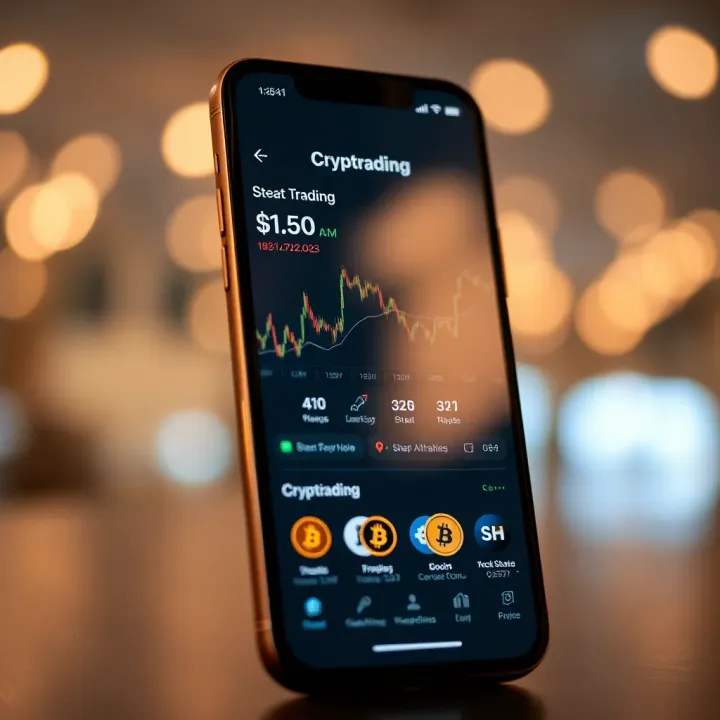
Discover how to pick the best cryptocurrency trading app in Pakistan 📱 Secure platforms, low fees, wide coin options & strong support help traders win safely!
Based on 13 reviews