

Benefits of Risk Management for Pakistani Businesses
📊 Discover how risk management in Pakistan businesses cuts losses, boosts smart decisions, saves costs, ensures compliance, and builds a stronger reputation.
Edited By
Emily Davies
Risk management is more than just a buzzword in business circles—it’s a necessary practice to protect your operations and investments from unexpected challenges. In Pakistan’s often volatile economic and regulatory environment, understanding the key steps of the risk management process can make the difference between steady growth and damaging setbacks.
At its core, risk management involves systematically identifying potential problems before they occur, assessing their impact, and finding practical ways to control or reduce them. This approach helps businesses—from traders in Karachi’s stock markets to exporters in Lahore—maintain stability and achieve their goals despite uncertainties.
Effective risk management isn’t about avoiding all risks; it’s about recognising which ones are worth taking and which require action to limit harm.
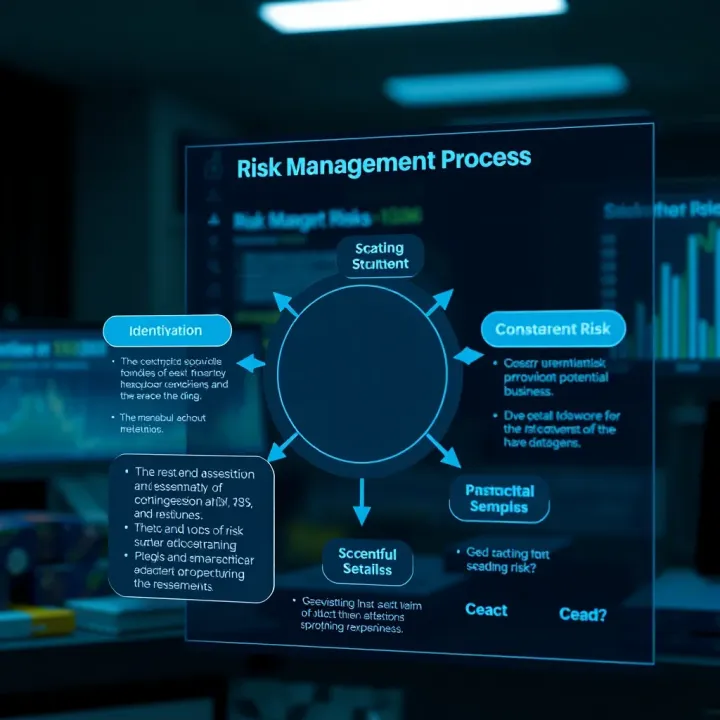
A well-rounded risk management process typically follows these main steps:
Risk Identification: Spotting and listing all possible risks that might affect your project or operation. This includes financial risks like currency fluctuations, operational risks such as supply delays, or even external risks like changes in government policies.
Risk Assessment: Measuring how likely each risk is to occur and what impact it could have. Quantifying this helps prioritise which risks deserve immediate attention and resources.
Risk Control: Planning and implementing measures to reduce, transfer, or avoid risk. For example, hedging against currency risk using forward contracts or diversifying suppliers to ease supply chain pressure during loadshedding.
Monitoring and Review: Continuously tracking risk factors and reviewing the effectiveness of controls. Pakistan’s dynamic market conditions mean this step requires constant vigilance to adjust strategies promptly.
For instance, a financial analyst managing a portfolio must keep a close eye on Pakistan Stock Exchange (PSX) trends and political shifts that could shake market confidence. Simultaneously, businesses reliant on imported goods need to monitor exchange rates and customs regulations set by the Federal Board of Revenue (FBR).
Understanding and applying these risk management steps ensures not only protection but also smarter decision-making amid uncertainty. By addressing risks logically and systematically, you safeguard your business and improve your chances of success in Pakistan’s competitive environment.
Understanding the basics of risk management is essential for any business or organisation seeking to operate smoothly and protect its interests. This section aims to clarify what risk management means, why it matters, and what it hopes to achieve, especially in practical terms relevant to traders, investors, financial analysts, and others involved in Pakistan’s dynamic markets.
Risk in business settings refers to any uncertainty that could impact objectives negatively — from market fluctuations and regulatory changes to operational hiccups and unexpected expenses. Take a textile exporter facing fluctuating currency rates or a brokerage dealing with sudden market volatility. The ability to recognise these risks early determines how well they can prepare or respond.
Managing risk is about more than just avoiding threats; it ensures businesses stay resilient. For example, a real estate developer in Karachi might face risks like project delays due to loadshedding or material cost spikes. By identifying and managing these risks, the developer can keep projects on track and maintain client trust. This proactive approach avoids costly surprises and helps sustain long-term growth.
Protecting assets and reputation is often the top priority. Businesses hold valuable resources, both tangible like machinery and intangible like brand goodwill. For instance, a bank operating in Lahore protects against fraud and cyberattacks to safeguard customer funds and maintain reputation. A single security breach can cause financial loss and damage customer confidence, which is harder to rebuild.
Ensuring regulatory compliance is crucial in Pakistan’s evolving business environment. Different sectors have specific rules enforced by authorities such as the Securities and Exchange Commission of Pakistan (SECP) or the Federal Board of Revenue (FBR). Non-compliance can lead to hefty fines or legal challenges. A financial analyst must understand these compliance frameworks to avoid risks related to taxation or market conduct.
Supporting decision-making depends heavily on understanding risk. When investors or brokers consider market moves, informed analysis of potential risks guides better choices. Data-driven risk assessments help determine when to enter or exit trades, manage portfolios, or launch new ventures. This clarity reduces guesswork and helps seize opportunities without unnecessary exposure.
Effective risk management turns uncertainty into manageable challenges, allowing organisations to operate confidently amidst change.
In sum, introducing risk management sets the foundation for all further steps — from identifying to monitoring — ensuring informed actions safeguard business goals in Pakistan’s vibrant economy.
Identifying risks is the first step in the risk management process and sets the direction for all further actions. Without a clear understanding of potential risks, organisations may overlook threats that could disrupt business operations or cause financial losses. For traders and investors in Pakistan's dynamic markets, spotting risks early helps in avoiding unnecessary exposure and making informed decisions.
Brainstorming and team discussions bring together diverse perspectives to surface risks that might not be obvious at first glance. For example, a brokerage firm in Karachi might gather its traders, compliance officers, and IT specialists to discuss market volatility, regulatory changes, or cybersecurity threats. This collaborative environment encourages open sharing and often reveals risks rooted in day-to-day operations or upcoming projects.
Historical data review involves analysing past incidents and performance records to identify recurring patterns or emerging threats. Businesses often look at previous financial statements, audit reports, or operational failures. For instance, a textile exporter might study how fluctuating currency rates affected profits during the last fiscal year, thus preparing better for future exchange rate risks.
Industry benchmarks and expert opinions provide valuable external insights. Consulting reports from Pakistan Stock Exchange (PSX) trends, financial analysts' reviews, or opinions from seasoned market experts can highlight risks common to the sector. This approach helps align internal risk perceptions with wider market realities, ensuring no major threat goes unnoticed.
Breaking down risks into categories improves clarity and prioritisation. Operational risks relate to internal processes or systems such as machinery breakdowns or staff shortages. Financial risks involve factors like credit defaults or market fluctuations impacting liquidity. Strategic risks concern long-term goals, like a failed product launch or competitor actions. Compliance risks stem from not meeting regulatory requirements—for example, failing to update client KYC documentation according to State Bank of Pakistan guidelines.

Understanding whether risks originate from within or outside the organisation is equally important. Internal risks include employee errors or outdated technology, while external risks cover market crashes, political upheaval, or sudden changes in trade tariffs. For a local business, identifying these distinctions assists in tailoring the response—internal risks might be managed through policy changes, whereas external risks often require contingency planning.
Effective risk identification combines multiple methods to cover blind spots, creating a comprehensive inventory of potential threats that supports robust management strategies.
In summary, recognising and categorising risks provides a strong foundation for managing uncertainties that Pakistani traders, investors, and financial analysts regularly face. It ensures that priorities are clear and efforts focus on the most impactful risks, ultimately helping safeguard assets and maintain confidence in decision-making.
Analysing and evaluating risks is a vital stage in the risk management process. It helps organisations understand which risks can have a significant impact and which ones are less urgent. Without this step, resources may be wasted on low-priority issues while critical threats remain unaddressed. For example, a stockbroker might face operational risks like system failures or financial risks due to currency fluctuations. Evaluating these systematically shapes informed decisions on where to focus preventive measures.
In this step, the risk's likelihood refers to how probable it is to occur, while impact measures the potential consequences if it does happen. Analysts usually rely on two methods: qualitative and quantitative analysis.
Qualitative analysis uses subjective assessment to classify risks based on experience, judgement, and categories like ‘high’, ‘medium’, or ‘low’. For instance, a portfolio manager might label the chance of geopolitical turmoil affecting a fund as 'medium', considering current news and expert opinions. This approach works well when numerical data is scarce or too complex.
On the other hand, quantitative analysis assigns numerical values to risks, often drawing on historical data or statistical models. An investment analyst could calculate that a sudden interest rate hike has a 30% chance of causing a 5% drop in asset value. This method gives precise measurements but needs reliable data, which may not always be available in Pakistan’s fluctuating markets.
Risk matrices and scoring systems help visualise and compare these assessments. A risk matrix typically plots likelihood on one axis and impact on another, dividing the grid into zones like 'low risk' to 'critical risk'. This makes it easier to spot risks demanding immediate attention. For example, a compliance officer might use a risk matrix to decide that regulatory breaches with high likelihood and severe penalties fall into the 'critical' category.
Scoring systems assign numerical scores to aspects like frequency, severity, and detectability, combining them to rank risks quantitatively. This supports objective prioritisation, making it clear where to allocate effort and budget.
Ranking risks by severity and probability ensures the organisation tackles the most damaging and likely threats first. For example, a trader might prioritise currency volatility over rare cyberattacks because the former affects daily operations more frequently. This ranking simplifies complex risk landscapes, allowing clearer focus.
Resource allocation is also linked tightly to prioritisation. Organisations have limited manpower, time, and money, so they must allocate these wisely. For instance, a bank in Karachi may commit more resources to secure its online banking system than upgrading less critical internal processes. Poor resource allocation risks leaving significant exposures unmanaged, increasing vulnerability.
Effective risk analysis and evaluation turn uncertainty into manageable insights, guiding Pakistani businesses in protecting assets and improving decision quality.
By assessing risk realistically and prioritising accordingly, businesses can use resources efficiently and defend against threats that could otherwise cause serious harm.
Responding to risks is a vital stage in the risk management process because it moves the focus from identifying threats to taking practical steps to handle them. Without a concrete response, risks remain potential problems that can derail business objectives. Having well-thought-out risk response measures helps traders, investors, and financial analysts minimise losses and maintain operational stability.
Businesses usually adopt one or more of four main strategies to manage their risks: avoidance, mitigation, transfer, and acceptance. Avoidance involves steering clear of activities that carry high risk—such as a brokerage firm refusing to trade in highly volatile stocks. Mitigation refers to reducing the severity or likelihood of a risk; for instance, financial firms might use stop-loss orders to limit potential losses. Transfer means shifting the risk to another party, as seen when companies buy insurance policies to cover specific risks. Finally, acceptance is acknowledging a risk without immediate action, generally because the cost of response outweighs the potential impact.
Choosing the right strategy depends on the nature of the risk and an organisation's capacity. High-impact, low-likelihood risks might be best avoided or transferred, while smaller, predictable risks could be mitigated or accepted. For example, an investor might accept minor market fluctuations but hedge against currency risk by using forward contracts. Deciding the best approach ensures that resources are used efficiently and the organisation stays resilient.
Assigning clear responsibilities is crucial when creating a risk response plan. Each risk must have an owner accountable for monitoring it and implementing necessary controls. This prevents confusion and delays during critical moments. For example, in a trading firm, the risk management team could take charge of financial risks, while compliance officers manage regulatory risks. Clear responsibilities help keep everyone focused and ensure timely action.
Setting appropriate timelines and allocating resources is equally important. A response plan should specify when actions need to be completed and what tools or funds are required. For instance, implementing a new risk control system might need approval within one month and a budget of Rs 5 lakh. Without proper deadlines and resource planning, risk responses can stall or become ineffective. This stage guarantees that risk management remains a proactive, ongoing effort aligned with business priorities.
Responding promptly and strategically to risks not only protects assets but also builds confidence among investors and stakeholders, reinforcing a culture of responsible management.
Monitoring and reviewing risks is a continuous process that ensures risk management remains effective and relevant over time. Businesses in Pakistan, particularly those in volatile sectors like finance or manufacturing, cannot afford to ignore changing conditions or emerging threats. By tracking risks actively, organisations get early warnings and can adapt swiftly to protect their assets and operations.
Regular status updates keep all stakeholders informed about current risk levels and any changes in the risk environment. For example, a financial analyst tracking currency fluctuations should receive daily updates to adjust investment decisions accordingly. This ongoing communication prevents surprises and allows teams to respond promptly.
Such updates also allow management to spot trends or repeated issues, which can signal deeper problems. In the banking sector, this might mean noticing a rise in customer defaults before it seriously affects the loan portfolio.
Early warning signs and triggers serve as signals that risk conditions are shifting or worsening. These might be specific thresholds in key indicators, like an increase in inflation rate crossing 10% or a spike in fuel prices beyond a certain level. For traders and investors, observing these triggers on time can mean the difference between loss and gain.
Organisations often set up dashboards or alerts highlighting these early signs, enabling a fast response. For instance, a textile exporter might watch for exchange rate movements impacting export competitiveness and have triggers to review pricing strategies when rates fluctuate sharply.
Lessons learned and feedback integration involve systematically reviewing what worked and what didn’t after risk events or assessments. A brokerage firm, after experiencing a cyber attack, might learn that their password policies were weak. Applying this lesson by strengthening security reduces future vulnerabilities.
Feedback from frontline staff or clients also provides practical insights often missed by top management. Incorporating these inputs helps refine risk controls and improve response plans, making them more realistic and effective.
Adjusting controls as conditions change recognises that risk environments are never static. For example, during Pakistan’s monsoon season, the risk of floods or transport disruptions rises, requiring companies to boost contingency plans temporarily.
Adapting controls could mean increasing stock levels, arranging alternative suppliers, or modifying cash flow forecasts. For financial analysts, it might involve revising risk models to account for new market realities like interest rate changes announced by the State Bank of Pakistan.
Continuous monitoring and timely review transform risk management from a one-time task into a dynamic process that keeps organisations resilient amidst uncertainty.
By embedding these practices, Pakistani businesses and investors strengthen their readiness and protect themselves better against losses or operational shocks in a challenging economic environment.
Embedding risk management within an organisation’s culture ensures that dealing with uncertainties becomes second nature rather than an afterthought. When risk awareness and proactive handling are part of everyday operations, businesses can respond faster to threats and seize opportunities more effectively. This integration builds resilience across departments and helps align risk management with overall strategic goals.
Training and communication strategies are vital to make sure every team member understands not only what risks may affect their work but also their role in managing those risks. Practical workshops, regular briefings, and accessible guides help embed risk awareness throughout the organisation. For example, a brokerage firm might conduct quarterly sessions where traders discuss recent market risks, enabling everyone to stay sharp and responsive.
Clear communication channels also help. When employees can report risks or uncertainties without hassle, early warning signs are caught before they escalate. This two-way exchange promotes a shared responsibility for risk management rather than leaving it solely to a dedicated department.
Encouraging risk ownership means empowering individuals at all levels to take responsibility for identifying and managing risks within their scope. This boosts accountability and reduces delays in decision-making. For instance, a financial analyst assigned to a project should feel confident to flag potential compliance risks instead of waiting for senior management to spot them.
Ownership also motivates employees to suggest practical risk controls reflecting ground realities rather than generic policies. This bottom-up involvement often uncovers challenges unseen by top management.
Risk management software options provide organisations with digital platforms to track, assess, and report risks systematically. These tools enable centralised data collection and generate real-time dashboards that highlight emerging threats across functions. In Pakistan, firms using solutions like SAP GRC or Oracle Risk Management can integrate their compliance, audit, and operational risk data, making the information accessible and actionable.
Such software reduces manual errors, speeds up reporting, and allows prompt allocation of resources. It also supports audit trails necessary for regulatory scrutiny, such as from the Securities and Exchange Commission of Pakistan (SECP).
Data-driven decision support uses analytics to translate risk data into insights that guide management actions. By analysing historical patterns and correlating risk factors, businesses can forecast potential trouble spots. For example, a trading company could evaluate past price volatilities to assess which commodities carry higher portfolio risk.
Applying data-driven methods helps prioritise risks with the most impact and improves resource allocation. It converts large volumes of complex information into clear recommendations, assisting decision-makers in navigating uncertainty with more confidence.
Strong risk culture backed by practical tools not only protects organisations but also empowers them to turn risks into competitive advantages.
Integrating risk management into organisational culture is not a single event but an ongoing process, requiring commitment from leadership and engagement across all teams. Done well, it strengthens every link in the operational chain against the ever-present uncertainties faced by Pakistani businesses today.
📊 Discover how risk management in Pakistan businesses cuts losses, boosts smart decisions, saves costs, ensures compliance, and builds a stronger reputation.

Explore key actuarial science and risk management concepts 🧮 to assess and control financial risks, helping businesses in Pakistan make smarter decisions 📊.

Explore binary fission 🧫, a key asexual reproduction process in single-celled organisms, essential for growth, reproduction, and genetic continuity.

📊 Discover 7 key chart patterns for technical analysis with practical examples and PDF guides, tailored for traders in Pakistan looking to boost skills.
Based on 6 reviews