
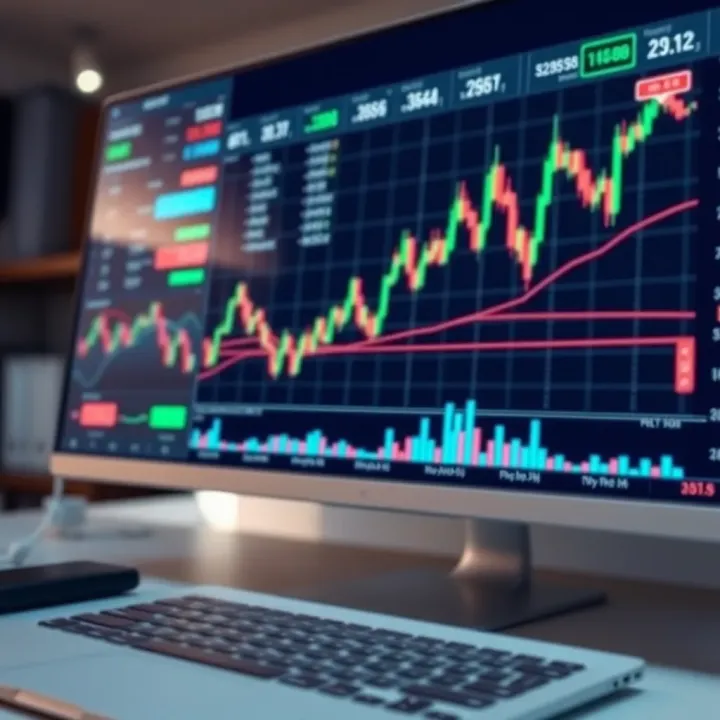
Choosing the Best Forex Trading Platform in Pakistan
Explore how to pick the best Forex trading platform in Pakistan 💹. Learn about key features, security, regulations, and tips for beginners to trade smart.
Edited By
Amelia Foster
Forex trading offers Pakistani investors a chance to tap into the world's largest financial market, with daily volumes exceeding $6 trillion. However, it's not just about buying and selling currencies; maximising profit requires a solid approach built on knowledge, discipline, and understanding of market dynamics.
Many traders in Pakistan jump into forex trading attracted by potential quick gains. Yet, without a clear strategy, they often face sizeable losses. To improve your chances of success, focus on practical aspects tailored to Pakistan's trading environment, such as choosing reliable brokers regulated by the State Bank of Pakistan or international authorities, and being aware of local regulations and taxes.
Successful forex trading involves managing risk just as much as spotting opportunities.
Consider the following key points to set a strong foundation:
Education and Research: Understand currency pairs, macroeconomic indicators, and how geopolitical events in Pakistan and globally affect exchange rates.
Risk Management: Implement stop losses and position sizing to protect capital. Never risk more than 1-2% of your trading account on a single trade.
Technical and Fundamental Analysis: Combine chart patterns with economic news for a balanced view.
Trading Plan: Define entry and exit rules, including profit targets and risk limits, and stick to the plan.
In Pakistan, fluctuating exchange rates and monetary policies require traders to stay updated daily. Using local platforms like Alpari Pakistan or international ones with Pakistani support can provide timely data and execution advantages. Also, factor in spreads and commissions, as high costs can eat into profits over time.
Overall, mastering forex trading profitably is a gradual process. It demands patience, continuous learning, and adapting to market shifts — especially in a complex, fast-moving market like Pakistan's foreign exchange scene.
Grasping the concept of profit in forex trading forms the backbone of any successful trader's approach. In Pakistan's forex context, understanding how profit is made—and lost—helps traders navigate market nuances wisely. This section breaks down the key components affecting profit so you can make better trading choices.
Gross profit in forex refers to the total gains from trades before subtracting costs like spreads, commissions, or overnight fees. For instance, if you buy USD/PKR and sell it for Rs 5000 more than your entry price, that gain is your gross profit.
Net profit, however, accounts for all trading expenses. After paying Rs 500 in spreads and commissions, your actual take-home profit drops to Rs 4500. Focusing on net profit offers a realistic picture of trading success, as costs can eat into your gains, especially with frequent trading.
Leverage in forex means trading with money borrowed from the broker, typically expressed as ratios like 1:100. It magnifies both profits and losses. With Rs 10,000 of your own capital, using 1:100 leverage lets you control Rs 1,000,000 in the market.
If the market moves in your favour by 1%, you make Rs 10,000 — doubling your investment. But if it moves against you, losses are equally magnified. This makes capital protection crucial as leverage can quickly wipe out your account. Pakistani traders should only use leverage levels they fully understand and can manage.
Spreads represent the difference between buying and selling prices, a cost baked into every trade. For example, trading USD/PKR at a 5-paisa spread means you start with a small loss before the market moves in your favour.
Commissions add to this cost, varying by broker. Plus, holding a trade overnight may incur swap fees. Accumulated costs matter most for short-term traders and can cut deeply into profit margins. Comparing broker charges before trading in Pakistan is essential for maximising net gains.
Volatility drives price movement and trading opportunities. Pakistani traders need to identify periods of high volatility, such as during major economic announcements or geopolitical events, to exploit larger price swings.
Stable trends help in placing calculated trades, but sudden shifts can result in losses. By analysing market volatility patterns, you can adjust trade size and timing to better align with market conditions.
Your chosen strategy and how fast you enter or exit trades can determine profits. Scalping requires quick decisions and low spreads, while swing trading relies on holding positions over days.
Execution speed affects opportunities, especially in volatile markets. Pakistani traders using local brokers should check for server delays or slippage, as these factors impact profits.
Events like Pakistan’s central bank decisions, elections, or global crises impact currency values sharply. Staying informed about such developments allows traders to anticipate market moves or avoid risky trades.
Geopolitical tensions often increase market uncertainty, pushing volatility higher—this can mean bigger profits or losses based on how well you manage risks.
Understanding these factors helps tailor your trading plan to the realities of Pakistan’s forex environment, improving your chances of consistent profit.
By mastering profit definitions and the elements shaping profitability, Pakistani traders can sharpen their approach, protect their capital, and grow gains over time.
Improving forex trading profit requires more than luck; it demands a mix of technical understanding, market awareness, and the right trading approach. For Pakistani traders, mastering these strategies can provide a noticeable edge, especially given the unique behaviour of the PKR and the local trading environment.
Using support and resistance levels: Support and resistance are price points where the market tends to pause or reverse. Support acts like a floor, preventing prices from falling further, while resistance serves as a ceiling capping price rises. Identifying these levels helps traders decide where to enter or exit trades. For example, if USD/PKR approaches a known resistance zone repeatedly but fails to break through, a trader might consider selling or tightening stop-loss orders. Spotting these zones is not difficult with chart patterns, and it’s a practical way to gauge potential market turning points.
Applying trend indicators like moving averages: Moving averages (MAs) smooth price data to reveal trends. Simple Moving Average (SMA) or Exponential Moving Average (EMA) are commonly used. A rising MA indicates an uptrend; a falling one suggests a downtrend. For instance, a 50-day MA crossing above the 200-day MA — called a "golden cross" — often signals a bullish phase. Pakistani traders watching USD/JPY or EUR/USD can use such signals to align their trades with broader momentum, reducing the chances of entering against the market flow.
Importance of volume and momentum analysis: Volume confirms strength in price movements, while momentum indicates speed. Higher volume during an upward move could mean strong buyer interest, supporting a lasting rally. On the other hand, if rising prices happen on low volume, the move might lack conviction, warning traders to be cautious. Momentum indicators like RSI (Relative Strength Index) help spot overbought or oversold conditions. For example, if GBP/USD RSI hits above 70, traders might expect a pullback soon. Such tools combined allow more nuanced trade timing.
Monitoring Pakistan’s economic data and central bank decisions: Pakistan’s key economic releases—such as inflation updates, trade balance, or State Bank of Pakistan (SBP) policy meetings—affect PKR pairs directly. An unexpected interest rate hike could boost PKR strength, offering short-term trading opportunities. Follow SBP announcements and budget speeches to anticipate moves. For instance, an interest rate reduction during high inflation might weaken PKR, prompting traders to reassess exposure.
Global events impacting currency pairs: Currency values react swiftly to international developments. Crude oil price shifts, US Federal Reserve policy changes, or geopolitical tensions can impact pairs like USD/PKR or emerging market currencies. During the US-China trade dispute, volatility in USD and JPY pairs increased, creating both risk and profit chances. Pakistani traders should keep an eye on these events, as spillover effects often influence local market flows.
Interpreting news releases and market sentiment: Beyond numbers, traders must read market mood. For example, optimistic earnings or political stability news may spur buying across markets, lifting currencies even before figures justify it. Using economic calendars alongside sentiment indexes or social media buzz provides insights on short-term market direction. Timing trades around news releases needs care but offers profit potential for those prepared.
Scalping versus swing trading: Scalping involves quick, small trades exploiting minor price moves often within minutes. Swing trading holds positions for days to weeks, targeting larger gains. Scalping suits traders with fast internet and constant market attention—Pakistani traders using platforms like MetaTrader or locally supported apps can adopt this style if they have time. In contrast, swing trading fits those who prefer less screen time but want to ride major trends, such as enduring PKR fluctuations.
Day trading considerations for Pakistani market hours: Active traders benefit by aligning their sessions with overlapping forex market hours. Pakistan Standard Time puts traders into the mid-session band of Asian and European markets. For USD/EUR or GBP/USD pairs, the 3 pm to 9 pm PKT window often provides increased liquidity and volatility. Planning day trades within these hours can improve entry and exit execution, minimising spreads and slippage.
Long-term position trading: Holding trades for weeks or months suits those keen on fundamental themes rather than quick moves. For instance, a trader anticipating PKR devaluation over a political cycle might take a long USD/PKR position and adjust stops accordingly. This style demands patience, capital to withstand swings, and solid analysis of macro trends. It reduces stress from daily noise, focusing on real economic drivers.
Employing these strategies thoughtfully helps Pakistani traders not only capture opportunities but also guard against common pitfalls that erode profits in forex markets.
Incorporating technical tools, monitoring economic signals, and matching the right trading style to personal capacity and market hours form a solid foundation to boost forex trading profits otherwise hard to achieve on guesswork alone.
In forex trading, managing risks is as important as identifying profitable opportunities. Protecting your capital means you can stay in the game longer and grow your profits steadily. In Pakistan, where market conditions can be highly volatile due to economic and geopolitical factors, strong risk management is not optional but necessary.
Setting appropriate stop-loss orders helps limit losses on trades going against you. For example, if you buy USD/PKR at 280 and set a stop-loss at 275, your maximum loss is capped at Rs 5 per unit. This prevents a small loss from ballooning into a serious damage to your account. Without stop-losses, one unexpected market move can wipe out weeks of profits.
Calculating position size relative to account balance ensures you don't risk too much on any single trade. A good rule of thumb is to risk no more than 1-2% of your total trading capital per position. So, if your account holds Rs 1 lakh, you should risk only Rs 1,000 to Rs 2,000 per trade. This strategy helps avoid large drawdowns and protects your capital from sudden shocks.
Diversifying trades to minimise risk means spreading your exposure across different currency pairs or trading strategies. Relying only on USD/PKR, for example, might expose you to local currency shocks. Instead, mix trades with stable pairs like EUR/USD or GBP/USD, plus some emerging market pairs. This approach balances potential losses in one trade with gains in others, smoothing your profit curve.
Avoiding overtrading and revenge trading protects your trading account and mental health. Overtrading often happens when traders chase small profits or try to recover losses too quickly. Similarly, revenge trading—trying to win back losses immediately—usually results in bigger losses. Staying patient and sticking to a planned number of trades each day reduces the chances of these emotional mistakes.
Sticking to trading plans and rules promotes consistency. Before entering a trade, decide on your entry, exit, and stop-loss points. For example, you may decide only to trade when the RSI indicator signals oversold conditions. Breaking these rules out of impatience or excitement often leads to costly errors. Having a clear plan keeps your trading methodical and less reactive.
Handling losses calmly and learning from mistakes is key to long-term success. Losses are part of forex trading, and reacting emotionally will hurt your decision-making. Instead, review what went wrong after each losing trade, such as poor timing or ignoring indicators. Use this insight to refine your strategy. Over time, this patience and learning attitude helps you grow more profitable and resilient.
Risk management is not just a safety net, but the foundation for growing consistent profits in forex trading.
Managing risks effectively protects your capital and boosts confidence, which is vital to navigate Pakistan's forex market conditions successfully.
Navigating the local regulatory landscape and utilising Pakistan-specific trading platforms offers an edge for forex traders here. Understanding how Pakistani regulations and market infrastructure work helps you avoid scams, save on costs, and operate within legal boundaries. This section highlights the practical benefits of selecting regulated brokers and trading in currency pairs relevant to the domestic economy.
Trading through Pakistan Telecommunication Authority (PTA) approved brokers ensures that you deal with firms compliant with national standards. Such brokers often provide better security, local customer support, and tailored services like Urdu language options. For example, brokers registered with PTA guarantee that you can deposit or withdraw funds without risking account freezes common with unapproved foreign brokers. This approval acts as a quality check, offering Pakistani traders peace of mind.
Choosing brokers that support local payment methods simplifies transactions and saves time. Many PTA-approved brokers facilitate deposits and withdrawals via JazzCash, Easypaisa, and direct bank transfers through the Pakistan banking network. This reduces dependency on international remittance services, avoids high currency conversion fees, and speeds up fund availability. For traders in smaller cities, being able to transact without travelling to bigger centres is a practical advantage.
The Securities and Exchange Commission of Pakistan (SECP) oversees financial service providers, including forex brokers, ensuring they uphold transparency, capital adequacy, and fair dealing rules. Similarly, the State Bank of Pakistan (SBP) regulates currency exchange frameworks and foreign exchange controls affecting forex trading. Trading with brokers regulated by these bodies minimizes risks related to fraud, sudden policy shifts, or non-compliance issues. Pakistani traders should prioritise brokers compliant with SECP and SBP to safeguard their capital.
The USD/PKR pair is the most accessible and actively traded currency for Pakistan-based traders due to its direct impact on the economy, imports, exports, and remittances. Trading this pair allows you to capitalise on Pakistan-specific events like trade balance reports and SBP policy rate changes. Besides USD/PKR, pairs tied to other emerging markets such as USD/INR or USD/TRY can present interesting volatility patterns linked to regional economic trends.
While USD/PKR is the bread and butter, some traders explore cross pairs like EUR/JPY for diversification or to exploit global market trends. However, these pairs often have lower liquidity during Pakistani market hours and can carry wider spreads and unpredictable volatility. It's crucial to consider trading times and economic calendars of the Eurozone and Japan before engaging with such pairs to avoid unwelcome surprises.
The Pakistani Rupee experiences frequent fluctuations owing to political developments, trade deficits, or regulatory announcements. This volatility affects forex trading strategies, especially when trading PKR pairs. Traders must watch PKR-related news closely as sudden swings can either produce quick profits or steep losses. Incorporating volatility analysis and adjusting stop-loss orders accordingly can help protect capital against abrupt PKR movements.
Trading with local regulatory compliance and focusing on currency pairs tied to Pakistan’s economic context offers practical advantages that aren't just about profit but also security and operational ease.
By integrating these local insights and regulatory awareness, you position yourself for better risk management and more informed trading decisions tailored to Pakistan's forex market realities.
Keeping a close eye on your trading performance plays a vital role in boosting your forex profits over time. Without proper tracking, it’s easy to repeat the same mistakes or miss out on opportunities to sharpen your strategies. This continuous improvement approach helps Pakistani traders adapt to changing market conditions, especially given the volatility around PKR and regional economic factors.
Recording your trades isn't just about jotting down what you bought and sold. It includes noting entry and exit points, trade size, market conditions, and even your emotional state during the trade. For example, if you enter a USD/PKR trade at 150.50 and exit at 151.00, noting this with context such as news events or your risk tolerance helps build a clearer picture of what works.
Over time, this detailed record becomes an asset. It highlights not only outcomes but the reasoning behind each trade. Most successful Pakistani traders find that journaling brings discipline, helping avoid impulsive decisions often triggered by emotions like fear or greed.
Analysing patterns in wins and losses can uncover trends you might otherwise miss. For instance, you may notice you perform better with shorter time-frame trades during the busiest hours of Pakistan Stock Exchange operation, or certain economic announcements prompt more volatile movements affecting your success rate.
This pattern recognition allows smarter decisions going forward. Noticing repeated losses on particular currency pairs or during specific sessions indicates where to cut back or adjust your approach.
Adjusting strategies based on your journal data is how trading becomes a learning process rather than a guessing game. Say your records show that using tight stop-losses on EUR/USD yields better profit consistency; then adopting this approach broadly can lead to steadier growth.
Regular evaluation might suggest diversifying your trades, revisiting leverage settings, or timing entries differently. Such tweaks, however small, compound into better overall performance.
Automated trading systems and expert advisors (EAs) can process market data faster than humans and execute trades when preset conditions are met. Pakistani traders using platforms like MetaTrader often rely on EAs to reduce emotional bias and maintain discipline. Though not foolproof, they can help maximise opportunities during Pakistan’s market hours when manual monitoring may gaps.
Mobile apps have transformed forex trading accessibility in Pakistan, with platforms like ForexTime and MetaTrader offering push alerts for price movements, economic events, and trade executions. These apps keep traders connected amid daily chores and unavoidable loadshedding, ensuring timely responses to market shifts.
Utilising economic calendars and real-time news sources helps Pakistani traders anticipate market moves. Monitoring State Bank of Pakistan announcements, CPI inflation data, or global developments like US Federal Reserve decisions using credible apps informs better timing of trades around these events.
Regularly updating yourself with authentic, timely information reduces risk and aligns strategies with actual market sentiment, increasing your chances to lock in profits consistently.
This mix of disciplined record-keeping and technology use equips you for smarter, data-driven forex trading tailored for Pakistan’s unique market dynamics.
Explore how to pick the best Forex trading platform in Pakistan 💹. Learn about key features, security, regulations, and tips for beginners to trade smart.
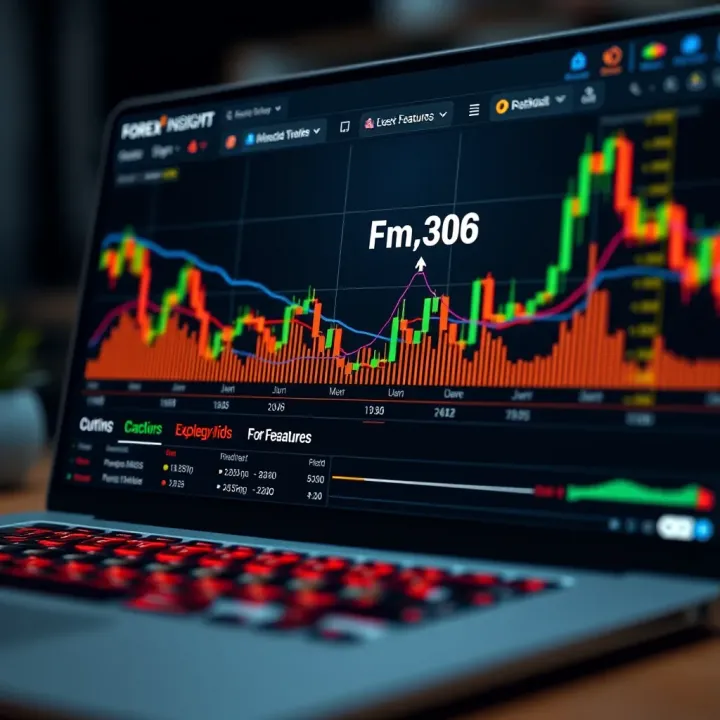
Find the ideal Forex trading platform in Pakistan 🇵🇰 with practical tips on features, security, and top choices tailored for every trader's style 📈💡
Find the best forex broker in Pakistan 🇵🇰 with our guide covering regulations, platforms, fees, local payments, and expert tips for smarter trading.
Discover top forex trading apps for Pakistan 🇵🇰. Learn key features, security tips 🔒, and how to boost your trading success with the right platform.
Based on 13 reviews