
Choosing the Best Forex Trading Platform in Pakistan
Explore how to pick the best Forex trading platform in Pakistan 💹. Learn about key features, security, regulations, and tips for beginners to trade smart.
Edited By
Henry Walsh
Profitable forex trading demands more than just guessing which way a currency pair will move. Successful traders combine market understanding, tested strategies, solid risk management, and emotional control to build consistent gains. In Pakistan, where currency fluctuations and economic shifts often impact forex markets, approaching trading with discipline helps safeguard your capital and improve returns.
Understanding market dynamics is the first step. Forex markets operate 24/5, influenced by global events, economic data releases, and central bank decisions, including those by the State Bank of Pakistan (SBP). For example, when the SBP adjusts policy rates, it often affects the PKR's value against the USD or other currencies. Being aware of such events allows traders to anticipate short-term market reactions.
Applying effective trading strategies means choosing a method that fits your style and time availability. Popular strategies include:
Trend following: Riding the direction of a strong market trend until signs of reversal.
Range trading: Buying and selling within established support and resistance levels when markets lack clear direction.
Breakout trading: Entering trades as price moves beyond a known range, anticipating momentum.
Each strategy requires backtesting and practice through demo accounts before risking live money. Pakistani traders often start with small lots to manage exposure.
Risk management serves as the backbone of profitable trading. Limiting losses through stop-loss orders, sizing positions relative to your trading capital, and diversifying trades are necessary safeguards. For instance, risking 1-2% of your capital per trade can prevent devastating drawdowns.
Discipline in following your trading plan and managing emotions will define your long-term success. Overtrading or revenge trading can wipe out profits rapidly.
Finally, making use of the right tools enhances decision-making. Charting software, economic calendars, and reliable brokers with transparency on spreads and execution speed are crucial. Locally, platforms like MetaTrader 4 and 5 remain popular, alongside brokers regulated under Pakistan’s Securities and Exchange Commission (SECP).
By combining market knowledge, suitable strategies, firm risk controls, and emotional discipline, Pakistani forex traders can effectively navigate volatile currency markets and move towards steady profits.
Understanding the forex market is essential for anyone aiming to trade currencies profitably. This knowledge helps traders grasp how various elements, from currency types to market timings, impact price movements and liquidity. Pakistani traders, especially those dealing with PKR against major currencies like USD or EUR, benefit from recognising these dynamics to make informed decisions.
At the core of forex trading are currency pairs — they represent the relative value of one currency against another. Pairs like USD/PKR or EUR/PKR are common for local traders. There are three main types:
Major pairs: These include high-liquidity pairs involving the USD, such as USD/JPY or GBP/USD.
Minor pairs: Currency pairs that exclude the USD but involve other strong currencies, like EUR/GBP.
Exotic pairs: These combine a major currency with that of an emerging economy, for example, USD/TRY or USD/ZAR.
For Pakistani traders, pairs involving the US dollar, Euro, British pound, and regional currencies are popular due to their wider availability and liquidity.
Forex operates 24 hours across overlapping global sessions — Asian, European, and North American. Liquidity peaks when these sessions overlap. For example, the London and New York sessions overlap between 1 pm and 5 pm PKT, creating higher trading volume and tighter spreads.
Understanding market hours helps avoid trading during low liquidity periods, which can cause erratic price swings and slippage. Pakistani traders should adjust their schedules to focus on these active hours for better trade execution.
Brokers act as the bridge between traders and the forex market. They facilitate order execution, provide trading platforms, and often offer leverage. Choosing a regulated and reliable broker in Pakistan is crucial, considering factors like spreads, execution speed, deposit/withdrawal methods, and customer support.
A local broker regulated by authorities such as the Securities and Exchange Commission of Pakistan (SECP) or international brokers with proper licences are preferable. This reduces risks related to fraud or unfair trading conditions.
Forex prices react sharply to economic data releases such as GDP growth rates, inflation figures, employment numbers, and trade balances. For example, a better-than-expected inflation report in the US could strengthen the USD, affecting USD/PKR rates.
Traders monitoring the Pakistani economy should keep an eye on the State Bank of Pakistan's monetary policy statements and inflation trends, as these impact PKR strength directly.
Political instability, conflicts, or major policy changes can lead to sudden forex volatility. For instance, during tensions at the Pakistan-Afghanistan border, the PKR often sees swift fluctuations due to risk perceptions.
Keeping track of such events helps traders anticipate market reactions and potentially avoid losses or exploit short-term opportunities.
Decisions by central banks, like the State Bank of Pakistan or the US Federal Reserve, greatly influence currency prices through interest rate changes. Higher rates tend to attract foreign investment, strengthening the currency.
For example, when SBP raises its policy rate to curb inflation, PKR might gain against other currencies. Conversely, expectations of a rate cut could weaken the rupee. Traders must closely watch these announcements for timely trading setups.
Mastering these fundamental aspects of the forex market builds a strong foundation, allowing traders in Pakistan to develop strategies suited to real market behaviours rather than guesswork.
Developing effective trading strategies is key to navigating the forex market successfully. Without a clear plan, traders may react emotionally to market fluctuations, resulting in avoidable losses. A well-constructed strategy helps you interpret market data, identify entry and exit points, and manage risks smartly. In the context of Pakistani traders, integrating local economic factors and global currency trends into your approach considerably boosts the chance of consistent profits.
Charts are visual tools that show currency price movements over specific periods. Recognising patterns like head and shoulders, double tops, or flags can signal potential reversals or continuations in price trends. For example, spotting an ascending triangle on the USD/PKR chart might hint at a breakout upward, guiding traders to time their buys properly.
Technical analysis relies heavily on these patterns to forecast short- to medium-term price action, which suits traders who want timely signals rather than vague market guesses.
Moving Averages smooth out price data, revealing trend direction. A 50-day MA crossing above a 200-day MA often implies bullish momentum, useful for swing or position traders.
The Relative Strength Index (RSI) measures overbought or oversold levels. An RSI above 70 suggests the currency pair might be overbought, signalling a possible correction. Conversely, an RSI below 30 indicates oversold conditions.
The MACD (Moving Average Convergence Divergence) highlights momentum changes and possible trend shifts. For example, a MACD crossover on the USD/EUR pair can alert traders to enter or exit positions timely.
Each indicator provides a different viewpoint; combining them enriches decision-making.
Support marks the price level where demand prevents the currency from falling further, while resistance is where selling pressure stops a rise. Identifying these levels on charts allows traders to set logical stop loss and take profit points.
For instance, if PKR is consistently rebounding near Rs 180 against the dollar, that price acts as support and can serve as a buying zone. Recognising these zones helps avoid blind entry and exit decisions, narrowing risk.
Fundamental analysis looks at economic data to judge a currency’s strength. Pakistan’s GDP growth, inflation rate, and trade balance, for example, impact PKR valuation.
If Pakistan reports strong industrial growth while inflation remains stable, it increases investor confidence, potentially strengthening PKR. Traders who follow such indicators can anticipate trends more confidently than by just watching charts.
Government policy and central bank decisions often drive forex movements. When the State Bank of Pakistan changes interest rates, it affects capital flows and currency demand.
An interest rate hike generally attracts foreign investment, boosting PKR. Conversely, expansive fiscal policy without careful control may cause depreciation. Monitoring policy announcements prepares traders to react quickly.
Understanding whether market moves are part of a broader trend or short-lived swings is vital. Long-term trends stem from structural changes like persistent trade deficits, while short-term volatility arises from events like election news or geopolitical tensions.
For example, during Ramadan or election season, PKR might see higher volatility but not necessarily a long-term shift. Recognising this helps traders avoid hasty decisions based on noise.
Day traders open and close positions within the same trading day, relying on quick decisions and small profits. Scalpers zoom in further, holding trades for minutes or seconds to exploit tiny price moves.
These styles demand intense focus, fast internet, and trading platforms like MetaTrader. They suit traders who prefer immediate results and can handle the stress.
Swing traders hold positions for several days to weeks, aiming to capture medium-term price swings. This style balances active monitoring with flexibility, ideal for those trading around day jobs.
For instance, a swing trader may buy USD/PKR anticipating a rise due to upcoming positive economic data, holding the position over several sessions.
Position traders keep trades open for months, focusing on fundamental shifts and long-term market sentiment. This suits traders who prefer less frequent monitoring and are prepared for wider price fluctuations.
In Pakistan, position trading can align with economic cycles or political events, allowing traders to ride significant trends without daily stress.
Choosing the right trading strategy involves balancing your time, risk appetite, and market understanding. Effective planning turns forex from guesswork into calculated opportunity.
Effective risk management and self-discipline are the backbone of profitable forex trading. They prevent traders from losing their entire capital on a single trade and help maintain a consistent approach over time. Without these, even the most promising strategies face the risk of failure due to emotional decision-making or unexpected market moves.
Stop loss orders act as a safety net, limiting the maximum amount a trader can lose on a trade. For example, if you enter a position on USD/PKR at Rs 280 with a stop loss set at Rs 275, your potential loss is capped at Rs 5. This prevents emotional decision-making like holding on to losing trades hoping for a turnaround that may never come. Preserving your capital means you can stay longer in the market and wait for better opportunities.
Take profit points help lock in profits once the market reaches your target level. However, setting these requires balancing between realistic rewards and acceptable losses. A common rule is the risk-reward ratio; many traders aim for a ratio of at least 1:2, meaning they expect to gain twice as much as they risk. For instance, risking Rs 500 per trade with a target profit of Rs 1,000 creates a healthy trading discipline. This balance guards against impulsive trades chasing huge gains while ignoring potential losses.
Leverage allows traders to control larger positions with a smaller amount of capital. In forex, it might be 1:50 or higher. While this magnifies profits, it also magnifies losses. Using 1:50 leverage means that even a 2% adverse move in price can wipe out the entire invested capital. So, it's crucial to understand how leverage multiplies risks. Many Pakistani brokers offer leverage but traders should limit this according to their risk tolerance.
Excessive leverage often leads traders to overtrade or risk more than they can afford to lose. Especially for beginners, chasing big profits with high leverage can quickly blow accounts. It’s like driving a vehicle too fast on rainy roads—you lose control. Maintaining moderate leverage, such as 1:10 to 1:20, helps manage risk better and keeps losses manageable.
Fear can cause premature exits from potentially profitable trades, whereas greed encourages holding onto winning trades too long, risking reversal. Staying composed helps follow the trading plan without second-guessing. For instance, if you’re nervous about a potential loss, you might exit early and miss out on gains. Practical techniques like following a strict trading journal or taking breaks after loss-making trades help curb these emotions.
Success in forex isn’t about occasional big wins but steady, repeatable profits. Sticking to a tested strategy, rather than switching based on momentary feelings or market noise, builds discipline. For example, a swing trader in Karachi following a mix of technical signals and fundamental news must trust their system even when the market is choppy.
Losses are inevitable but should be seen as lessons, not failures. Keeping track of what went wrong—poor timing, incorrect analysis, or overleveraging—enables improvement. Reviewing trades regularly helps avoid repeating the same mistakes, which is key to long-term profitability.
Risk management and discipline form the safety rails of forex trading. Without them, even a well-planned strategy risks falling apart under emotional stress or unexpected market swings.
By integrating these principles—proper stop loss and take profit settings, responsible leverage use, and emotional control—Pakistani traders can navigate volatile forex markets more confidently and sustainably.
Efficient forex trading relies heavily on the right tools and platforms. These resources not only simplify the trading process but also provide crucial data and execution speed, improving the chances of profitable trades. In Pakistan, where access to reliable services can sometimes be tricky, selecting suitable trading infrastructure is even more critical.
Choosing a broker regulated by credible authorities safeguards your investment against fraud. In Pakistan, traders should look for brokers licensed by reputable international bodies like the FCA (UK) or ASIC (Australia), as local regulatory frameworks are still evolving. Such licensing ensures brokers meet minimum standards of transparency and client fund security.
Low trading costs matter because even small differences in spreads and commissions can eat into profits over time. Pakistani traders should compare spreads offered by brokers, especially for popular currency pairs like USD/PKR or EUR/USD. For example, one broker might offer spreads of 1.5 pips, while another charges 2.5 pips, which accumulates significantly if you trade frequently.
Smooth deposit and withdrawal processes are essential for timely fund access. Most Pakistani traders prefer brokers that support local payment options like JazzCash and Easypaisa alongside international methods such as bank transfers and credit cards. Confirming the broker’s withdrawal processing times and fees can prevent unexpected delays or costs.
MetaTrader 4 (MT4) and MetaTrader 5 (MT5) remain the most trusted platforms worldwide. MT4 appeals due to its simplicity and wide availability of custom indicators, which helps traders identify setups quickly. MT5 adds features such as more timeframes and economic calendars integrated within the platform, useful for traders who want advanced tools in one place.
Mobile apps let you manage trades on the go, crucial in Pakistan where internet reliability varies. Both MT4 and MT5 apps provide real-time data, order management, and charts. Additionally, brokers offer proprietary mobile apps with features tailored to PKR trading or local markets. A responsive mobile app ensures you don’t miss critical market moves during the day.
Charting tools help visualise price action, enabling better entry and exit decisions. Platforms often provide built-in indicators like Moving Averages and RSI. Signal tools offer trade alerts based on predefined strategies. For instance, a moving average crossover alert might notify you when a pair trends up or down, letting you act quickly.
Economic calendars list key events such as Pakistan’s inflation data, SBP interest rate decisions, or US Non-Farm Payroll statistics, all of which can drastically affect currency prices. Monitoring these helps traders prepare for volatility and avoid entering trades blindly before major announcements.
Unexpected news can cause sharp price swings. Reliable news feeds from Forex Factory or Investing.com alert traders to breaking developments, geopolitical events, or policy changes. Staying informed reduces the chance of getting caught off guard and helps with quick decision-making during turbulent sessions.
Tools and platforms form the backbone of efficient forex trading. Without the right setup, even the best strategies risk turning unprofitable. Focus on regulated brokers, user-friendly platforms, and timely market data to stay ahead.
Trading forex profitably in Pakistan requires more than just technical knowledge; practical approaches tailored to local realities can make a notable difference. Realistic goal-setting, understanding market nuances, and continuous practice shape a trader’s long-term success in Pakistan’s dynamic forex environment.
Defining profit targets is essential for managing your trading journey. Rather than aiming for unrealistic daily returns, setting achievable targets like 1-2% monthly profit aligns better with market volatility and keeps risk manageable. For instance, expecting to double your account in a month often leads to reckless decisions, especially when trading the PKR against major currencies.
Accepting the learning curve means recognising that losses and mistakes are part of the process. Many novice traders in Pakistan jump into live trading without enough practice, leading to disappointment. Patience is key; mastering entries, exits, and risk control usually takes months of dedicated effort. Seeing losses as stepping stones instead of failures helps maintain confidence.
Impact of PKR fluctuations plays a big role in forex trading for Pakistani traders. Since PKR often faces pressure due to the balance of payments, political developments, and IMF agreements, these events can cause sharp swings. Staying updated about Pakistan’s economic health, such as remittance flows and exports, helps foresee currency moves and adjust your trades accordingly.
Tracking the US dollar and major currencies matters because the USD serves as a benchmark in forex. Movements in the US economy, Federal Reserve policies, or geopolitical tensions affect currencies worldwide. For Pakistani traders, watching USD/PKR alongside pairs like EUR/USD or GBP/USD provides insight into overall market sentiment and possible ripple effects.
Using demo accounts before risking real funds is crucial. Demo accounts from brokers like FXTM or OctaFX allow new traders in Pakistan to test strategies with virtual money. This hands-on exposure builds confidence and familiarises with trading platforms without financial pressure.
Joining trading communities adds value by exposing traders to diverse experiences and ideas. Pakistani forex forums, WhatsApp groups, or social media channels provide platforms to share tips, review market conditions, and discuss strategies. Being part of a community encourages accountability and reduces the isolation many traders face.
Reviewing and refining strategies ensures adaptability in changing markets. Successful traders regularly analyse their past trades to identify patterns or mistakes. For example, if a scalping approach is not yielding results in heavy PKR volatility, shifting to swing trading might work better. Continuous improvement keeps your trading aligned with shifting circumstances.
Practical trading success emerges from blending realistic expectations, local market awareness, and steady learning. This approach increases your chances of profitability in the unique forex landscape of Pakistan.
Explore how to pick the best Forex trading platform in Pakistan 💹. Learn about key features, security, regulations, and tips for beginners to trade smart.
Find the ideal Forex trading platform in Pakistan 🇵🇰 with practical tips on features, security, and top choices tailored for every trader's style 📈💡
Find the best forex broker in Pakistan 🇵🇰 with our guide covering regulations, platforms, fees, local payments, and expert tips for smarter trading.
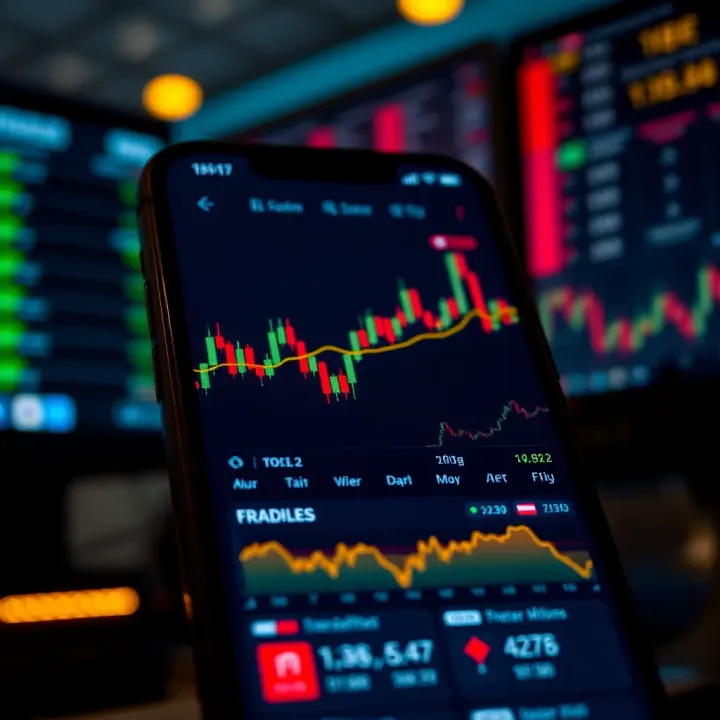
Discover top forex trading apps for Pakistan 🇵🇰. Learn key features, security tips 🔒, and how to boost your trading success with the right platform.
Based on 5 reviews