

Understanding Islamic Forex Trading
Explore Islamic forex trading principles 🕌, including Shariah-compliant contracts, halal brokers, and practical tips for trading forex within Islamic guidelines safely and ethically.
Edited By
Oliver Reed
Ethereum has established itself as more than just a cryptocurrency—it’s the backbone of decentralized applications ranging from finance to gaming. By 2030, Ethereum's price won't just depend on its current market standing but also on several crucial factors shaping its landscape.

Ethereum's continuous upgrades, like the shift to Ethereum 2.0, aim to improve scalability and energy efficiency. These changes aren't just technical jargon—they directly impact how many transactions the network can handle and the cost per transaction, factors that can boost Ethereum’s adoption.
Factors like investor sentiment, regulatory changes, and competition from other blockchain platforms influence Ethereum's price significantly. For example, if governments crack down on crypto trading, or new regulations emerge, the market could respond quickly, causing price swings.
Looking back, Ethereum has responded sharply to major events, such as the DeFi boom in 2020. Observing these patterns helps anticipate how Ethereum might behave under similar circumstances in the future.
Many financial analysts use data models combining on-chain metrics and macroeconomic trends to forecast Ethereum’s long-term price. While no prediction is a sure thing, these insights provide a useful gauge.
Keep in mind: the volatile nature of cryptocurrencies means price predictions should be viewed with caution, balancing optimism with realistic risk awareness.
Ethereum’s 2030 price relies heavily on its technological progress and market acceptance.
Regulatory clarity in the U.S. and worldwide could either smooth or disrupt Ethereum’s growth.
Competition from emerging blockchains may pressure Ethereum to innovate faster.
Understanding these elements offers a clearer picture of Ethereum’s potential price movement by the end of this decade. Staying informed allows investors and analysts to make smarter decisions rather than relying on hype or guesswork.
Understanding Ethereum’s market position and its historical trends is key for anyone looking to grasp how its price might evolve by 2030. This section lays out a practical framework by highlighting Ethereum’s journey, current standing among cryptocurrencies, and what those factors mean for investors and traders.
Early adoption and milestones played a big role in setting Ethereum apart early on. Launched in 2015, Ethereum was among the first platforms to introduce programmable smart contracts, effectively turning blockchain tech from mere digital currency into a flexible software platform. This innovation sparked interest beyond just investors, attracting developers who saw the potential for decentralized apps (dApps). For instance, the rise of Initial Coin Offerings (ICOs) around 2017 leaned heavily on Ethereum's capabilities, bringing huge network activity and price spikes.
Price trends over the years tell a story of remarkable ups and downs, but with a clear upward momentum overall. From just a couple dollars per ETH in its early days to peaking near $4,800 in late 2021, Ethereum has grown alongside the broader crypto market. The price swings often followed technological advancements or market hype—for example, the DeFi boom in 2020 pushed Ethereum prices up as more users locked assets in smart contracts. These historical fluctuations underscore how Ethereum’s value is closely linked to both technological progress and market sentiment.
Impact of major upgrades such as the transition to Ethereum 2.0 demonstrate Ethereum’s adaptability and response to scalability challenges. Ethereum 2.0 aims to replace energy-intensive proof-of-work with proof-of-stake, which should reduce fees and increase speed—two major pain points that have dampened user experience. Powerful network upgrades tend to renew confidence among investors since they promise long-term sustainability and improved usability, directly influencing Ethereum’s market prospects.
Comparison with other cryptocurrencies highlights that Ethereum holds a solid second place after Bitcoin but differentiates itself through its broader utility. While Bitcoin is often called digital gold, Ethereum’s platform-centric approach enables a wider range of applications, from DeFi to NFTs. This diversity makes Ethereum attractive to both institutional and retail players who want more than just a store of value.
Looking at market capitalization and trading volume, Ethereum consistently ranks among the top cryptocurrencies, often holding more than $200 billion in market cap at peak times. Steady high trading volumes on major exchanges like Coinbase and Binance reflect its liquidity and investor interest. These indicators are crucial because they signal Ethereum’s staying power and ability to absorb large investment flows without destabilizing the price.
The adoption by institutions and developers is another vital piece of the puzzle. Big players such as JPMorgan and Microsoft have integrated Ethereum-based solutions or explored its blockchain for enterprise use cases, increasing legitimacy. On the developer side, Ethereum has the largest active developer community in crypto, fueling a constant pipeline of innovation. This dual engagement keeps Ethereum relevant and more likely to attract future capital.
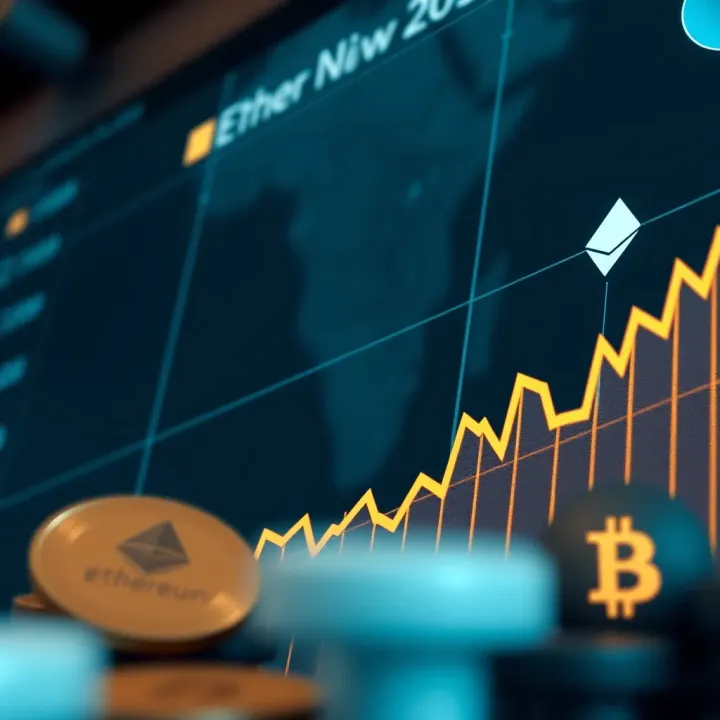
The bottom line is that Ethereum’s mix of past achievements and solid current standing offer a useful lens to anticipate its price trajectory over the next decade. Investors who understand these factors are better positioned to evaluate risks and opportunities.
Ethereum’s future price hinges a lot on technological advancements within its network. These developments don’t just improve the platform—they shape how accessible, efficient, and secure Ethereum becomes for users, developers, and investors. With upgrades and expanding applications, Ethereum aims to maintain its place as a leading blockchain while addressing limitations like speed, cost, and scalability.
Transitioning from proof-of-work (PoW) to proof-of-stake (PoS) is a cornerstone of Ethereum 2.0. This change reduces energy consumption drastically—by over 99%—making the network more eco-friendly. Practically, PoS replaces mining with staking, where holders lock up Ether (ETH) to secure the chain. This provides more consistent block validation and lowers entrance barriers for participants since specialized mining hardware is no longer needed. For investors, this means staking opportunities with potentially steadier rewards compared to volatile mining profits.
Ethereum’s original design limits how many transactions it can process—roughly 15 per second. Ethereum 2.0 addresses this bottleneck through sharding, which splits the blockchain into smaller parts to handle transactions in parallel. Instead of one lane on a highway, Ethereum will have multiple, reducing congestion significantly. This opens the door to higher transaction volumes, allowing applications, like decentralized exchanges or games, to operate smoothly even with thousands of users.
Faster transaction processing and lower fees will directly affect Ethereum’s usability. Currently, network congestion leads to spikes in gas fees, sometimes making small transactions uneconomical. Upgrades aim to bring transaction times down from minutes to seconds while slashing costs. For example, after implementing rollups and layer-2 solutions, gas fees could drop by 80% or more, encouraging retail and institutional users to stick with Ethereum instead of switching to cheaper alternatives.
DeFi platforms—offering lending, borrowing, and yield farming—rely heavily on Ethereum's infrastructure. As the network scales, more complex financial products can be created with less risk of delays or excessive fees. Real-life examples include Compound and Aave, which have millions of dollars locked in their smart contracts. Their success depends on Ethereum handling large volumes securely and affordably. Growth in DeFi will likely drive substantial demand for ETH, linking technological progress directly to price.
Non-fungible tokens (NFTs) exploded onto the scene through Ethereum, enabling artists and brands to monetize digital content uniquely. Faster, cheaper transactions mean creators can mint, sell, and trade NFTs without worrying about wasteful costs or long waits. Projects like NBA Top Shot and CryptoPunks showed what’s possible when NFT marketplaces run efficiently. As virtual experiences and digital ownership gain traction, Ethereum’s technology must keep up or risk losing ground to blockchains better suited for NFTs.
Big companies are exploring Ethereum for supply chains, identity verification, and more. Enterprises need reliable networks with robust security and predictable costs. Ethereum has attracted firms like Microsoft and JPMorgan, which use its platform for decentralized applications. Improving the network’s performance and reducing fees could accelerate corporate adoption, bringing steady transactional volume and increasing demand for ETH as “fuel” to power these applications.
Technological advances within Ethereum are more than just upgrades—they're the foundation of its price potential by 2030. Real-world use cases rely on these improvements to scale and flourish.
The bottom line: Ethereum’s path depends on how well it navigates upgrades and application growth. Keeping pace with technical demands while reducing costs is vital for retaining its market dominance.
Ethereum's price in 2030 will hinge on a few key drivers. Understanding these factors gives investors a clearer picture of potential gains and dangers ahead. From how much Ethereum is circulating to regulatory roadblocks and competitors trying to steal its thunder, these dynamics paint the full story.
Ethereum’s supply is unique because of its staking mechanism. After the switch to proof-of-stake, thousands of Ether are locked up by validators securing the network. This effectively reduces the liquid supply available for trading, which tends to support upward price pressure if demand holds steady or grows. For example, the Beacon Chain has become a significant vault, with over 14 million ETH staked as of early 2024. This staking lockup directly controls scarcity, and that scarcity can cool selling pressure and raise ETH's value.
Demand comes from two main groups: users and developers. Users want Ethereum to power transactions, pay gas fees, or participate in decentralized finance (DeFi) and NFT markets. Developers build dApps and smart contracts, expanding Ethereum’s ecosystem and utility. For instance, growth in DeFi platforms like Uniswap or Aave has consistently driven demand for ETH because users need it to interact with services. If more developers adopt Ethereum as their base layer, that creates ongoing demand for its token, supporting price gains.
Regulations form a tricky backdrop. In the US, the SEC’s stance on cryptocurrency has created uncertainty, especially concerning how cryptocurrencies like Ethereum are classified. Future regulatory rulings could impact trading or institutional involvement. Other countries are moving fast too — some cracking down tightly, others embracing crypto innovation. These regulatory shifts can make or break market sentiment quickly.
Institutional investors care deeply about regulation clarity. Without clear rules, big players hesitate to pour billions into Ethereum, fearing enforcement actions or legal complications. For example, pension funds or hedge funds might hold back if Ethereum is deemed a security or faces stringent reporting demands. But if regulators clarify Ethereum’s status and allow safer access, that could unlock massive institutional inflows, elevating demand and prices.
Ethereum's biggest threat comes from alternative blockchains aiming to do the same things but faster or cheaper. Networks like Solana, Avalanche, or Cardano promise better scalability or lower fees, tempting developers away. This competition could slow Ethereum’s growth or make its gas fees look less attractive.
Additionally, technology risks persist. Bugs, security flaws, or unexpected vulnerabilities can shake confidence. The DAO hack in 2016 showed how quickly issues can damage value. Though Ethereum has matured, no platform is immune to setbacks. Investors must weigh these risks against rewards carefully.
Bottom line: Ethereum’s 2030 price will reflect how well it manages supply through staking, navigates regulatory uncertainties, holds up against rivals, and avoids tech pitfalls. These factors together tell the story beyond just price charts.
Expert opinions and market sentiment provide valuable insight into where Ethereum’s price might head by 2030. They synthesize various factors such as technological developments, market conditions, and regulatory climate. For traders and investors, these predictions serve as a reality check against mere speculation, helping shape realistic expectations and strategies.
Price forecasts for Ethereum in 2030 vary widely, reflecting the uncertainty inherent in the crypto market. Analysts have proposed ranges from as low as $2,000 to as high as $50,000 or more. This discrepancy shows how dependent price predictions are on different variables, including adoption rates, innovation pace, and broader economic trends.
Understanding the assumptions behind these forecasts is just as important as the numbers themselves. Some analysts expect Ethereum to benefit from its shift to proof-of-stake and growing DeFi applications, driving demand and price up. Others caution that regulatory crackdowns or competition from newer blockchains like Solana or Polkadot could limit Ethereum’s upside. Recognizing these assumptions helps investors grasp why forecasts differ and prepares them to adjust their expectations as real-world events unfold.
Investor confidence trends mirror the general health of the market and are influenced by Ethereum's network performance and external factors like regulation news. In recent years, spikes in institutional interest have boosted confidence, contributing to price rallies. However, periods of network congestion or high gas fees tend to shake investor trust temporarily.
Sentiment analysis from social platforms adds another layer of insight by capturing the mood of retail investors and everyday users. Platforms like Twitter, Reddit, and specialized crypto forums often reflect early shifts in opinion and emerging trends. For example, viral discussions around NFT projects or major network updates can quickly sway sentiment and trading volumes. Monitoring social sentiment provides a real-time barometer that, when combined with analyst forecasts, forms a more comprehensive picture of Ethereum's potential price trajectory.
Bottom line: Balancing expert forecasts with community sentiment offers a practical way to navigate Ethereum’s price uncertainty. Staying informed about both helps traders and investors make better decisions based on evolving market dynamics rather than hype or fear alone.
Understanding Ethereum’s long-term outlook means recognizing both its upsides and the bumps along the road. The crypto market, especially Ethereum, is notorious for swings that can surprise even seasoned investors. So, balancing the risks and potential rewards is key to navigating these waters.
Volatility and market uncertainty are realities investors can't ignore with Ethereum. Prices can fluctuate wildly in short spans, driven by factors like regulatory news, technological hiccups, or market sentiment shifts. For example, the major price drop in May 2022 after regulatory concerns shook the market serves as a reminder that even solid projects face unpredictable turns. Keeping volatility in mind helps investors avoid panic selling and maintain a long-term focus.
On the flip side, Ethereum offers huge growth opportunities in the crypto space. As the leading smart contract platform, Ethereum steadily powers DeFi projects, NFTs, and more. Say you're watching the rise of decentralized exchanges like Uniswap or popular NFT platforms like OpenSea — these real-world use cases fuel demand and can push Ethereum's value upward. Plus, Ethereum's transition to proof-of-stake is expected to reduce energy costs and attract eco-conscious investors, boosting adoption further.
Diversifying portfolios is a smart move to manage risk when investing in Ethereum. Relying solely on one crypto exposes you to severe losses if that asset tanks. Instead, mixing Ethereum holdings with other cryptocurrencies, stocks, or bonds cushions the blow from downturns. For instance, pairing ETH with stablecoins or traditional tech stocks can balance growth potential and safety.
Staying updated on technological and regulatory changes is equally important. Ethereum’s planned upgrades, like shard chains, promise improved scalability but require staying informed to spot investment windows. Meanwhile, shifts in crypto regulations, like SEC rulings or tax law changes, can affect market access and price. Following trusted sources and regulatory bodies keeps you ahead, allowing you to adjust strategies promptly.
The bottom line is, Ethereum's future holds promise but demands careful attention to market swings and ongoing developments. A well-rounded, informed approach gives you the best shot at capitalizing on Ethereum’s long-term potential while shielding your investments from surprises.
Explore Islamic forex trading principles 🕌, including Shariah-compliant contracts, halal brokers, and practical tips for trading forex within Islamic guidelines safely and ethically.
Learn how to convert binary numbers to hexadecimal step-by-step with clear examples and tips 🔢. Perfect for students and engineers in computing and tech fields.

📈 Learn forex trading in Pakistan with our free, practical course. Understand strategies, risk management & legal tips to trade safely on top platforms. 🇵🇰

🔢 Learn how to convert binary code into readable ASCII characters with this clear, detailed guide. Perfect for students and beginners keen to understand this data representation method.
Based on 13 reviews