

Compliance Risk Management in Pakistan's Business
📊 Learn how Pakistani businesses can manage compliance risks by understanding regulations, tackling challenges, and building strong compliance cultures to protect operations.
Edited By
Thomas Walker
Understanding and managing risk is a daily reality for businesses and financiers in Pakistan's dynamic market. Effective risk management tools help identify potential threats early, assess their impact, and implement controls to protect capital and reputation. For traders, investors, financial analysts, and brokers, choosing the right risk tools can mean the difference between weathering economic shocks and suffering significant losses.
Risk management involves both qualitative and quantitative methods. Qualitative tools, such as SWOT analysis (Strengths, Weaknesses, Opportunities, Threats), offer a straightforward way to assess risks by discussing internal and external factors influencing an organisation. For example, a textile exporter in Faisalabad may recognise loadshedding risks affecting production and include mitigation plans like investing in backup generators.

Quantitative tools rely on data and statistical modelling to measure risk numerically. Value at Risk (VaR) is widely used to estimate potential financial losses over a specific period within a confidence level. In Pakistan’s stock market context, a portfolio manager might use VaR to gauge exposure to volatile sectors like energy or banking. Stress testing scenarios help assess how shocks—such as currency depreciation or policy changes—could impact portfolio value.
Technology-driven software solutions have become essential in risk management. Packages like Bloomberg Terminal and RiskWatch offer real-time market data, scenario analysis, and compliance tracking. Local businesses are increasingly adopting financial technology platforms that integrate with payment services like JazzCash and Easypaisa to monitor transactional risks and fraud.
Practical risk management also involves regulatory compliance tools. For instance, FBR (Federal Board of Revenue) mandates strict documentation and periodic reporting, requiring businesses to use software that flags tax-related risks and deadlines. Similarly, understanding PTA (Pakistan Telecommunication Authority) rules prevents penalties linked to SIM verification failures.
Combining qualitative insight with quantitative data and technology tools enables stakeholders to make informed decisions, limiting losses and capitalising on growth opportunities.
Key tools to consider include:
Risk identification frameworks such as checklists and hazard logs
Analytical models including Monte Carlo simulations and scenario planning
Sector-specific dashboards tracking macroeconomic indicators affecting Pakistani markets
Compliance monitoring systems for tax, telecommunication, and financial regulations
By selecting tools suited to your specific organisation’s scale, sector, and regulatory environment, you can better navigate Pakistan’s economic ups and downs. The following sections will explore these tools in detail to help you build a reliable risk management practise that fits local realities.
Risk management tools play a fundamental role in helping businesses and financial organisations identify, assess, and control the varied risks they face. These tools are not just theoretical checklists but practical instruments that enable better planning and safeguard assets. For instance, a textile exporter in Faisalabad can use risk registers to track supply chain disruptions caused by monsoon flooding, avoiding costly delays.
Early identification of risks helps businesses avoid surprises that could derail operations or investments. When a Karachi-based manufacturing company spots potential raw material shortages early through supplier risk assessments, it can source alternatives before production halts. This proactive approach saves time, cost, and reputation damage.
Risk management tools provide data-driven insights, making decisions more informed and less prone to guesswork. Financial analysts in Pakistan often rely on stress testing and scenario analysis to understand the impact of currency devaluation or interest rate hikes on portfolios. This clarity assists in crafting strategies that withstand market swings.
Tools help ensure businesses meet local and international regulations by keeping track of compliance risks. For example, financial institutions in Pakistan must follow State Bank of Pakistan (SBP) guidelines. Risk monitoring software alerts these banks about regulatory changes and exposes gaps in adherence, preventing penalties.
Operational risks arise from internal processes, people, or system failures. A local logistics company experiences operational risk if its fleet maintenance lapses, leading to breakdowns. Using checklists and regular audits reduces such risks, ensuring smooth day-to-day activities.
These include credit risks, liquidity issues, or losses from investments. For instance, a small investor in Lahore employing financial ratios like the debt-to-equity ratio can assess whether a company is over-leveraged before investing. Managing financial risks protects capital and earnings.
Market risks concern price fluctuations, while credit risks relate to counterparties defaulting. A stockbroker tracking market volatility through Value at Risk (VaR) methods can limit exposure. Similarly, banks evaluate creditworthiness using credit scoring models to reduce defaults.
Failing to comply with laws or contractual obligations leads to legal penalties. Companies in Pakistan must observe labour laws and tax provisions diligently. Risk management tools that document compliance tasks and deadlines ensure legal risks are mitigated effectively.
Effective risk management isn’t about eliminating all risk but managing what’s likely to impact your business badly. It helps preserve value and supports sustainable growth in uncertain environments.
By understanding these roles, financial professionals and business leaders in Pakistan can choose and apply risk management tools that fit their specific needs and challenges.

Qualitative tools offer a valuable approach to understanding risks that are often difficult to quantify. These tools rely on experience, judgement, and structured discussions to highlight potential pitfalls before they severely impact business operations or financial standing. For traders, investors, and financial analysts, qualitative methods complement hard data by bringing in human insight that can flag evolving risks not evident from numbers alone.
Risk checklists and risk registers serve as foundational tools for identifying and organising risks within a business. A checklist helps ensure no common risks are overlooked, acting as a reminder of known hazards based on previous experience or industry standards. Meanwhile, a risk register documents identified risks with details like their descriptions, likelihood, and possible consequences. This structured record enables clear communication among stakeholders and provides a central reference to revisit during regular risk assessments.
For example, a Pakistani textile exporter might have a checklist covering currency fluctuations, political instability, and supply chain disruptions. The risk register then tracks updates on these risks along with any mitigation actions.
Maintaining current and accurate risk records is essential for their effectiveness. Risks evolve due to market shifts, regulatory changes, or internal developments. Regularly reviewing and updating the risk register ensures risk management efforts remain relevant and proactive rather than reactive. An outdated register can create a false sense of security, missing emerging threats.
In practical terms, firms should assign responsibility for periodic updates and integrate risk record reviews into monthly or quarterly management meetings, especially in Pakistan's fast-changing economic environment.
Expert judgement brings varied perspectives to risk assessment, drawing on the experience of individuals familiar with specific markets, products, or regulations. Organising brainstorming sessions with stakeholders encourages open dialogue, surface hidden risks, and leverage collective knowledge. This approach works well in dynamic sectors like stock trading or banking, where new risks appear regularly.
In Pakistan's context, involving senior managers, compliance officers, and frontline staff in such sessions can capture practical insights ranging from political developments to operational bottlenecks.
Qualitative analysis involves evaluating risks by their nature, impact, and frequency without relying on precise numerical data. Using categories such as high, medium, or low risk simplifies decision-making, guiding prioritisation of mitigation efforts. For instance, a foreign investor in Pakistan might qualitatively assess risks linked to currency depreciation as high, even if exact financial models are unavailable.
This method is particularly useful early in the risk assessment cycle or when quantitative data is scarce or unreliable.
Scenario analysis helps organisations prepare for a range of possible futures by imagining different risk situations and how they could evolve. This proactive modelling highlights vulnerabilities and tests the resilience of strategies. For example, a Karachi-based financial institution could create scenarios involving sudden interest rate hikes, major regulatory reforms, or geopolitical tensions.
Generating realistic, relevant scenarios requires combining historical data with expert insight. It encourages thinking beyond best-case or worst-case extremes towards more nuanced possibilities.
Once scenarios are established, the next step is to examine how each would affect business goals, cash flows, or regulatory compliance. This assessment helps quantify possible losses or disruptions, shaping contingency plans. For Pakistani businesses, realistic scenarios might include loadshedding spikes affecting operations or currency fluctuations impacting import costs.
Through scenario analysis, decision-makers gain a clearer picture of risks’ potential effects, enabling better resource allocation to manage critical threats.
Effective use of qualitative tools sharpens awareness and readiness against risks that cannot be neatly measured. These tools form a vital part of risk management, especially under conditions of uncertainty common to Pakistan's business landscape.
Quantitative tools provide hard numbers that help businesses and investors understand potential losses and manage risks more effectively. These tools use statistical models and financial metrics to give a clear picture of risk exposure. For traders and financial analysts in Pakistan’s dynamic market, quantitative approaches are essential to making informed decisions backed by data.
Value at Risk (VaR) measures the maximum expected loss over a given time frame at a specific confidence level. For instance, a VaR of Rs 1 crore at 95% confidence over one month means there is only a 5% chance losses will exceed that amount within that period. Pakistani banks and financial institutions often use VaR to quantify market risk, helping them allocate capital and prepare for downturns. However, VaR depends heavily on historical data and may underestimate risks during extreme market shocks.
Monte Carlo Simulation involves running thousands of random scenarios to predict possible outcomes of investment portfolios or business decisions. This method accounts for uncertainty in various factors by simulating a wide range of possibilities. For example, a Karachi-based exporter can simulate exchange rate fluctuations and export demand variations to find the probability of different profit levels. Monte Carlo helps reveal hidden risks not obvious in simple statistical models.
Sensitivity and Stress Testing assess how drastic changes in key variables affect business health. Sensitivity testing changes one factor at a time—like a 10% rise in interest rates—to see its impact on profits or cash flow. Stress testing pushes multiple variables to extreme but plausible scenarios, such as a sudden rupee depreciation combined with a surge in commodity prices. Pakistani firms benefit from these tests by identifying vulnerabilities and preparing contingency plans against events like sudden load-shedding or geopolitical tensions.
Debt-to-equity ratio shows the balance between borrowed funds and shareholders’ equity. A high ratio might mean greater financial risk if earnings drop, while a low ratio could suggest underutilisation of borrowing capacity. Pakistani companies listed on the Pakistan Stock Exchange (PSX) monitor this ratio closely to manage financial leverage and investor confidence, especially when rupee instability affects repayment costs.
Liquidity ratios measure a company's ability to meet short-term obligations. The current ratio (current assets divided by current liabilities) indicates if a firm can pay bills on time. For example, a textile mill in Faisalabad with a current ratio below 1 risks cashflow problems during export slowdowns. Liquidity ratios are vital for businesses in Pakistan’s economy, where cash flow disruptions from delayed payments and supply chain issues are common.
Credit risk measurements evaluate the likelihood that borrowers or counterparties may default. Financial institutions use credit scoring models and probability of default metrics to safeguard loan portfolios. Pakistani microfinance banks, for example, rely on credit risk analysis to approve loans to small businesses in rural areas, balancing access to credit with portfolio quality.
Quantitative risk tools are not foolproof but serve as valuable guides, enabling Pakistani businesses to quantify risk exposure and plan accordingly.
Using these quantitative methods together creates a robust risk management framework that helps traders, investors, and financial professionals navigate uncertainty with confidence.
Technology plays an increasingly vital role in managing risks, especially for businesses and financial institutions operating in Pakistan’s fast-growing market. It enhances efficiency, accuracy, and real-time decision-making, which traditional tools alone cannot fully provide. By adopting technological solutions, organisations can better track, assess, and minimise risks that may impact operations or investments.
Modern risk management software brings multiple functionalities under one roof. These platforms typically offer risk identification, assessment, monitoring, and reporting tools. Automation helps reduce manual errors, while integrated dashboards provide clear visual summaries of potential threats. Additionally, some offer compliance management features to align with local regulatory standards, which is critical for firms dealing with SBP, FBR, or SECP requirements.
In Pakistan, platforms like SAP GRC and MetricStream have made headway, especially among larger enterprises, delivering customised solutions that consider local tax laws and industry specifics. Smaller businesses often use affordable cloud-based applications like LogicManager or Resolver, which enable risk tracking without heavy infrastructure costs. These examples highlight that regardless of size, Pakistani firms can find software suited to their scale and sector.
One of the biggest advantages of using data analytics and AI in risk management is predictive analytics. This allows firms to spot emerging risks by analysing patterns from past data combined with real-time market information. For traders and financial analysts, this means better anticipation of market volatility or credit defaults, enabling pre-emptive action.
Moreover, AI-powered automation streamlines risk reporting, producing regular, standardised reports without the delay or errors associated with manual preparation. Efficiency in documentation helps management and boards make informed decisions faster, which is critical during sudden events like currency fluctuations or policy shifts in Pakistan’s dynamic economy.
Protecting sensitive information is non-negotiable today. Cybersecurity solutions defend against hacking attempts, phishing, and malware—risks that can cripple financial firms or traders reliant on digital systems. Tools like firewalls, antivirus software, and intrusion detection systems build layered protection around confidential client data and business strategies.
Dealing with data breaches involves swift detection and response mechanisms. Organisations in Pakistan are increasingly investing in incident response tools that alert teams to suspicious activities. Post-incident, these tools help with forensic analysis and recovery, minimising financial and reputational damage. Considering the rise in cyber threats locally, having robust cybersecurity measures in place supports business continuity and trust among stakeholders.
Technology is no longer an option but a necessity for risk management in Pakistan’s business and financial sectors. It streamlines complex processes and strengthens defence against a wide range of risks.
This section reflects a practical guide for traders, investors, and analysts looking to enhance risk management through technology while addressing local demands.
Implementing risk management tools properly makes a big difference in how well they help an organisation manage threats. Without careful application, even the best tools can become ineffective or misused. Pakistani companies, particularly small and medium-sized enterprises, often choose tools without considering their specific needs, which leads to wasted resources and missed risk signals.
Matching tools with business size and sector plays a key role in effective risk management. For example, a large financial institution in Karachi will need complex risk modelling software capable of handling market, credit, and operational risks simultaneously. On the other hand, a retail store in Lahore may benefit more from basic risk checklists and manual monitoring, as complex software might be an overkill and costly. Furthermore, sectors like manufacturing face distinct operational hazards that differ from service industry risks; hence, risk tools must adapt to these sector-specific challenges.
Considering regulatory compliance is essential when selecting risk tools, especially in Pakistan's tightly regulated financial and corporate sectors. Financial firms must ensure their risk management approaches comply with Pakistan's State Bank regulations and Federal Board of Revenue tax laws. Non-compliance can result in fines or reputational damage. For instance, a company should integrate tools that generate reports aligning with SECP or SBP requirements, avoiding any disconnect during audits or regulatory reviews.
Building risk awareness across teams ensures every staff member understands potential risks and the role of risk tools. Many Pakistani organisations overlook training, causing gaps where employees either ignore risk alerts or misinterpret data. Conducting regular workshops and practical training sessions tailored to how risk affects daily roles can embed a culture of risk vigilance. For example, frontline staff at a logistics company can be trained to spot early signs of supply chain disruption, feeding real-time updates into risk systems.
Integrating tools into daily operations means risk management isn't an afterthought but part of everyday decision-making. Tools must be user-friendly and seamlessly fit with other business processes. Take a trader using a risk dashboard that updates in real time with market movements — this immediate visibility helps adjust positions proactively rather than reacting late. Companies should foster collaboration between IT and business units to ensure tools meet operational realities.
Reviewing tool effectiveness regularly helps spot if risk tools are delivering expected benefits or require adjustments. Organisations in Pakistan should set clear KPIs for their risk systems, such as reduction in unexpected losses or faster risk detection. Quarterly reviews can compare predicted and actual risks, prompting revisions in tool parameters or user training.
Updating risk data regularly is critical because risk environments evolve rapidly, especially in volatile markets like Pakistan’s. Ignoring data freshness can lead to outdated insights. For instance, a company tracking currency risk must update foreign exchange rates daily and adjust hedging strategies accordingly. Maintaining accurate risk databases allows informed and timely decisions.
Effective risk management demands more than just tools; it requires selecting the right fit, training people well, and constant upkeep. Only then can businesses stay ahead of uncertainties and safeguard their interests in Pakistan’s dynamic market.
📊 Learn how Pakistani businesses can manage compliance risks by understanding regulations, tackling challenges, and building strong compliance cultures to protect operations.

🌪️ Learn about disaster risk management in Pakistan with this practical guide covering key roles, challenges, and ways to boost community resilience against disasters.

📊 Discover how risk management in Pakistan businesses cuts losses, boosts smart decisions, saves costs, ensures compliance, and builds a stronger reputation.
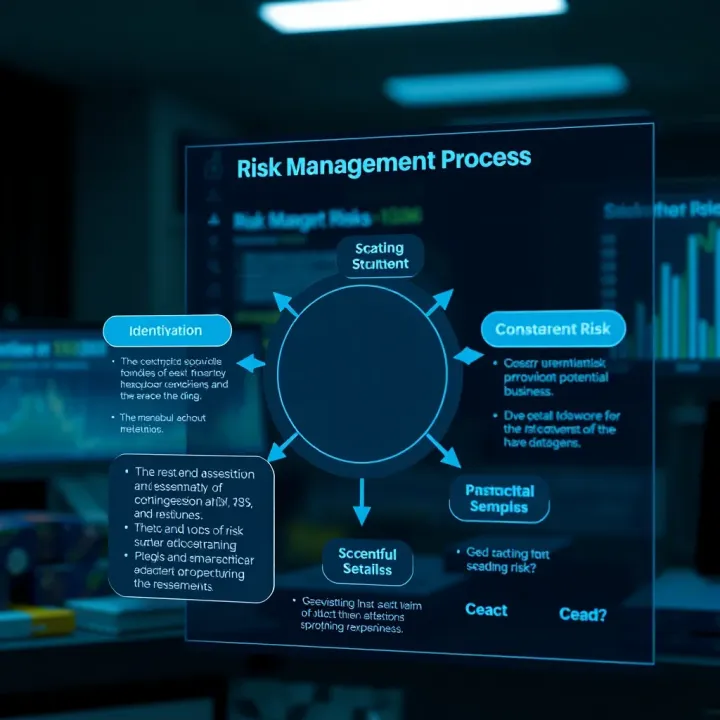
📊 Explore practical steps of risk management for businesses and organisations in Pakistan. Learn how to identify, assess, and control risks to protect operations effectively.
Based on 7 reviews