
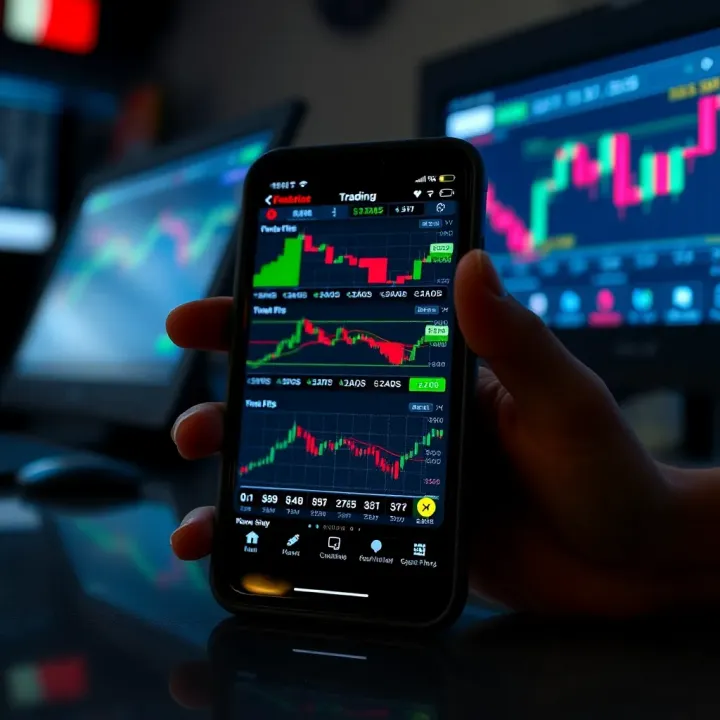
Best Forex Trading Apps: A Simple Guide
🌍 Find the best forex trading app tailored for you. Explore features, compare top picks, and learn tips on security, costs, and ease of use for effective trading.
Edited By
Henry Walsh
Karachi stands as Pakistan's financial hub, making it a natural centre for forex trading education. Foreign exchange trading has gained traction here, especially among youth keen to tap into global markets from the comfort of their homes. But stepping into forex without proper guidance can be risky, given the market’s volatility and complexity.
A forex trading course in Karachi offers structured learning that covers both theoretical concepts and hands-on trading skills. These courses help traders understand currency pairs, market analysis, risk management, and trading platforms commonly used in Pakistan, such as MetaTrader 4 or 5.
Avoid Costly Mistakes: Many beginners lose money by trading blindly. A course builds foundational knowledge and reduces errors.
Understand Market Nuances: Local economic factors, geopolitical shifts, and Pakistan’s currency trends influence forex markets differently than global averages.
Learn Technical and Fundamental Analysis: Recognising patterns, statistics, and news impacts requires training.
Access Expert Guidance: Experienced instructors in Karachi can share insights specific to Pakistan’s trading environment.
Clear explanations of basic terms like pips, lots, leverage, and margins.
Training on using forex trading software and platforms.
Risk management techniques tailored to protect capital in volatile times.
Study of economic indicators that affect forex, including Pakistan’s inflation and SBP (State Bank of Pakistan) policies.
Real-time market simulations or live trading sessions.
Choosing the right course means considering factors like course duration, fees (most range between Rs 20,000 to Rs 50,000), instructor experience, and student reviews. Some well-established training centres in Karachi also offer certifications recognised by local financial bodies.
In short, enrolling in a forex trading course in Karachi equips you with practical skills and regional knowledge, preparing you better for the ups and downs of currency trading.
Forex trading involves buying and selling currencies to profit from changes in exchange rates. For newcomers, understanding fundamental terms like currency pairs, pips, and leverage is crucial. Currency pairs—such as USD/PKR—show how one currency relates to another. Traders aim to buy currencies expected to strengthen against others and sell those likely to weaken. Mastery of these basics helps reduce risks and make informed decisions.
On a global scale, forex operates as an over-the-counter market open 24 hours during weekdays. Major financial centres like London, New York, and Tokyo overlap to create continuous trading. Locally, Karachi plays a key role given Pakistan’s dependence on foreign exchange for imports, exports, and remittances. The Karachi Stock Exchange (now part of Pakistan Stock Exchange) alongside forex brokers facilitates currency trading. Understanding both global dynamics and Karachi’s position helps traders anticipate market moves.
Forex stands for foreign exchange, where global currencies trade in pairs. Each pair reflects the value comparison between two currencies. For example, if USD/PKR rises from 280 to 282, it means the US dollar has strengthened against the Pakistani rupee. Terms like ‘spread’ (the cost difference between buy and sell price) and ‘leverage’ (borrowing capital to increase trade size) are essential to comprehend as they impact profits and losses directly.
Globally, forex trading centres function in a relay from east to west, ensuring liquidity round the clock. Traders rely on macroeconomic data, geopolitical news, and central bank policies to predict currency movements. Locally, Karachi’s proximity to major banks and regulatory bodies gives Pakistani traders access to currency markets with some restrictions. The State Bank of Pakistan’s (SBP) policies influence the rupee’s strength, affecting forex trends that Karachi traders must follow closely.

Pakistan’s economy depends heavily on forex due to imports of essential commodities and remittances from overseas Pakistanis. Forex trading acts as a bridge allowing businesses to hedge currency risks and individuals to capitalise on market fluctuations. With the rupee’s usual volatility, understanding forex trading empowers traders in Karachi to navigate and potentially profit from economic shifts.
Karachi offers considerable access to brokerages and financial training institutes compared to other cities in Pakistan. This access fosters skill development and market exposure. However, risks remain, such as market unpredictability and regulatory changes impacting currency flows. New traders should acknowledge that while forex offers high-return potentials, losses can be significant if market signals and economic data are overlooked.
Proper understanding of forex trading basics combined with awareness of Karachi’s economic context equips aspiring traders for more confident decision-making and real-world applications in Pakistan’s market.
This knowledge lays the foundation to choose courses wisely and trade responsibly.
A good forex trading course in Karachi must offer a curriculum that prepares students for real market conditions. Quality content and practical skills go hand in hand to equip learners for the risks and rewards in trading. Alongside what is taught, how it’s taught, and who teaches it, also shapes the effectiveness of a course.
Technical and fundamental analysis form the backbone of most forex trading education. Technical analysis involves studying charts, patterns, and indicators to predict price movements. This skill helps traders in Karachi spot entry and exit points based on historical price data rather than guesswork. For example, learning to read candlestick patterns or moving averages can give a trader an edge when trading USD/PKR.
Fundamental analysis covers factors like economic reports, interest rates, and geopolitical events which influence currency values. In Pakistan’s context, understanding how State Bank of Pakistan’s policy rate changes or political developments impact the rupee is crucial. Effective courses teach students to combine both analyses to form balanced trading decisions rather than relying on one approach only.
Risk management strategies are equally vital to keep losses under control. A course that covers position sizing, stop-loss orders, and diversification helps traders protect their capital during volatile phases. Many beginner traders often lose money by ignoring these fundamentals. Practical lessons on setting realistic risk-reward ratios and using leverage sensibly can help Karachi’s traders stay in the game longer and avoid rash decisions under pressure.
Classroom sessions versus online learning is a major factor in course selection. Classroom settings provide face-to-face interaction which benefits learners who prefer direct guidance and immediate feedback. In Karachi, some institutions offer in-person classes where real-time discussion and hands-on chart work occur.
On the other hand, online learning offers flexibility and accessibility, especially for working professionals. Platforms like Zoom or pre-recorded videos let learners study at their own pace. This suits Karachi’s busy traders who may not attend fixed timings but still want structured learning.
Full-time courses and part-time options address different student needs. Full-time courses usually run over a few weeks with intensive sessions, ideal for those dedicated to mastering forex quickly. Part-time courses spread over months allow gradual learning alongside jobs or studies. Knowing your availability helps pick the right rhythm for efficient learning in Karachi’s dynamic environment.
Recognised certification increases a course’s credibility and value for career prospects. Certificates acknowledged by financial institutes or international bodies assure employers or clients that you have sound knowledge. In Karachi’s competitive market, a recognised forex certification can set you apart.
Qualifications and experience of instructors directly impact learning quality. Trainers with actual trading experience and relevant financial credentials can share insights beyond textbooks, including local market quirks. For instance, an instructor who has traded Karachi Stock Exchange-listed companies' stocks and forex pairs understands what traders face here. Always seek courses led by professionals who actively practise trading or mentoring to get real-world perspectives.
Choosing the right forex trading course means looking beyond surface promises. Focus on thorough curriculum content, flexible yet effective delivery methods, and well-qualified trainers with recognised certificates for meaningful learning in Karachi’s forex space.
Selecting the right forex trading course in Karachi is essential for building a solid foundation and avoiding costly mistakes. Karachi's forex market environment has its unique features, especially considering the local economic conditions and regulatory framework. A quality course adjusts for these local factors, offering practical knowledge that you can apply directly, rather than just generic theories.
Feedback from past students is one of the most reliable ways to gauge the effectiveness of a forex trading course. Honest reviews reveal whether a course delivers a balanced mix of theory and hands-on practice. For instance, if past students report that the trainers provide clear explanations of technical analysis suited to Pakistan’s market volatility, it indicates strong course relevance. Also, feedback often points out if the course support staff responds quickly to queries, which matters greatly for beginners navigating complex forex platforms.
Success stories and case studies give practical evidence of a course's real-world impact. When a course showcases past learners who went on to trade profitably or secured professional roles in Karachi’s financial institutions, that signals a worthwhile investment. For example, hearing about someone who started with Rs 50,000 and successfully grew their portfolio with strategies learned in the course adds confidence. Case studies also help demonstrate how course content unfolds over time, showing concrete results rather than promises.
As in any major city, typical course fees in Karachi vary depending on the curriculum's depth and institutional reputation. Most beginner-friendly forex courses range from Rs 20,000 to Rs 70,000, depending on factors like session duration, included materials, and one-on-one mentorship. It's good to compare multiple options since high fees do not always guarantee quality. Some courses offered by reputable training houses or financial institutes might charge more but could come with better placement or certification.
Installment and scholarship possibilities can ease financial pressure, making forex education accessible to more traders. A few training centres in Karachi offer monthly instalments to spread out payments, which benefits those earning a monthly salary. Occasionally, scholarships or discounts appear during festive seasons, like Ramazan or Eid, to encourage more sign-ups. It helps to ask centres directly about such options rather than assuming upfront payment is mandatory.
Choosing carefully based on reputation, student feedback, success proof, and affordable payment terms protects your investment and improves your chances of becoming a confident forex trader in Karachi.
Making a thoughtful choice in your forex trading education ensures you're not just learning the basics but gaining usable skills aligned with Pakistan’s forex market realities.
Starting forex trading without practical tips is like setting out on a trip without a map. For beginners in Karachi, grasping actionable advice is essential to avoid costly mistakes and build confidence quickly. Karachi’s volatile economic landscape demands a steady approach, making practical tips not just helpful but necessary for anyone new to the forex market.
Using demo accounts lets beginners experience live trading conditions without risking real money. These practice accounts simulate actual market scenarios, allowing traders in Karachi to develop strategies and understand order execution firsthand. For example, by using a demo account on platforms like MetaTrader, you can test how currency pairs like USD/PKR behave during news fluctuations without financial risk.
Most importantly, demo trading helps in building discipline and familiarity with trading tools. It’s best to treat demo accounts seriously, tracking profits, losses, and market behaviour just like a real account.
Learning to manage losses is key to long-term success. Even with small investments, losses are unavoidable. Understanding how to limit losses through stop-loss orders and position sizing can save your capital. Many beginners make the mistake of ignoring losses, thinking they will recover in the next trade. In Karachi’s forex scene, where economic indicators like inflation or rupee volatility affect market moves, this attitude can quickly wipe out your funds.
Forex trading hinges on current information. Accessing reliable sources for forex market news helps traders make informed decisions. Websites like Bloomberg, Reuters, and local financial news portals offer timely updates. Additionally, keeping an eye on announcements from State Bank of Pakistan (SBP) or major trade reports can provide clues about currency movements.
Pakistan’s economic data such as interest rate changes, trade deficits, or remittance flows significantly impact currency values. For instance, if SBP raises the policy rate, the rupee might strengthen against the dollar, affecting forex positions. Being aware of such indicators helps Karachi traders adjust their strategies, reducing risk and seizing profitable opportunities.
Staying practical means starting carefully, practising consistently, and relying on trustworthy news. This approach equips beginners in Karachi's forex market to trade with confidence and minimise losses effectively.
🌍 Find the best forex trading app tailored for you. Explore features, compare top picks, and learn tips on security, costs, and ease of use for effective trading.
📈 Explore forex trading training essentials for Pakistani traders: skills, strategies, course structures, and tips to navigate market challenges confidently.
📊 Understand live forex trading with real-time tools, market insights, and risk management tips crafted for Pakistani traders seeking success in volatile markets.
Learn forex trading basics in Pakistan 🇵🇰, from essential terms to risk strategies and technology use, with practical tips for confident trading in local markets 💹
Based on 7 reviews