
Is Forex Trading Halal or Haram? Islamic Views Explained
Explore if forex trading is halal or haram under Islamic law 📈. Understand concepts like riba, gharar, and get practical guidance for Pakistani investors.
Edited By
Emma Thompson
Binary trading involves predicting whether an asset’s price will rise or fall within a set timeframe. If you guess right, you gain a fixed payout; guess wrong, and you lose your investment. Think of it as a yes-or-no bet on price movements rather than owning the asset itself.
From an Islamic finance perspective, several concerns come up around binary trading. Islamic law, or Sharia, prohibits activities involving excessive uncertainty (gharar), gambling (maysir), and interest (riba). Whether binary trading falls under these prohibitions depends on its exact nature and execution.
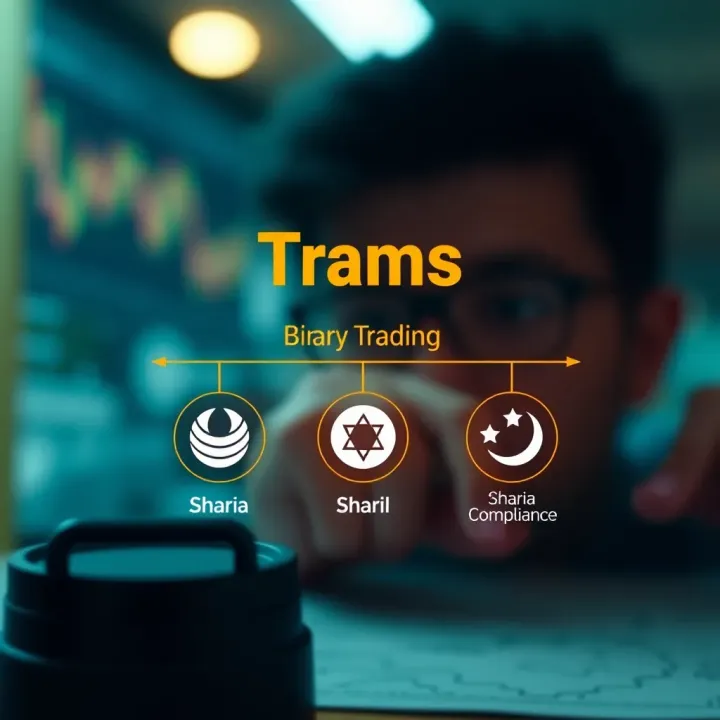
Gharar (Excessive Uncertainty): Binary trading has a high level of uncertainty since outcomes depend on short-term price swings that are often unpredictable. Many scholars view this uncertainty as problematic.
Maysir (Gambling): Since binary trading is essentially a wager on price direction without asset ownership, it closely resembles gambling, which Islamic law forbids.
Lack of Asset Ownership: Traders do not own underlying stocks or commodities, just rights to payouts based on price moves. This detaches the activity from real economic transactions.
Interest (Riba): Some binary trading platforms involve rollovers or other mechanisms that may resemble paying interest, adding another layer of concern.
Opinions vary widely. Some scholars outright declare binary trading haram (forbidden) because it mimics gambling. Others suggest it could be halal (permissible) if structured carefully — for example, by ensuring no interest, limiting speculation, or tying trades more closely to tangible assets.
If you’re considering binary trading, keep these points in mind:
Understand the Platform: Does it charge interest or encourage excessive speculation?
Check for Transparency: Are the terms clear? Is the underlying asset identifiable?
Consult Trusted Scholars: Guidance can vary, so seek advice from knowledgeable Islamic finance authorities.
Consider Alternatives: Platforms offering Islamic trading accounts or compliant investment products might be better suited.
The bottom line is that binary trading’s compatibility with Islamic law depends heavily on how it’s practiced. It’s crucial to analyze each case closely rather than assuming all binary trading is the same.
Understanding these aspects helps Muslim traders weigh the risks and make informed decisions that align with their values and financial goals.
Understanding what binary trading involves is essential before evaluating its compliance with Islamic principles. Binary trading simplifies asset price movements into a yes-or-no bet, but its mechanics, assets involved, and risks do matter for anyone thinking about engaging in this market.
Binary options let traders predict whether an asset's price will go up or down within a fixed time frame—say, 30 minutes or a day. If your prediction is right, you get a fixed payoff; if it’s wrong, you lose the investment for that option. Imagine betting $100 that Apple’s stock will rise in the next hour. If Apple’s price closes higher at expiration, you might earn $80 profit. Get it wrong, and you lose the $100.
In practice, it’s a simple all-or-nothing bet, which means there is no partial gain or loss—only a fixed return or a total loss. This binary outcome appeals to traders who like straightforward risk and reward scenarios.
Common assets traded via binary options include stocks, indices like the S&P 500, currencies such as EUR/USD, and commodities like gold or oil. These are popular because their prices fluctuate regularly, creating opportunities for traders to place short-term bets on their direction.
Binary trading offers potentially high rewards, sometimes promising 70% to 90% returns if you win. This lump-sum payout is attractive, but the risks are just as sharp: you can lose your entire investment in a single trade. The all-or-nothing nature amplifies both the excitement and the danger.
Risks include market volatility, sudden price swings, and situations where brokers may create conflicts of interest since they often act as counter-parties. Traders may also make decisions based on limited information, increasing the chance of losses.
Binary trading attracts a mix of retail investors, day traders, and speculators looking for quick profits. Its simplicity and low entry costs—sometimes as little as $10 per option—make it accessible to beginners. Yet, this ease also tempts people to treat it like gambling rather than strategic trading.
Platforms offering binary options vary widely, from established brokers regulated under agencies like the Commodity Futures Trading Commission (CFTC) to offshore unregulated websites. Well-known platforms emphasize user-friendly interfaces and fast trade execution.
In the United States, binary options trading is tightly regulated. The CFTC and SEC oversee these markets to protect investors from scams and fraud. Only a few exchanges, like Nadex, are licensed to operate, with strict rules on transparency and fair pricing.
This regulatory control aims to ensure a level playing field, but many offshore platforms still operate outside US jurisdiction, leading to risks of unfair practices. Traders need to verify platform credentials carefully to avoid falling prey to unauthorized or fraudulent services.
Knowing how binary trading works, along with its risks and players, is a key step in assessing whether it aligns with Islamic finance principles that emphasize fairness, transparency, and avoidance of excessive risk.
Islamic finance differs from conventional finance primarily because it operates within the framework defined by Sharia law. This framework influences how trading and investing must be approached, especially regarding fairness, risk, and ethical considerations. Understanding these principles offers a clear lens to evaluate whether certain financial activities, like binary trading, align with Islamic values.
At the heart of Islamic finance lies the outright ban on riba, or interest. This means any guaranteed interest on loans or investments is considered unjust and exploitative. In practice, this prohibits earning money from money alone without any real economic activity or risk involved. For example, a savings account that offers a fixed interest payment would be non-compliant, while profit-sharing investment accounts are preferred since profits and losses are shared.
Islam emphasizes sharing actual business risks, discouraging excessive uncertainty or speculation, known as gharar. This principle discourages transactions where the outcome depends heavily on chance or misleading information. It’s why speculative bets or highly uncertain contracts are frowned upon. For instance, investing in a project where profits and losses are shared aligns with this principle, but gambling on price movements without asset ownership wouldn’t.
Contracts in Islamic finance must be clear, fair, and transparent for all parties involved. Hidden fees, ambiguous terms, or deceptive practices violate Sharia principles. This ensures that both buyer and seller, or investor and entrepreneur, fully understand their rights and obligations, preventing exploitation. So, a well-structured trade agreement or investment contract clearly stating all terms is critical.

Islam permits trading when based on tangible assets or legitimate business activities. Buying and selling goods, shares of companies with halal operations, or real estate are usual examples. However, trading in forbidden items or engaging in contracts purely speculative without ownership is not allowed. A practical example is purchasing shares in a compliant company versus betting on price fluctuations without owning the underlying asset.
Ethics hold considerable weight in Islamic investing. Traders must avoid involvement in businesses tied to alcohol, gambling, pork products, or anything viewed as harmful or unethical under Islamic law. Transparency, honesty, and social responsibility also matter. If a Muslim investor finds a company involved in environmentally destructive practices, that could be a red flag, even if the company itself is halal.
Islamic finance stresses the importance of contract validity — contracts must meet certain conditions, including mutual consent, lawful subject matter, and absence of excessive uncertainty. Invalid contracts can render transactions void or haram. For instance, if a trade contract leaves key details vague or if one party pressures the other unfairly, religious scholars may question its validity.
In short, trading within Islamic finance requires clarity, fairness, and genuine economic activity, steering clear of unjust gains and pure speculation. These principles help Muslims decide which trading practices align with their faith and which cross the line.
By recognizing these core concepts, traders and investors can better assess whether their activities comply with Islamic finance principles, especially when dealing with complex instruments like binary options.
Binary trading raises important questions when viewed through the lens of Islamic finance. This section digs into why certain aspects of binary trading might conflict with Sharia principles, focusing on speculation, fairness, and transparency. Understanding these concerns can help traders make informed decisions about whether binary trading aligns with their ethical and religious values.
Binary options essentially involve predicting if an asset’s price will go up or down by a specific time. This all-or-nothing setup closely resembles gambling since the trader either wins a fixed payout or loses their entire investment. Islam clearly prohibits gambling, as it is based on chance and no real productive activity happens. The question then is whether binary trading’s speculative nature crosses this line, making it akin to gambling.
While gambling generally revolves around games of chance like roulette or slot machines, binary trading is based on market price movements. However, market shifts can be unpredictable and heavily influenced by factors beyond the trader’s control. Unlike investing in a company’s stock, binary trading doesn’t involve ownership or dividends—it is more about betting on short-term outcomes. For many Islamic scholars, this makes binary trading closer to gambling than legitimate trading, spurring debate about its permissibility.
Sharia finance emphasizes avoiding excessive uncertainty (gharar) and encourages concrete ownership of assets. Binary trading involves high uncertainty since the trader doesn’t own the underlying asset—they hold a contract betting on price direction instead. This detachment from actual ownership and the all-or-nothing payoff further complicates the matter. Traders risk losing their entire stake on uncertain outcomes, which many view as speculative and not compliant with Islamic ideals.
One major concern is the uneven information flow between traders and brokers. Often, traders might not have full access to trade data or how prices are determined. This imbalance can lead to unfair disadvantages, undermining the Islamic principle of transparent and honest dealings.
Many binary trading platforms act as counterparties to their clients’ trades. This creates a direct conflict of interest—the more a client loses, the more the broker gains. Such a setup raises ethical questions, as brokers might have incentives to influence prices or trade conditions, conflicting with the fairness demanded by Sharia.
Due to weak regulation in many markets, binary trading platforms might manipulate payout rates, prices, or trade execution. This manipulation harms traders and erodes trust. Sharia emphasizes justice and prohibits fraud, so any form of manipulation clearly clashes with Islamic finance's core values.
The bottom line is that concerns about speculation, fairness, and transparency are at the heart of Islamic critiques of binary trading. These issues make it crucial for Muslim traders to scrutinize the platforms and methods they use before engaging in such trading.
Understanding these challenges provides a solid foundation for anyone trying to decide if binary trading is truly halal. It shows why this trading form remains controversial among Islamic scholars and highlights the need for caution and due diligence.
Islamic scholars play a key role in guiding Muslims on financial matters, especially when it comes to complex products like binary trading. Their views help clarify whether such trading fits within Islamic finance principles, offering practical insights that traders can rely on. Beyond theoretical debates, these perspectives address real concerns related to ethics, contract validity, and risk.
Many scholars argue binary trading resembles gambling because it often involves betting on price movements without actual ownership of the underlying asset. This similarity is particularly relevant in cases where traders simply predict market direction and stand to lose or win a fixed sum, much like a bet on a coin toss. Such behavior contradicts the Islamic prohibition against gambling (maysir), as it can foster dependency on chance rather than productive economic activity.
For instance, if a trader bets $100 that a stock price will rise in 30 minutes and simply wins or loses based on that outcome, some scholars view this as pure speculation with no added value or asset transfer involved.
Binary trading may also violate principles like riba (prohibition of interest) and gharar (excessive uncertainty), which are fundamental in Islamic finance. Certain binary options offerings involve implicit interest-like components or excessive ambiguity in contract terms, creating unfairness and potential for exploitation.
Practically, if a binary contract includes fees or payout structures weighted unfairly or hidden risk factors, a Muslim trader risks engaging in transactions that conflict with Sharia. This means the entire trade could be deemed invalid or non-compliant.
Islamic finance emphasizes reducing uncertainty (gharar) to ensure fairness and transparency. Binary trading’s fixed payoff and often short-term nature can introduce excessive uncertainty, as traders gamble on unpredictable price movements within brief windows.
The practical effect is that traders might enter deals where outcomes depend largely on luck or insider information. This unstable setup conflicts with Islamic teachings that promote clear, confident contracts where both parties understand risks.
Some scholars allow binary trading if it meets strict requirements designed to minimize gambling and uncertainty. These include clear contract terms, absence of interest charges, and genuine risk-sharing.
Practically, traders should review every contract detail, verify terms upfront, and ensure they understand all risks without hidden variables. Only then can binary trading be considered closer to halal.
A key factor for permissibility is that traders hold actual ownership or rights to the underlying asset during the trade. Some scholars say that true asset ownership distinguishes legitimate trading from mere speculation.
For example, if a binary option contract grants ownership or delivery rights to a commodity or stock, this can satisfy conditions for Sharia compliance. Without this, the trade risks being a hollow contract based on guesswork.
Using regulated brokers and transparent platforms reduces risks of manipulation and unfair practices. This transparency aligns well with Islamic emphasis on fairness and trust in contracts.
In practice, traders should choose platforms registered with US regulators like the CFTC or SEC, which enforce strict operational standards. This helps prevent scams and ensures all trading activity remains above board.
The bottom line is that while many Islamic scholars caution against binary trading due to gambling and uncertainty concerns, some allow it under conditions that enforce clarity, ownership, and fairness. Muslims considering this trading must scrutinize platforms and contracts carefully to align with Islamic finance principles.
Navigating the complex question of whether binary trading is halal involves more than just academic or religious debate. It’s about practical steps that help Muslim traders make informed decisions. This section lays out actionable advice to evaluate binary trading's alignment with Islamic principles clearly, focusing on concrete factors like platform credibility, contract details, and avoiding prohibited elements.
Not all brokers and trading platforms operate the same, and this can seriously affect whether trading is halal. Muslim traders should start by choosing a platform regulated by recognized authorities, such as the U.S. SEC or the Commodity Futures Trading Commission (CFTC). Regulation ensures some level of transparency and reduces the risk of fraud. For example, a platform lacking clear licensing or customer protection policies is a red flag and likely not suitable.
Moreover, the platform should offer straightforward terms and clear asset ownership. Traders have to confirm that their trades involve real assets rather than mere bets on price movements, since genuine asset exchange aligns better with Islamic trading rules.
Next, scrutinizing the details of the contract itself is critical. The contract should explicitly state what assets are involved, the duration of the trade, and payout conditions without ambiguity. Hidden clauses or overly complex terms can introduce unnecessary uncertainty (gharar), which Islam prohibits. For example, if the contract has unclear terms or penalties not well explained, it adds to risk and could be considered non-compliant.
Transparency here isn't just a legal concern but a religious one. Knowing exactly what you're agreeing to helps avoid involvement in misleading or deceptive transactions.
Binary trading often resembles a gamble because the payoff depends on predicting market movements within a short time frame, sometimes just minutes or seconds. To stay halal, a trader must ensure that the activity doesn’t involve riba (interest) or resemble maysir (gambling).
It means avoiding platforms or setups where the broker profits if you lose, creating a conflict of interest. Instead, halal-compliant trading should involve fair market participation without bets solely on chance. For instance, trades that represent real asset ownership or are done through Islamic financial institutions stand a better chance of being acceptable.
The bottom line is to avoid speculative setups riddled with risk and uncertainty that Islam specifically warns against.
For those wary of binary trading, exploring Sharia-compliant alternatives offers safer and faith-aligned paths. Options include Sukuk (Islamic bonds), which generate returns without interest, and real asset investments like halal real estate projects. These alternatives emphasize asset backing and risk-sharing, steering clear from speculation.
Investing in such products is generally more transparent and structured according to Islamic principles, providing traders peace of mind.
Investing in stocks is permissible in Islam if the companies comply with Sharia rules—for example, avoiding businesses involved in alcohol, gambling, or interest-based activities. Islamic mutual funds curate portfolios to exclude such companies, making it easier for Muslims to invest ethically.
For example, many U.S. and international financial institutions now offer Shariah-compliant mutual funds, providing diversification and professional management without violating religious precepts.
Rather than short-term binary trades, long-term ethical investment strategies align better with Islamic values. Holding investments over months or years reduces speculation and focuses on real growth.
Strategies might include investing in companies with strong environmental, social, and governance (ESG) policies or supporting community development projects. These approaches promote sustainability, fairness, and responsibility—values deeply rooted in Islamic finance.
Choosing investments based on good ethics and patient growth is not just practical but spiritually rewarding.
Explore if forex trading is halal or haram under Islamic law 📈. Understand concepts like riba, gharar, and get practical guidance for Pakistani investors.
Curious about the legality of binary trading in Pakistan? 📊 Understand its rules, risks, and what financial authorities say before you invest. 💼

📊 Learn how binary trading works, its risks, and legal aspects in Pakistan. Get practical tips to start trading wisely with this clear, detailed guide for local investors.

📊 Learn how binary quotes work and their role in trading. This guide helps Pakistan traders interpret quotes for better decisions in binary options markets.
Based on 10 reviews